
There’s a myth that becoming a doctor is hard-so hard that everyone who tries gives up. But not all doctors face the same climb. Some paths demand more years, more pressure, more sleepless nights, and more mental stamina than others. If you’re asking, what is the hardest doctor to become, the answer isn’t just about grades. It’s about the system, the competition, and the sheer weight of expectations piled on top of you before you even step into a hospital.
The NEET Wall: Your First Real Hurdle
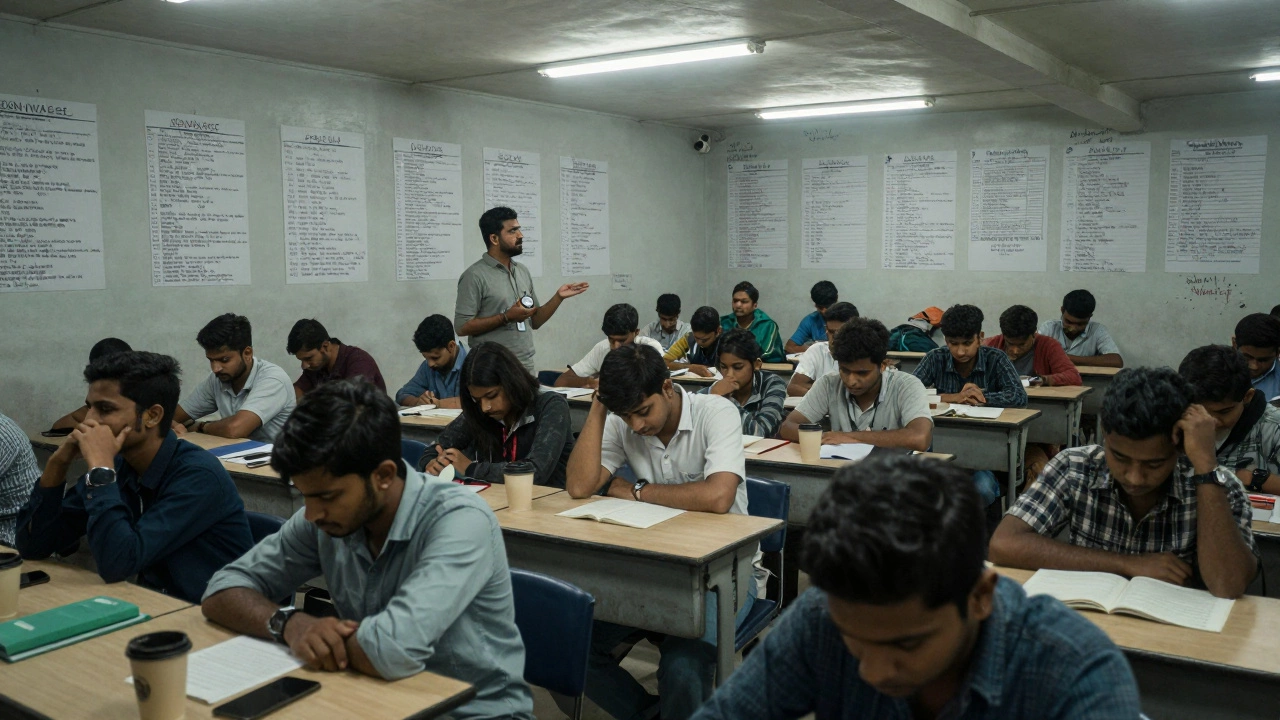
In India, becoming a doctor starts with one exam: NEET. Not just any exam. The National Eligibility cum Entrance Test is the only gateway to 95% of all medical seats in the country. Over 2.3 million students take it every year. Only about 100,000 clear it. That’s a 4.3% success rate. And that’s just to get into a government medical college. For top colleges like AIIMS Delhi or PGIMER Chandigarh, you need to be in the top 0.1%.Most students start NEET coaching by Class 11. Some even earlier. They spend 12 to 18 hours a day studying-physics, chemistry, biology-while balancing school. Their entire social life shrinks. Weekends are for mock tests. Holidays are for revision. There’s no room for error. One wrong guess in the MCQs can drop you 500 ranks. And with only 40,000 government MBBS seats available, the gap between a good score and a great score is the difference between a future and a dead end.
Specialties That Make It Worse
Getting into medical school is just the beginning. The real test comes after MBBS. Choosing your specialty is where the pressure multiplies. Some fields require 7-9 years of training after MBBS. And competition for those spots? It’s brutal.Neurosurgery is often called the hardest. Why? Because you need surgical precision, deep knowledge of brain anatomy, and nerves of steel. You train for 6-7 years after MBBS. You work 90+ hour weeks. You’re on call every third night. You’re expected to handle complex cases with zero margin for error. One mistake can cost a patient their life-or your career.
Cardiothoracic surgery is similar. You’re operating on a beating heart. No room for hesitation. You need hand-eye coordination like a professional gamer, plus the mental endurance of a marathon runner. And the competition for seats? Only 15-20 seats are available nationwide for cardiothoracic surgery in top institutes like AIIMS and PGI.
Then there’s radiation oncology. You need to master physics, biology, and patient care. You’re treating cancer patients. You’re responsible for radiation doses that can kill or cure. One miscalculation? Permanent damage. And the training? 5 years after MBBS. And you’re competing with the top 5% of MBBS graduates.
It’s Not Just About Skill-It’s About Survival
The hardest doctors aren’t just the smartest. They’re the ones who survived burnout.Medical students in India report depression rates above 50%. Suicide rates among interns are 2-3 times higher than the national average. Why? Because the system doesn’t just test knowledge-it tests endurance. You’re expected to work 36-hour shifts as a junior resident. You’re yelled at by seniors. You’re ignored by patients’ families. You’re told you’re not good enough-even when you’re top of your class.
One student from Lucknow told me: “I passed NEET with an All India Rank of 120. I thought I made it. Then I got assigned to a rural hospital. No electricity. No clean water. No senior doctor on call. I had to deliver a baby alone at 3 a.m. with only a flashlight. That’s when I realized: passing the exam was the easy part.”
Why NEET Coaching Isn’t Enough
Most coaching centers promise you’ll get into AIIMS if you study hard. They sell you 10,000-page books. They give you 100 mock tests. But they don’t teach you how to handle failure.Many students take NEET twice, three times, even four times. Each attempt costs ₹1.5 lakh in coaching fees, books, and living expenses. Each failure chips away at confidence. Parents stop talking about it. Friends move on to engineering or law. You start doubting if you’re cut out for this.
Top coaching centers now include mental health sessions. They bring in counselors. They teach time management. They show students how to sleep 6 hours a night without guilt. Because if you burn out before your first clinical rotation, no amount of coaching will save you.
What Makes a Doctor Truly Hard to Become?
The hardest doctor isn’t the one with the longest training. It’s the one who keeps going after the system tries to break them.It’s the girl from Bihar who studied under a streetlamp because her home had no electricity. It’s the boy who sold his bike to pay for NEET coaching. It’s the student who cried after failing NEET twice but came back for a third try-because they still believed they could save lives.
Hardness isn’t measured in years. It’s measured in resilience. In the ability to sit down after a 24-hour shift, open a textbook, and study for the next exam-even when your hands are shaking from exhaustion.
If you’re asking what’s the hardest doctor to become, the real answer is this: the one who never stops trying, even when the world tells them to quit.

Is It Worth It?
Yes. But not for the money. Not for the title. Not for the respect.It’s worth it because one day, you’ll be the one holding a newborn’s hand in the NICU. Or telling a cancer patient, “We caught it early.” Or stitching a wound on a child who survived a road accident because you were the only doctor on duty.
Those moments don’t come from coaching classes. They come from showing up-even when you’re tired. Even when you’re scared. Even when you’ve failed before.
That’s what makes the hardest doctor… the one who never gave up.
Is NEET the hardest exam in India?
Yes, by volume and stakes. Over 2.3 million students take NEET every year for only 40,000 government MBBS seats. The competition ratio is higher than IIT JEE. But unlike JEE, NEET has no reservation for coaching centers or elite schools-it’s purely merit-based. That makes it harder for students from rural areas or low-income families to compete without support.
Which medical specialty takes the longest to become?
Neurosurgery and cardiothoracic surgery both take 7-9 years after MBBS, including internship and residency. That’s 12-14 years total from Class 12 to becoming an independent surgeon. Most other specialties like pediatrics or internal medicine take 5-6 years post-MBBS.
Can you become a doctor without NEET coaching?
Absolutely. Many doctors cleared NEET without coaching. But it’s rare. In 2024, only 1.2% of top 100 rankers had no coaching background. Coaching helps with pattern recognition, time management, and access to high-quality mock tests. But self-study with disciplined planning and access to past papers can work-especially if you’re in a top-tier school with good faculty.
What’s the failure rate for NEET aspirants?
Over 95% of students who take NEET don’t get into a government medical college on their first try. Around 30-40% take it twice. 10-15% take it three times or more. Many drop out after two failures due to financial pressure or mental exhaustion. Only 5-7% of all aspirants eventually become doctors.
Are foreign medical degrees easier than NEET?
Not necessarily. Studying medicine in Ukraine, Russia, or Georgia costs less than Indian private colleges, but you still need to pass the FMGE (Foreign Medical Graduate Exam) to practice in India. The pass rate for FMGE is under 20%. So many students end up spending 6 years abroad, then fail the licensing exam. NEET is harder to clear, but once you clear it, your path is clearer.
How do top NEET scorers manage stress?
They don’t ignore stress-they manage it. Top performers schedule 30 minutes of exercise daily, sleep 6-7 hours, and avoid social media during study blocks. Many use the Pomodoro technique: 25 minutes study, 5 minutes break. They also join small peer groups for discussion, not comparison. The key isn’t studying more-it’s studying smarter and staying mentally healthy.
What Comes After NEET?
Clearing NEET doesn’t mean you’re done. It means you’ve just entered the real race.Once you’re in medical college, the pressure doesn’t drop. You’re expected to memorize 500+ drugs, understand complex physiology, and pass clinical exams where professors grill you for 45 minutes straight. Many students fail their first professional exam. Some get detained. Others leave.
Then comes internship-where you’re on your own for the first time. You’re responsible for patients. You’re working nights. You’re learning how to break bad news. No one teaches you that in coaching.
And then? The PG entrance exams. NEET PG. This is another 2.5 million candidates competing for 40,000 seats. Again. Another year of coaching. Another year of sacrifice.
So yes-the hardest doctor to become is the one who survives NEET, survives MBBS, survives PG, survives residency, and still believes in healing.
Final Thought: The Real Test Is Within
No coaching center can teach you grit. No book can give you courage. No mock test can prepare you for the silence after a patient dies because you missed a sign.The hardest doctor isn’t the one with the highest rank. It’s the one who still shows up the next day.