Can I Self-Study for JEE? Here’s What Actually Works
Yes, you can self-study for JEE and crack it without coaching. Learn the right books, daily plan, common mistakes to avoid, and how to stay consistent-based on real data from past qualifiers.
When you're preparing for JEE, India's most competitive engineering entrance exam that tests Physics, Chemistry, and Math at a high level of depth and speed. Also known as Joint Entrance Examination, it's not just about how hard you study—it's about what you study. And for self learners, the right books make all the difference. Many students assume coaching is the only way to crack JEE, but thousands of top rankers have done it alone—with discipline, the right materials, and smart strategy.
Self learners need books that explain concepts clearly, give enough practice, and match the JEE pattern. NCERT textbooks, the foundation of JEE Chemistry and part of Physics and Math syllabus. Also known as National Council of Educational Research and Training, these are non-negotiable. If you skip NCERT, you're skipping 60% of JEE Main’s Chemistry questions and half the theory in Physics. Skip them, and you’re guessing on easy marks. Then comes objective books, specialized problem books that train you for JEE’s multiple-choice format and time pressure. Also known as MCQ-focused study material, these include titles like Physical Chemistry by O.P. Tandon, Organic Chemistry by Morrison and Boyd, and Problems in Physical Chemistry by N. Awasthi. These aren’t just supplements—they’re your practice ground. For Math, Objective Mathematics by R.D. Sharma builds your base, while Play with Graphs by Amit M. Agarwal teaches you to visualize problems fast. For Physics, H.C. Verma is the gold standard for concept clarity, and I.E. Irodov is for those aiming for top 100 ranks.
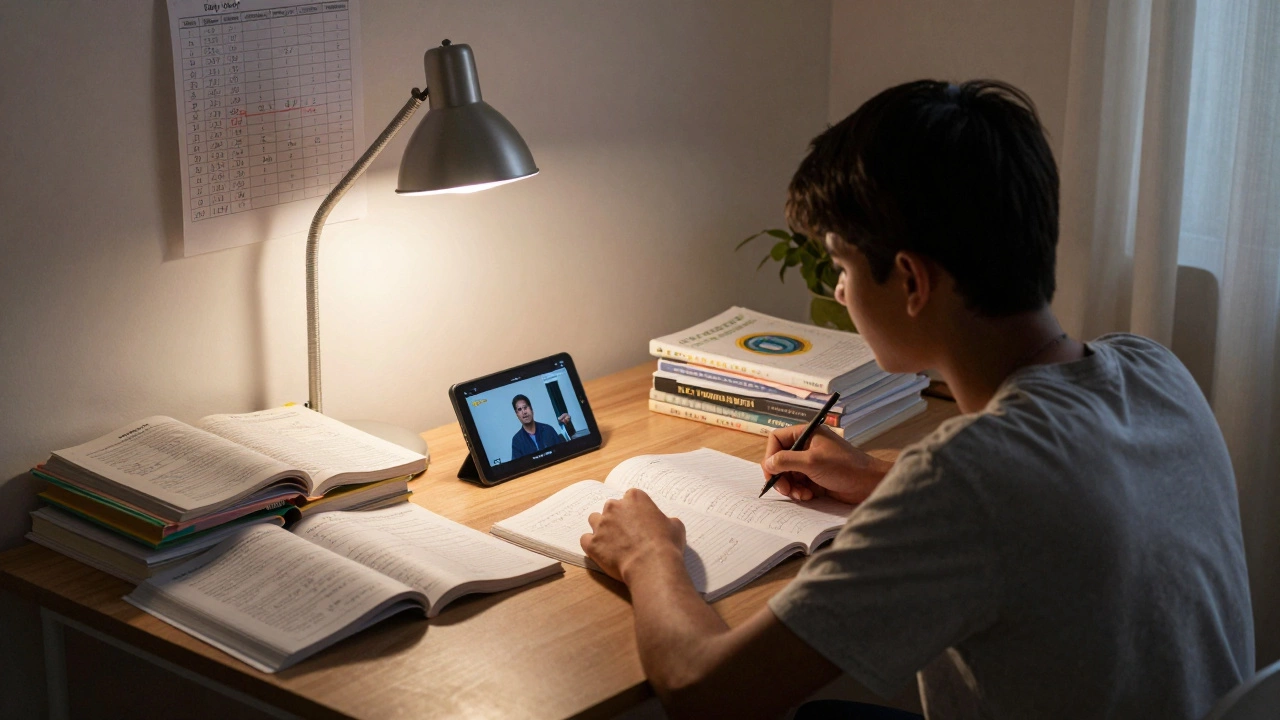
What separates self learners from others isn’t talent—it’s structure. You need one book per subject for theory, one for practice, and one for previous years’ papers. Don’t collect ten books. Use three well. JEE doesn’t test how many books you’ve read—it tests how well you’ve mastered the core. Top scorers don’t flip through 50 books. They solve 3 books 3 times. And they track mistakes. That’s why previous year papers, real JEE questions from 2015 to 2024, are the most valuable resource for self learners. Also known as JEE archives, they show you exactly what’s repeated, what’s changed, and where the traps are. You don’t need coaching notes if you’ve solved 15 years of papers and understood every solution.
There’s no magic formula. But there is a proven path: NCERT first, then targeted problem books, then past papers. Repeat. Track weak areas. Revisit. Self learners win not because they’re smarter—they’re more consistent. And they pick the right tools. Below, you’ll find real reviews and breakdowns of the exact books that helped students go from zero to top 1000 without stepping into a coaching center. No hype. Just what works.
Yes, you can self-study for JEE and crack it without coaching. Learn the right books, daily plan, common mistakes to avoid, and how to stay consistent-based on real data from past qualifiers.