India: Chemistry Education, JEE, NEET, and CBSE Explained
When you think of India, a country where millions of students prepare for high-stakes science exams every year. Also known as the largest education market in South Asia, it's where chemistry isn’t just a subject—it’s a gateway to medical and engineering careers. This isn’t theory. It’s daily life for over 15 million students who study under the CBSE, the national school board that sets the standard for JEE and NEET preparation. CBSE isn’t just popular—it’s the default path for families who want their kids to compete at the national level.
Why? Because JEE, the entrance exam for India’s top engineering colleges and NEET, the mandatory test for medical school both follow CBSE’s syllabus. That’s why chemistry becomes the secret weapon. Unlike physics or math, chemistry questions in JEE and NEET come straight from NCERT textbooks. Students who master it gain 30-40% more marks with less time spent. It’s not luck—it’s strategy. And it’s why coaching centers across Delhi, Kota, and Hyderabad focus so hard on chemistry modules. You don’t need to be a genius. You just need to know which chapters repeat every year.
But India’s education system isn’t just about exams. Behind the pressure are real choices: state boards, ICSE, vocational paths, and online learning. Some students skip physical chemistry to save time. Others chase scholarships to avoid loans. Some even take RRB Group D jobs after 10th grade because the competition is lower. And while government jobs promise security, they also come with slow promotions and rigid rules. Meanwhile, teachers who train for NEET earn decent pay—but only if they know the exam inside out. The system is complex, but it’s not random. Every rule, every syllabus, every coaching institute exists because of one thing: the demand for science careers in India.
What you’ll find below isn’t just a list of articles. It’s a map. A practical guide to how students in India actually study, what works, what doesn’t, and why chemistry keeps coming up as the answer. Whether you’re a parent choosing a board, a student deciding which chapter to tackle next, or a teacher trying to stay ahead—this collection gives you what you need, without fluff.
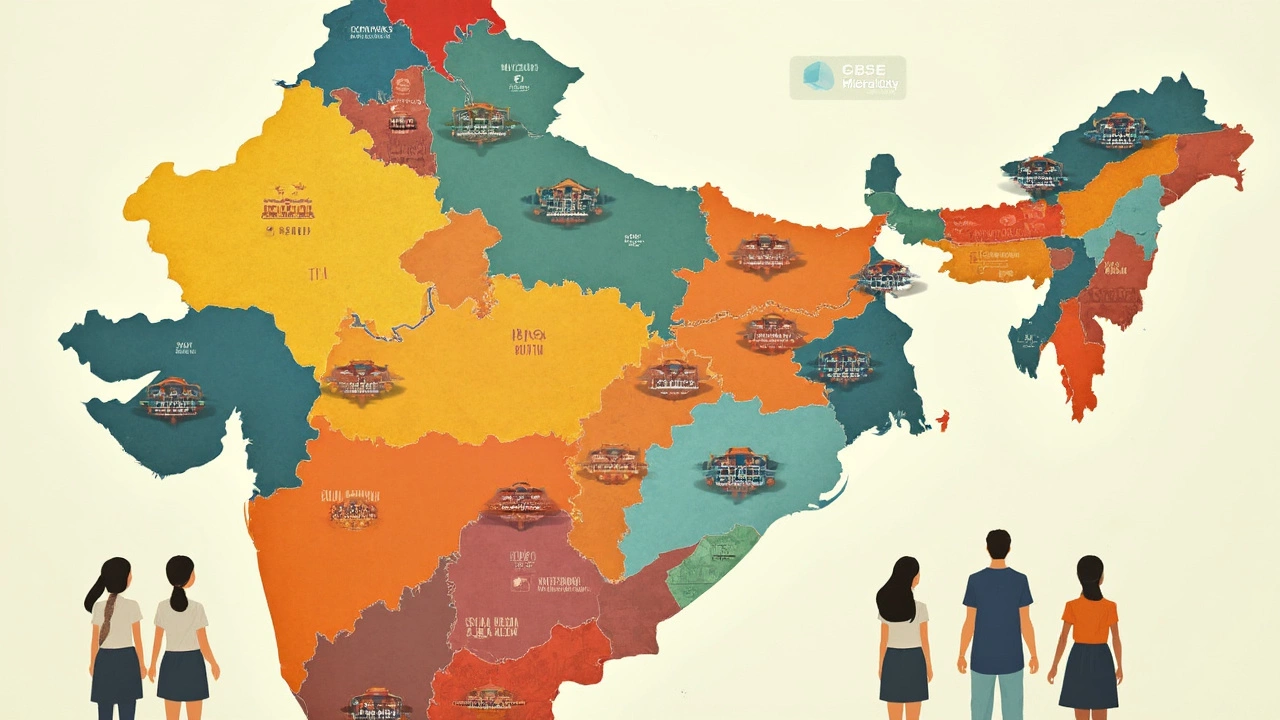
Which State Has More CBSE Schools in India? Key Facts You Should Know
May, 18 2025
Curious about where CBSE schools are most common in India? This article pinpoints which state leads the count, gives interesting facts about why that’s the case, and shares tips for navigating the CBSE network as a parent or student. We break down real numbers, share practical reasons behind these trends, and make it easy to compare states. You'll also discover what makes CBSE school distribution unique and how it can affect student choices. Dive in if you want to get serious about CBSE schooling options across India.
Is CBSE a Delhi Board? Facts You Didn't Know
May, 4 2025
Ever wondered if CBSE is just for Delhi schools? This article cuts through the confusion and explains what CBSE really is, how it started, and why it's everywhere in India. You’ll learn why people call it the Delhi board, how its syllabus is set, and what makes it different from state boards. If you’re choosing the right board for your child, these facts and tips will clear things up. Get ready for a clear, no-nonsense look at CBSE.
CBSE Syllabus in India: What Students and Parents Need to Know
Apr, 29 2025
This article breaks down what the CBSE syllabus in India actually covers, who sets it, and how it shapes students' learning from elementary to high school. Discover key subjects, exam tips, and why the CBSE curriculum is so popular. You’ll get insider tips about navigating the syllabus and how recent updates matter for students and parents. Find out how to download the latest syllabus and stay ahead in school.
Total IIT Seats in India: All You Need to Know
Feb, 25 2025
This article provides detailed information on the number of seats available across Indian Institutes of Technology (IITs) in India, an essential detail for those preparing for the IIT JEE. From insights into seat distribution to reservation quotas, it also offers relevant tips and facts for prospective IIT candidates. Understanding the number of seats can help aspirants strategize their preparation efficiently. Dive into the adventurous journey towards joining IIT with thorough knowledge and preparation tips.