Google Classroom Migration Estimator
Estimate Your Migration Effort
How difficult would it be to move your Google Classroom data to another platform? Input your class details below to see estimated time and effort.
Migration Estimate
This estimate is based on the migration challenges described in the article: Why Can't You Leave Google Classrooms Anymore?
Ever tried to leave Google Classroom and found yourself stuck? You’re not alone. Teachers, students, and even admins have hit the same wall: no matter how hard you try, Google Classroom won’t let you go. It’s not a bug. It’s by design. And it’s happening everywhere-from small private schools in Toronto to massive public districts across North America.
Google Classroom Isn’t Just a Tool-It’s a System
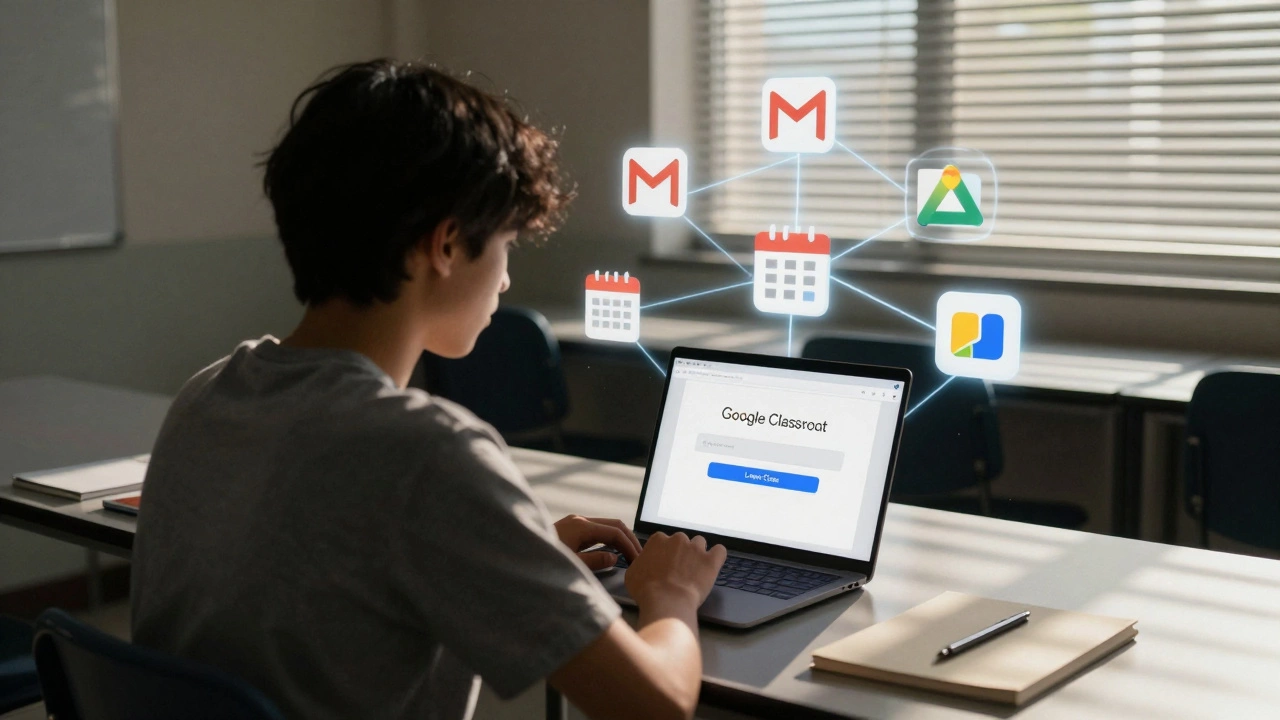
Google Classroom started as a simple way to hand out assignments. But over time, it became the backbone of how schools manage learning. It’s not just a platform. It’s a system tied to Google Workspace for Education, which includes Gmail, Drive, Calendar, and Meet. Once a school signs up, everything connects. Students use their school email to log in. Teachers store files in Drive. Attendance is tracked through Calendar. Video lessons happen in Meet. You can’t pull one thread without unraveling the whole thing.
Try deleting your Classroom. Go ahead. You’ll find the option grayed out. Even if you’re an admin, you can’t just turn it off. Google locks it in because schools rely on it for daily operations. Removing it would break grading systems, parent portals, and automated attendance logs. Schools don’t want to lose that. And Google knows it.
Student Accounts Are Locked by Policy
Most schools use managed Google accounts. These aren’t personal Gmail accounts. They’re controlled by the district’s IT department. When a student joins, their account is created with strict rules: no external apps, no personal data syncing, no downloading outside approved tools. And here’s the catch: you can’t delete your own account. Even if you graduate, the account stays active until the school manually deletes it-sometimes months later.
Parents sometimes ask: “Why can’t my child just use a personal Google account?” The answer is simple: privacy and compliance. Schools must follow FERPA (in the U.S.) and PIPEDA (in Canada). Using personal accounts would mean student data could be stored outside protected systems. Google’s education tier gives schools control over data retention, access logs, and third-party sharing. Switching to a personal account would break those rules.
Grades and Transcripts Are Tied to Classroom
Let’s say you want to switch to Microsoft Teams or Canvas. Sounds reasonable, right? But your grades are in Google Classroom. Your assignments, feedback, due dates, and even peer reviews are all stored there. Exporting them isn’t easy. Google lets you download assignments as PDFs or CSVs, but the structure is messy. Grades don’t map cleanly to other platforms. Feedback comments get lost. Rubrics disappear.
One high school in Hamilton, Ontario tried switching to Schoology in 2024. They spent six weeks just moving gradebooks. Teachers had to re-enter 12,000 individual student scores by hand. The IT team had to rebuild all assignment templates. It cost $45,000 in staff time alone. Most schools just give up.
Teachers Are Trained, Not Just Equipped
Professional development for teachers doesn’t stop at “how to post an assignment.” Schools invest hundreds of hours training staff on Google Classroom workflows. How to use the grading toolbar. How to reuse assignments across classes. How to integrate with Google Forms for quizzes. How to set up differentiated tasks for students with IEPs.
When a new teacher joins, they don’t get a manual-they get a Google Classroom orientation. It’s built into the onboarding process. Switching platforms means retraining every teacher. That’s expensive. And most schools don’t have the budget.
Even worse: Google Classroom updates automatically. No one has to install anything. New features roll out silently-like the ability to assign to specific students, or turn on quiz retakes. Other platforms require manual updates, patches, or even server changes. For schools with limited IT staff, that’s a nightmare.
Parents and Guardians Are Already In
Google Classroom lets parents receive weekly summaries of their child’s work. It sends emails with missing assignments, upcoming deadlines, and teacher comments. Parents don’t need to log in. They just get updates. That’s powerful.
Try replacing that with another platform. Most require parents to create accounts, remember passwords, and navigate unfamiliar dashboards. Schools have found that when they switch, parent engagement drops by 30-50%. That’s not a small number. It’s a dealbreaker.
There’s No Easy Export or Migration Path
Google doesn’t offer a one-click export to other LMS platforms. You can’t move your entire class from Classroom to Brightspace or Moodle with a few clicks. You have to manually recreate each assignment, upload files, reconfigure grading scales, and reassign students.
Even if you’re willing to do that, you lose history. Past assignments, comments, and grades stay locked in Google’s system. If a student applies to college and needs to show their academic record, the transcript won’t include their Classroom activity unless the school exports it manually-and most don’t.
Some districts have built custom scripts to pull data out, but those are rare. They require developers, testing, and ongoing maintenance. Only large districts with tech teams can afford it.
Google’s Ecosystem Is the Real Trap
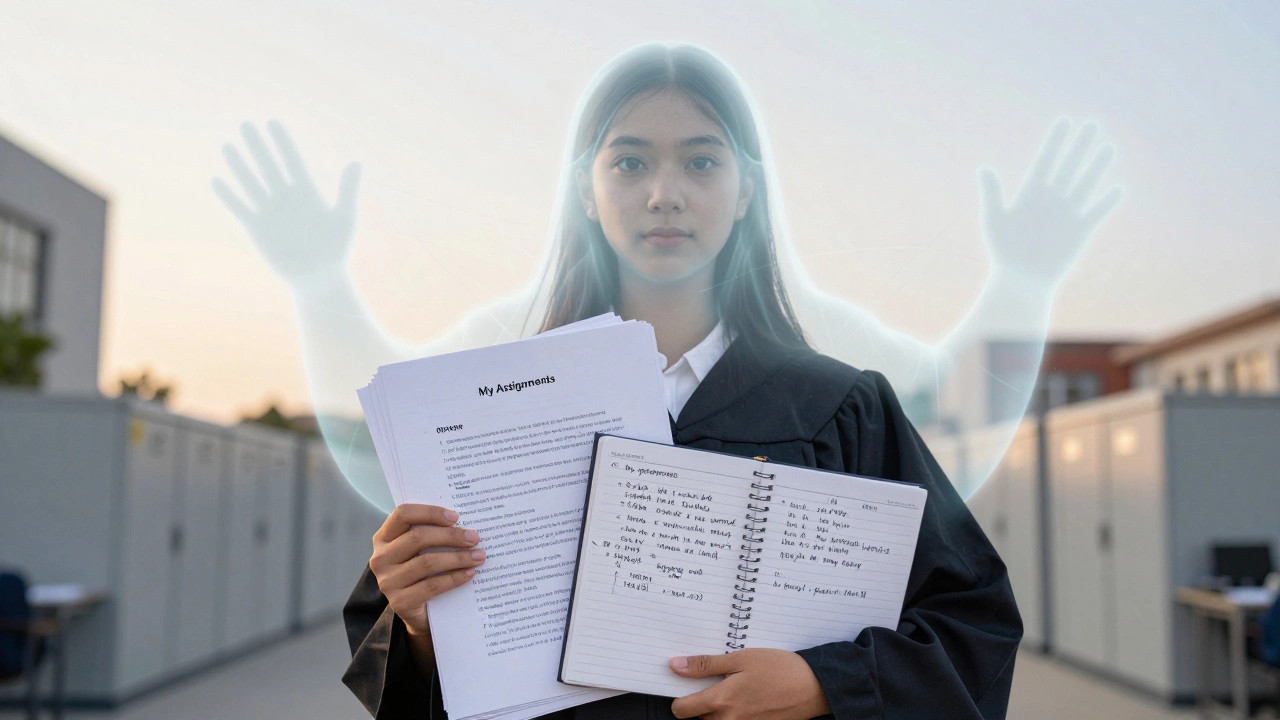
The biggest reason you can’t leave isn’t Google Classroom itself. It’s the whole Google ecosystem. Your school uses Gmail. You store files on Drive. You schedule meetings in Calendar. You collaborate in Docs. You watch videos on YouTube (blocked for students, but still part of the system).
Leaving Classroom means leaving all of it. And that’s not practical. Imagine switching to Microsoft Teams. Now you need to migrate 5,000 student emails. Rebuild all shared drives. Train everyone on OneDrive. Set up new calendar permissions. Redo video conferencing rules. The cost and chaos are too high.
Google didn’t build a classroom tool. They built a learning ecosystem-and once you’re in, you’re locked in.
What Can You Do If You Want Out?
You can’t delete your account. But you can reduce your dependence.
- Use Google Drive to store your work as backups-download files regularly.
- Export assignments as PDFs before they’re graded.
- Keep a personal journal of your grades and feedback.
- Ask your school if they offer a data export option for graduating students.
- If you’re a teacher, advocate for open standards like LTI (Learning Tools Interoperability) to allow future migration.
There’s no magic button to escape. But you can protect your data. And that’s the only real power you have.
Why This Matters Beyond Schools
This isn’t just about students. It’s about control. When a single company holds your learning history, your grades, your feedback, and your communications-you’re not just using a tool. You’re trusting them with your educational identity.
What happens if Google changes its privacy policy? What if they stop offering free education tools? What if they sell data to advertisers (even if they say they won’t)?
Most schools don’t ask these questions. They just use what’s free and easy. But the cost isn’t money. It’s autonomy.
Google Classroom is convenient. It’s reliable. It’s everywhere. But convenience shouldn’t mean captivity.
Can I delete my Google Classroom account myself?
No. Google Classroom accounts are managed by schools or districts. Only an administrator can delete or deactivate them. Students and parents don’t have the permission to remove the account, even after graduation. The school controls the lifecycle of the account, not the user.
Why can’t I just use my personal Gmail instead of my school account?
Schools use managed Google accounts to comply with student privacy laws like FERPA and PIPEDA. Personal Gmail accounts don’t offer the same level of data protection. Student work on personal accounts could be accessed by Google’s advertising systems, which violates educational privacy rules. Schools require managed accounts to keep student data secure and separate from commercial services.
Can I export my grades and assignments from Google Classroom?
Yes, but it’s limited. You can download assignments as PDFs or export grades as a CSV file. However, these exports don’t include teacher comments, rubrics, or submission history. They’re just raw data. There’s no way to fully migrate your learning record to another platform without manual re-entry.
Do other platforms like Microsoft Teams or Canvas let you leave more easily?
Technically, yes-but only if your school chose them. The issue isn’t the platform. It’s how deeply integrated the system is. If your school uses Microsoft Teams as its main tool, you’ll face the same lock-in. The problem isn’t Google. It’s that any LMS becomes central to school operations, making migration difficult no matter the vendor.
Will Google Classroom ever let users leave without school approval?
Unlikely. Google’s business model for education depends on institutional adoption, not individual control. They design Classroom to be a district-wide tool, not a personal one. Giving users the power to delete accounts would break the system for schools. Google prioritizes institutional stability over user autonomy.