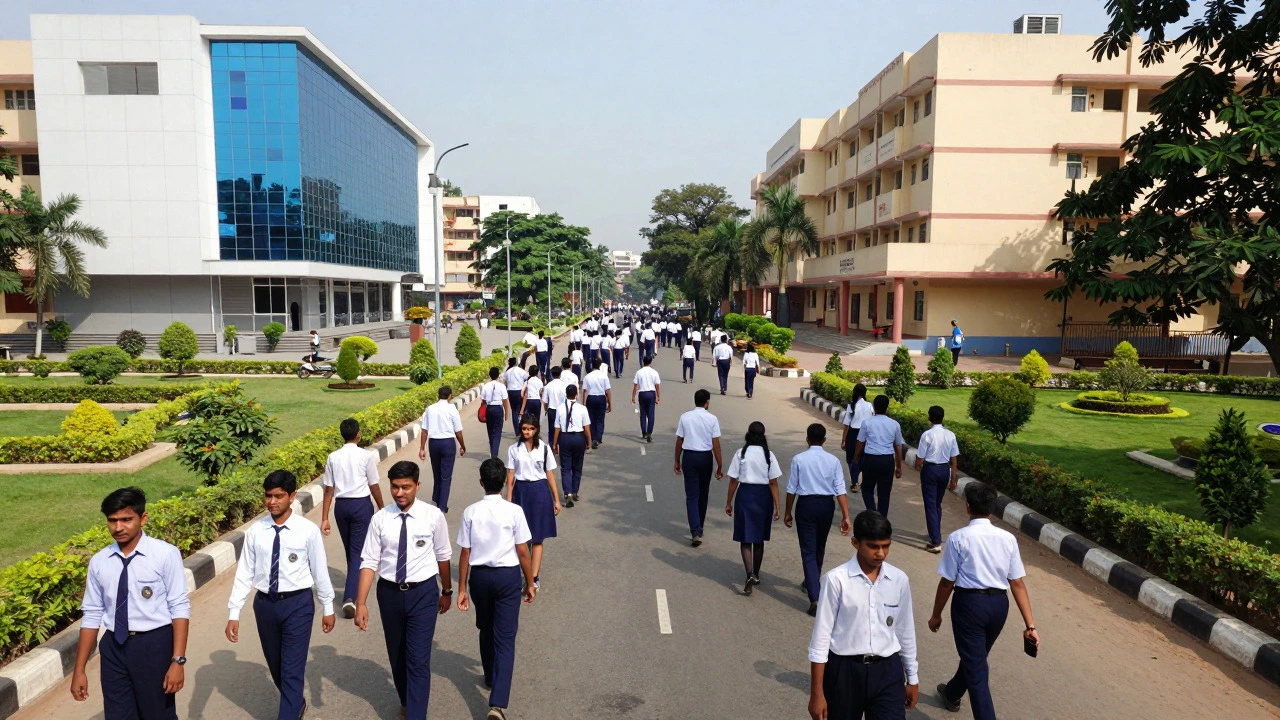
CBSE School Density & Distribution Analyzer
Explore how CBSE-affiliated schools are distributed across major Indian states. Toggle between absolute counts and per-capita estimates to see which states lead in different metrics.
Walk into any major city in Uttar Pradesh, and you’ll likely see a Central Board of Secondary Education (CBSE) school within walking distance. But is it actually the state with the most? The answer might surprise you. While Uttar Pradesh has the largest student population, the sheer number of registered CBSE institutions often points to different leaders depending on whether you count total schools or just those offering higher secondary education.
As of the latest academic year data from the board, the landscape of CBSE presence across India is shifting. It’s not just about how many students are enrolled; it’s about where the infrastructure for standardized national curriculum testing is densest. This matters if you’re a parent planning relocation, a researcher tracking educational equity, or an educator looking at regional trends. Let’s break down who actually holds the top spot and why the numbers tell a more complex story than just “most students = most schools.”
The Top Contenders: Uttar Pradesh vs. Maharashtra vs. Delhi
When people ask which state has the highest number of CBSE schools, three names usually come up: Uttar Pradesh, Maharashtra, and the National Capital Territory of Delhi. Each represents a different demographic and economic profile.
- Uttar Pradesh: With over 230 million residents, UP has the highest potential demand. However, a significant portion of its population relies on state boards or private unaided schools that may not be fully affiliated with CBSE. The number of CBSE-affiliated schools here is high, but the ratio per capita is lower compared to urbanized states.
- Maharashtra: Home to Mumbai, India’s financial capital, Maharashtra sees a massive influx of expatriates, IT professionals, and families seeking international-standard education. This drives a high concentration of premium CBSE schools, particularly in the Mumbai-Pune-Nagpur industrial belt.
- Delhi: As the political and administrative hub, Delhi has a unique density. The small geographic area packs a huge number of schools, making the per-square-kilometer count incredibly high. For many, Delhi feels like the center of the CBSE universe because of this density.
Recent audits suggest that Uttar Pradesh currently leads in the absolute count of registered CBSE schools, largely due to rapid urbanization in cities like Lucknow, Kanpur, and Noida. However, if you look at the average number of students per school, Maharashtra often shows larger institutional sizes, indicating fewer, but bigger, campuses.
Why the Numbers Matter: Infrastructure and Access
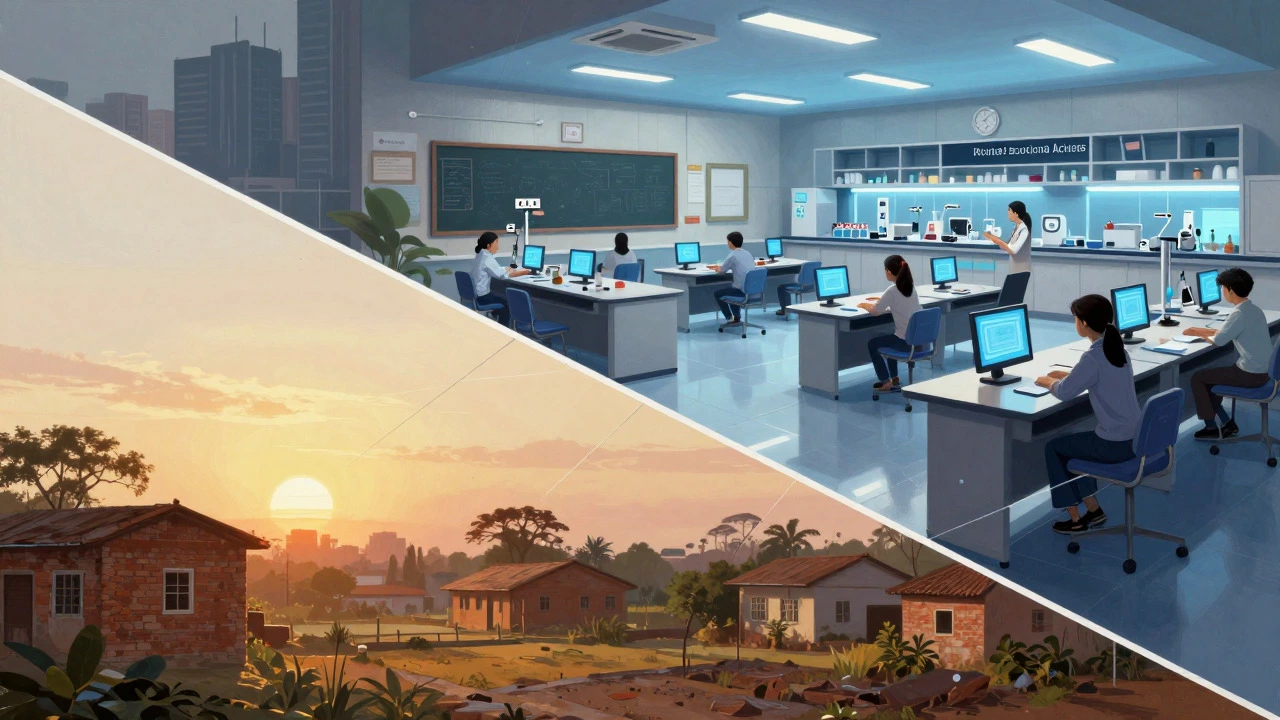
Counting schools isn’t just an academic exercise. It reveals gaps in educational access. A state with 5,000 CBSE schools spread across vast rural areas faces different logistical challenges than a state with 1,500 schools concentrated in metro hubs. The CBSE syllabus requires specific laboratory equipment, library resources, and trained faculty to implement effectively. In remote districts of Bihar or Jharkhand, even if a CBSE school exists, maintaining the quality standards set by the board can be difficult due to infrastructure deficits.
This is where the concept of "affiliation" becomes crucial. Not every school teaching the CBSE syllabus is formally affiliated. Some operate under local permissions but follow the same textbooks and exam patterns. When we talk about official statistics, we refer only to those with valid affiliation certificates from the board. This distinction is vital for parents verifying the legitimacy of a school’s certification process.
The Role of Private Sector Growth
A major driver of CBSE school proliferation is the private sector. Over the last decade, large education chains have expanded aggressively into Tier-2 and Tier-3 cities. These chains often open multiple branches, each counted as a separate entity in board records. This explains why states with strong real estate markets and growing middle-class populations see a spike in CBSE school counts.
In contrast, government-run CBSE schools remain rare. Most public institutions follow state-specific curricula. Therefore, when you see a high number of CBSE schools in a particular region, it almost always indicates a robust private education market rather than a government initiative. This trend is particularly visible in Karnataka and Tamil Nadu, where tech hubs have fueled demand for standardized national curricula.
| State/UT | Estimated CBSE Schools | Primary Driver | Urban Concentration |
|---|---|---|---|
| Uttar Pradesh | ~4,500+ | Population size & urban growth | High in NCR/Lucknow |
| Maharashtra | ~3,800+ | Private sector & expat demand | Very High in Mumbai/Pune |
| Delhi | ~1,200+ | Administrative hub & density | Extremely High |
| Karnataka | ~2,500+ | Tech industry & Bangalore ecosystem | High in Bengaluru |
Challenges in Rural Affiliation
You might wonder why there aren’t thousands more CBSE schools in rural India. The barrier isn’t just demand; it’s compliance. To get affiliated, a school must meet strict norms regarding land area, classroom space, science labs, and teacher qualifications. In many rural areas, building such infrastructure is prohibitively expensive. Consequently, the CBSE network remains heavily skewed toward urban and semi-urban centers. This creates a two-tier system where access to the national board curriculum is a privilege of location and income, rather than a universal right.
However, digital learning initiatives are starting to bridge this gap. Online coaching platforms now offer CBSE-aligned content to students in remote villages, allowing them to prepare for board exams without physically attending a CBSE-affiliated school. While these students still need to register through a nearby recognized center, the preparation phase is becoming less dependent on physical proximity to a major city.
What This Means for Parents and Students
If you’re choosing a school based on the CBSE syllabus, don’t just look at the state’s total count. Look at the specific district. A state might have the highest number of schools, but your local district could have very few options, leading to long commutes or limited peer groups. Conversely, a smaller state might have a well-distributed network that offers better community integration.
Also, consider the type of school. Senior Secondary schools (grades 11-12) are fewer than primary or middle schools. If you’re planning for higher secondary education, verify the availability of specific streams like Science, Commerce, or Arts in your chosen area. Not all CBSE schools offer full-stream options, especially in newer developments.
Frequently Asked Questions
Is Uttar Pradesh really the state with the most CBSE schools?
Yes, in terms of absolute numbers, Uttar Pradesh typically leads due to its massive population and rapid urbanization. However, Maharashtra and Delhi compete closely in terms of school density and average enrollment size per institution.
Does having more CBSE schools mean better education quality?
Not necessarily. Quantity doesn't guarantee quality. Quality depends on individual school management, teacher training, and infrastructure maintenance. A smaller CBSE school in a tier-2 city might outperform a large chain school in a metro area if it has dedicated faculty and better student-to-teacher ratios.
Can I study CBSE outside of India?
Yes, CBSE has a significant international presence. There are hundreds of CBSE-affiliated schools in countries like UAE, Singapore, and Canada. These schools follow the same syllabus and conduct exams either locally or via online modes, depending on current regulations.
How does the CBSE syllabus differ from state board syllabi?
The CBSE syllabus is standardized nationally, ensuring consistency across states. State board syllabi can vary significantly in depth and focus. CBSE places a stronger emphasis on conceptual understanding and application-based questions, whereas some state boards may focus more on rote memorization, though this gap is narrowing.
Are government schools allowed to adopt the CBSE syllabus?
Mostly no. Government schools in India primarily follow their respective state board curricula. Only a select few central government schools (like Kendriya Vidyalayas) follow a CBSE-like curriculum, but they are distinct entities. Private schools have the flexibility to choose CBSE affiliation.