State Education System Comparison Tool
Compare State Education Systems
See how different states perform in competitive exams like JEE and NEET and how their education systems differ
Success Rate: 10% (JEE Advanced)
Key Strength: Systematic curriculum integration
Kerala's government schools align with national exam patterns from early grades, providing structured preparation without requiring private coaching.
Success Rate: 10% (JEE Advanced)
Key Strength: Systematic curriculum integration
Kerala's government schools align with national exam patterns from early grades, providing structured preparation without requiring private coaching.
JEE Advanced Performance
NEET Performance
Key Strengths
Education System Approach
When it comes to competitive exams like JEE, NEET, UPSC, or state-level entrance tests, where you grow up matters more than you think. It’s not just about coaching centers or private tutors-it’s about the entire ecosystem around education. Some states don’t just teach kids; they build exam-ready minds from day one. So which state actually has the best education system when it comes to crushing competitive exams?
The Real Measure of Education Quality
Forget rankings based on literacy rates or school infrastructure alone. For competitive exams, the real metric is how many students from a state clear national-level tests like JEE Advanced or NEET at high scores. In 2024, Uttar Pradesh sent over 120,000 students to JEE Main-but only 1,800 made it to JEE Advanced. Meanwhile, Bihar had nearly 90,000 applicants, with just 1,200 qualifying. Numbers like these tell you more than any government report.But then there’s Kerala. In 2024, Kerala had fewer than 15,000 JEE applicants-but nearly 1,500 cleared JEE Advanced. That’s a 10% success rate. Compare that to the national average of 2.3%. Or look at Tamil Nadu: over 80% of NEET qualifiers from South India came from just three districts-Chennai, Coimbatore, and Madurai. Why? Because their public schools have structured, exam-focused curricula built into daily lessons, not just last-minute coaching.
Kerala: The Quiet Champion
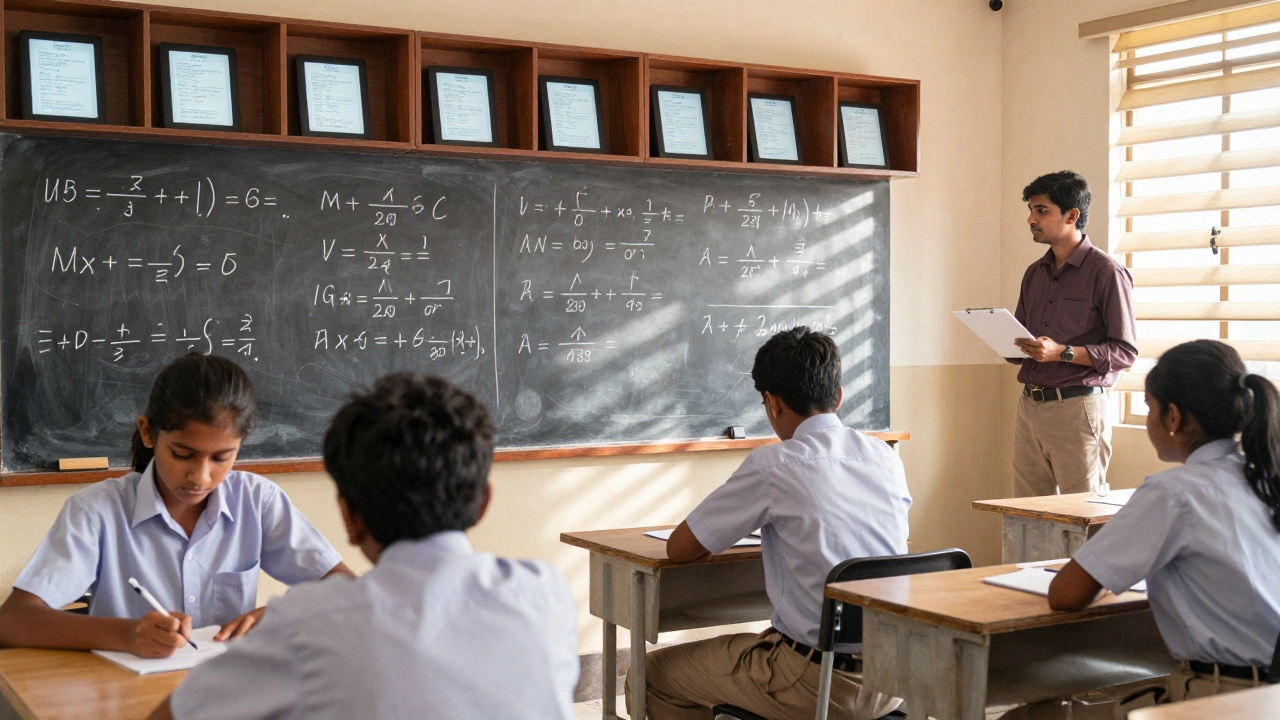
Kerala doesn’t brag. It doesn’t have flashy coaching chains like FIITJEE or Allen. But its government schools have something more powerful: consistency. Every public school in Kerala follows a standardized academic calendar that aligns with national exam patterns. Science and math aren’t optional electives-they’re the backbone of every grade from 6 to 12.Teachers in Kerala are trained specifically to identify students who show aptitude for competitive exams by 8th grade. They get extra mentoring, access to digital practice platforms funded by the state, and weekly mock tests that mirror JEE and NEET formats. There’s no pressure to enroll in private coaching because the school system already does it better.
In 2023, Kerala produced 17 students in the top 100 of NEET. No other state with a population under 40 million did that. And they did it without spending more per student than Bihar or Uttar Pradesh. The secret? Early intervention, teacher accountability, and a culture that treats exams as a natural extension of school-not a separate battle.
Tamil Nadu: Discipline Meets Depth
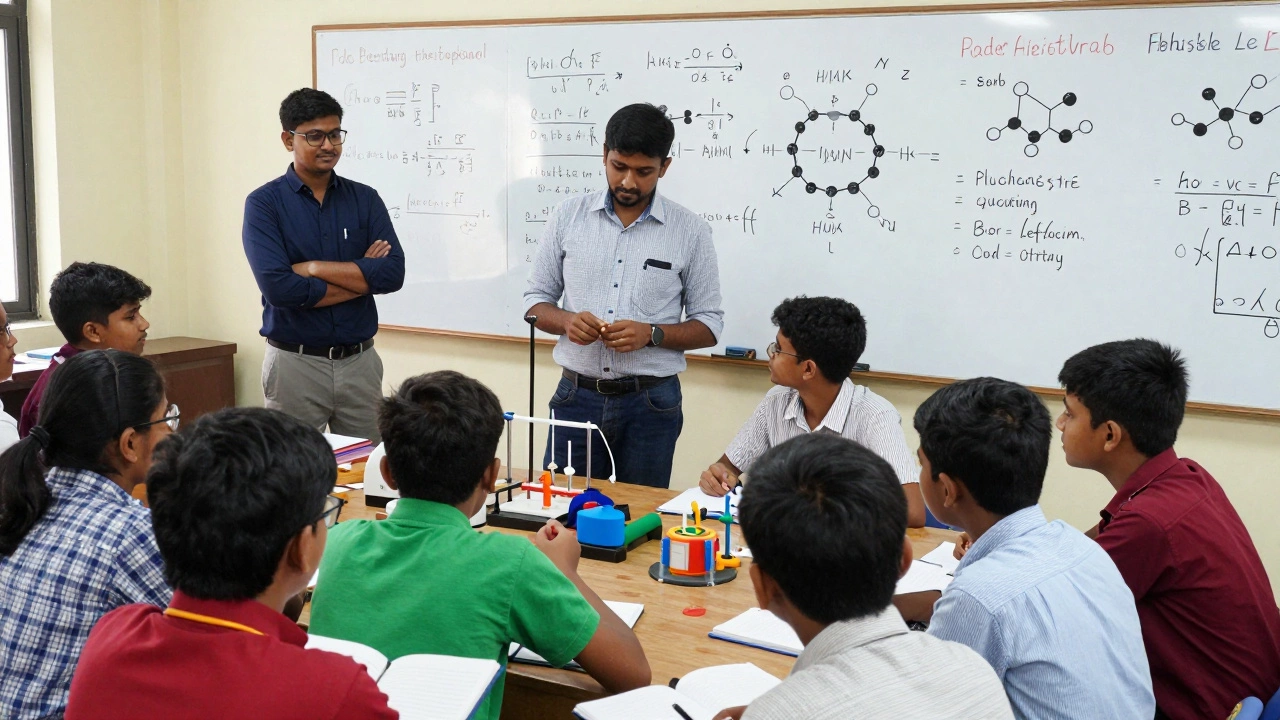
Tamil Nadu’s education system is built on discipline. Students start preparing for competitive exams as early as 6th grade-not because they’re pushed, but because the system expects it. The state board syllabus is nearly identical to CBSE’s for science subjects, but with deeper problem-solving emphasis. Physics isn’t memorized; it’s applied. Chemistry isn’t just reactions-it’s mechanisms.Government schools in Chennai and Coimbatore have partnered with IITs to run free Saturday workshops. These aren’t ads for coaching institutes-they’re actual sessions led by IIT graduates hired by the state. The result? Over 3,000 Tamil Nadu students qualified for JEE Advanced in 2024, more than Maharashtra and West Bengal combined, despite having smaller populations.
And here’s the kicker: Tamil Nadu’s average NEET score is 620 out of 720. The national average is 540. That’s not luck. That’s curriculum design.
And Then There’s Delhi
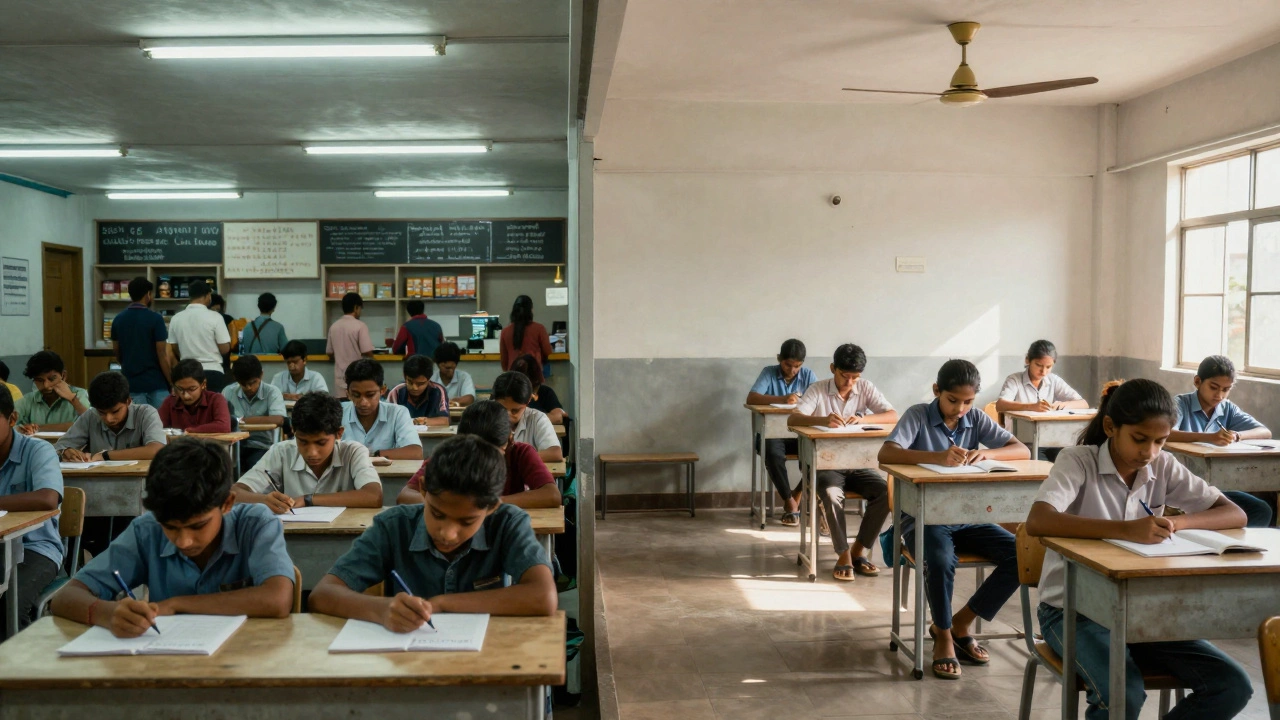
Delhi is the coaching capital of India. Thousands of students flock here every year from UP, Bihar, MP, and Rajasthan. But here’s the truth: Delhi’s own students don’t dominate the rankings. In 2024, only 4 of the top 100 JEE Advanced rankers were from Delhi government schools. Most of the top scorers were from outside Delhi, studying in private coaching centers.Why? Because Delhi’s public education system is fragmented. Schools vary wildly in quality. While some elite government schools like Atma Ram Sanatan Dharma College have excellent results, most don’t. The system relies on private coaching to fill the gaps-so it’s not building systemic excellence. It’s outsourcing it.
Delhi’s strength isn’t its education system-it’s its infrastructure for coaching. That’s not the same thing.
What About Maharashtra and Karnataka?
Maharashtra has the most JEE applicants in the country-over 200,000 in 2024. But its success rate? Only 2.1%. That’s below average. Why? Because the state’s board exams are easier than CBSE, so students aren’t prepared for the rigor of national tests. Many students from Maharashtra end up relocating to Kota or Delhi for coaching just to catch up.Karnataka is better. Bangalore’s public schools have strong science labs and partnerships with engineering colleges. The state also runs free online test series for students in rural areas. In 2024, Karnataka produced 2,100 JEE Advanced qualifiers-more than Gujarat, Odisha, and Haryana combined. But it still lags behind Kerala and Tamil Nadu in per-student success rates.
The Hidden Factor: Teacher Quality
You can’t talk about education without talking about teachers. In Kerala and Tamil Nadu, teachers in government schools get regular training in competitive exam patterns. They’re evaluated not just on attendance, but on how many of their students qualify for national exams. In states like UP and Bihar, teachers often lack exposure to these exams. Many haven’t even taken JEE or NEET themselves.Research from the National Council of Educational Research and Training (NCERT) in 2023 showed that students taught by teachers who had cleared JEE/NEET themselves scored 27% higher on average. That’s not coincidence. It’s expertise.
Kerala and Tamil Nadu pay teachers more than most states-and tie promotions to student outcomes in competitive exams. That’s not punishment. That’s incentive.
Why Other States Fall Behind
In states like Rajasthan, Madhya Pradesh, and Jharkhand, the problem isn’t lack of effort-it’s lack of alignment. The state board curriculum doesn’t match the syllabus of JEE or NEET. Students have to unlearn what they’re taught in school and relearn it in coaching centers. That’s inefficient. It’s expensive. And it puts low-income families at a huge disadvantage.Even in Haryana, where there’s good infrastructure, the focus is on rote learning. Students memorize formulas but can’t apply them. In Kerala, they’re taught to derive formulas from first principles. That’s the difference between passing and excelling.
The Bottom Line
If you’re asking which state has the best education system for competitive exams, the answer isn’t the one with the most coaching centers. It’s the one that builds exam readiness into public education from the ground up.Kerala leads in efficiency. Tamil Nadu leads in depth. Together, they prove that you don’t need to spend more to get better results-you just need to design better systems.
For students outside these states, the lesson is clear: don’t wait for your school to catch up. Use the free resources these states offer-like Kerala’s digital practice portal or Tamil Nadu’s IIT-led workshops-and replicate their methods. Start early. Focus on concepts, not cramming. And remember: the best education system isn’t the one with the most money. It’s the one that makes every student feel like they’re already prepared.
Which state has the highest success rate in JEE Advanced?
Kerala has the highest success rate in JEE Advanced, with nearly 10% of its applicants qualifying in 2024-far above the national average of 2.3%. This is due to its state-funded school system that integrates exam-style problem-solving into daily curriculum from early grades.
Why is Tamil Nadu strong in NEET?
Tamil Nadu’s strength in NEET comes from its state board syllabus, which closely mirrors the NEET exam pattern, especially in biology and chemistry. Public schools offer free weekly mock tests and partner with IITs for mentorship. Over 80% of South India’s NEET qualifiers come from just three districts in Tamil Nadu.
Do coaching centers matter more than the state education system?
Coaching centers help, but they’re a band-aid for weak public systems. In Kerala and Tamil Nadu, where schools are structured for competitive exams, fewer students rely on coaching-and still outperform students from states with thousands of coaching centers. Systemic preparation beats last-minute cramming every time.
Can students from UP or Bihar compete with those from Kerala?
Absolutely. Many top rankers in JEE and NEET come from UP and Bihar. But they often move to coaching hubs like Kota or rely on private coaching, which costs thousands of rupees a month. Students from Kerala and Tamil Nadu achieve similar results with little to no coaching because their schools prepare them from day one.
What should students do if their state’s education system is weak?
Use free online resources from top-performing states. Kerala’s e-learning portal, Tamil Nadu’s IIT workshops, and NCERT’s official practice modules are all available online. Focus on understanding concepts, not memorizing. Solve past papers daily. Build a study routine that mirrors the discipline of Kerala’s public schools-early mornings, weekly mocks, and concept journals.