
Code Readability Analyzer
Paste your code snippet below. We'll analyze it for readability issues based on the Golden Rule of coding.
Readability Score:
0%Key Issues:
Recommendations:
No analysis performed yet. Paste your code to get started.
There’s a single rule in coding that separates good programmers from great ones. It’s not about writing the fastest code, using the latest framework, or knowing every syntax trick. It’s about something far simpler-and far harder to master: write code so other humans can understand it.
Why the Golden Rule Isn’t About Speed or Efficiency
Most beginners think coding is about making things run fast. They optimize loops, squeeze out milliseconds, and brag about how their algorithm beats others. But in the real world, speed rarely matters as much as clarity. A program that runs 10% faster but takes three days to debug is a net loss. A program that runs 20% slower but a new teammate can fix in an hour? That’s a win.
Companies don’t hire coders to write code for machines. They hire them to write code for people. Your code will be read dozens, maybe hundreds, of times-by teammates, by future you, by auditors, by interns. Every line you write is a message. If that message is confusing, expensive mistakes happen.
What Does Readable Code Actually Look Like?
Readable code isn’t about fancy comments or pretty formatting. It’s about making intent obvious.
Take this example:
if (x % 2 == 0) {That’s fine. But what if you wrote:
if (userAge % 2 == 0) {Now it’s clear you’re checking if someone’s age is even. No guesswork. No context needed.
Or this:
function calc() { ... }vs.
function calculateMonthlyInterestRate() { ... }The second one tells you exactly what it does. No need to open the function to find out. That’s the difference between code that’s a puzzle and code that’s a conversation.
Good code uses:
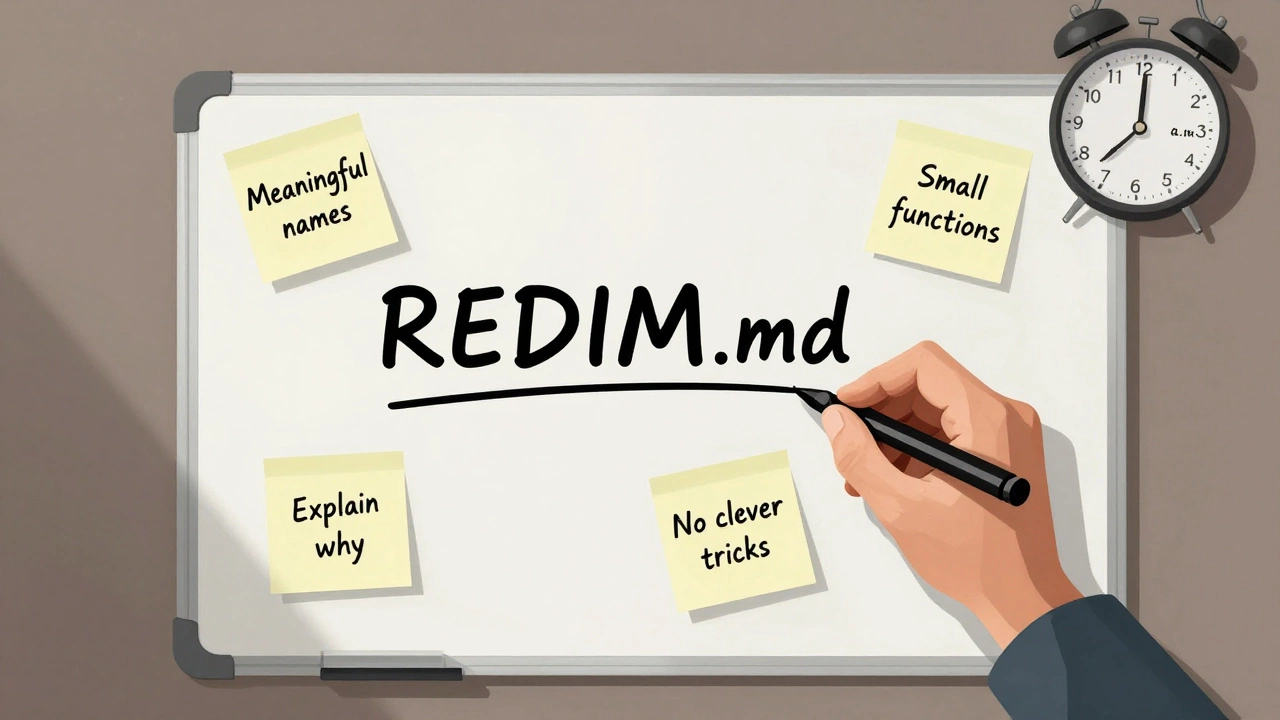
- Meaningful variable names (not
i,temp, ordata) - Consistent naming patterns (camelCase, snake_case-pick one and stick to it)
- Small functions that do one thing
- Logical grouping of related code
- Comments that explain why, not what (the code already shows the what)
Real-World Consequences of Ignoring This Rule
In 2023, a major Canadian bank had to shut down its online payment system for 14 hours because a single line of code broke. The issue? A developer had used a variable named flag across 12 different modules. No one knew what it meant anymore. No one dared to change it. When a new engineer tried to fix a bug, they accidentally flipped the wrong flag. The system crashed.
That wasn’t a bug in logic. It was a failure of communication.
At a startup in Toronto, a team spent six weeks rewriting a feature because the original code was so tangled they couldn’t figure out how it worked. The original coder had left months earlier. No documentation. No comments. Just a mountain of clever tricks that made sense only to him.
These aren’t rare cases. They happen every day. According to a 2024 study by the IEEE, 68% of software maintenance time is spent trying to understand existing code-not fixing bugs or adding features.
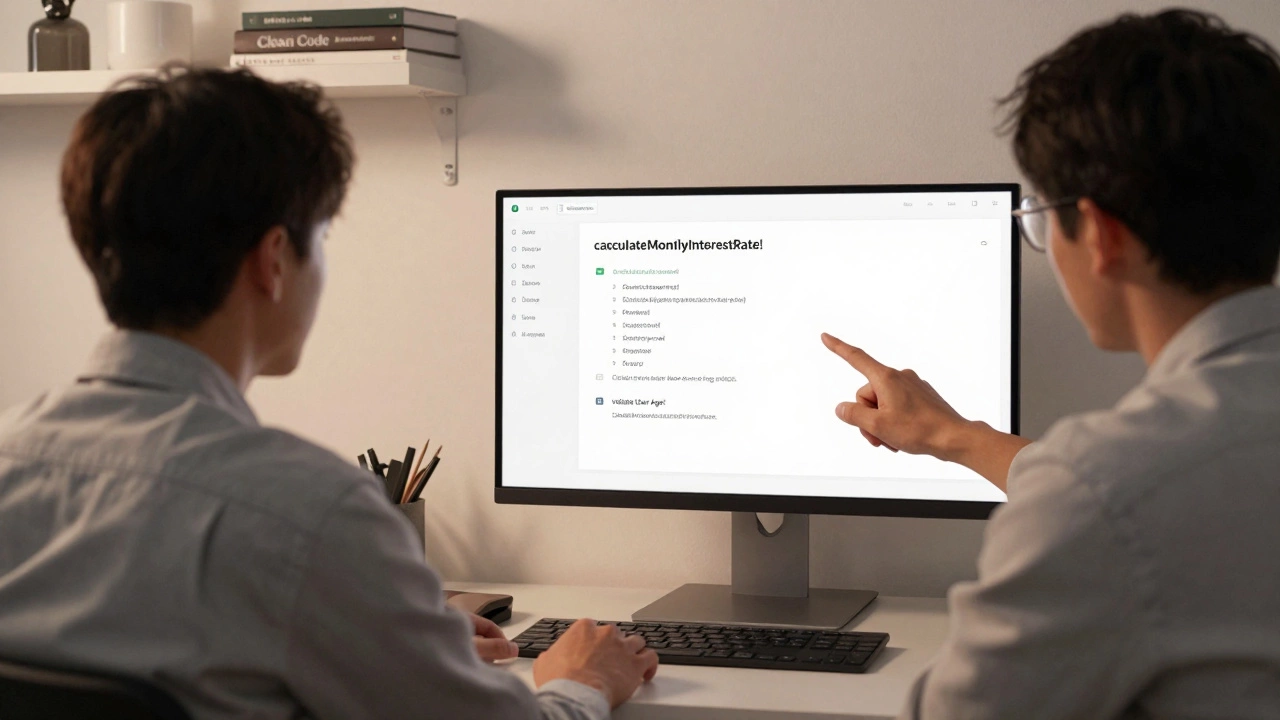
How to Train Yourself to Write Readable Code
Readable code isn’t magic. It’s a habit. Here’s how to build it:
- Read other people’s code daily. Open-source projects on GitHub are goldmines. Look at well-known projects like Django, React, or Linux. Notice how they name things. Notice how they structure files. Notice how they avoid cleverness.
- Write code like you’re explaining it to a 16-year-old. If you can’t explain what a function does in plain English, it’s too complex.
- Force yourself to rename everything. Before you commit code, go through every variable and function name. Ask: “If I saw this name in a new project, would I know what it does without looking?” If not, change it.
- Use code reviews as learning tools. When someone says, “I don’t get this,” don’t defend it. Ask, “How would you rewrite it?” You’ll learn more from that than from any tutorial.
- Set a “no clever code” rule. If you’re proud of how “smart” your solution is, you’re probably doing it wrong. The best code looks boring.
What Happens When Everyone Follows This Rule?
Teams move faster. Onboarding takes days, not weeks. Bugs get caught before they ship. Codebases stay alive for years instead of becoming technical debt nightmares.
At a mid-sized SaaS company in Vancouver, engineers started enforcing a simple rule: no code gets merged unless another developer can explain what it does in under 30 seconds. Within six months, their deployment failures dropped by 70%. Their average time to fix production issues went from 4 hours to 45 minutes.
That’s the power of clarity.
It’s Not About Being Perfect-It’s About Being Considerate
You don’t have to write perfect code. You don’t need to follow every style guide. You don’t even need to use the latest tools.
You just need to remember: someone else will have to live with what you write. Maybe it’s your teammate. Maybe it’s you, six months from now, bleary-eyed at 2 a.m., trying to fix a bug you didn’t even know you made.
Good coding isn’t about showing off your skills. It’s about respecting the people who come after you. It’s about leaving the code better than you found it.
That’s the golden rule.
What About Automated Tools and Linters?
Tools like ESLint, Prettier, and Black help. They enforce spacing, naming, and structure. But they can’t make your code understandable.
A linter will tell you to rename x to userName. But it won’t tell you if userName should even exist-or if you’re storing the wrong data in the first place.
Tools support clarity. They don’t create it. You do.
What’s the Most Common Mistake New Coders Make?
They write code for the computer. They think the machine is the audience. It’s not. The machine doesn’t care if your variables are named a1 or totalUserCount. It runs the same either way.
The audience is the human. Always.
Is the golden rule of coding the same for all programming languages?
Yes. Whether you’re writing Python, JavaScript, Java, or Rust, the goal is the same: make your code easy for other people to read and understand. The syntax changes, but the principle doesn’t. A well-named variable in Python is just as valuable as a well-named function in C++. The machine doesn’t care. The human does.
Does this rule apply to solo developers too?
Absolutely. Solo developers often think they won’t need to share their code. But even if you’re the only person working on a project, you’ll come back to it weeks or months later. You’ll forget what you were thinking. You’ll make changes that break things because you didn’t remember why something was written a certain way. Writing readable code for your future self isn’t optional-it’s essential.
Can clean code slow down development at first?
Yes, initially. Naming things properly, breaking functions into smaller pieces, and writing clear comments takes more time upfront. But that time pays off immediately in fewer bugs, easier debugging, and faster onboarding. In the long run, clean code saves hours every week. Teams that skip this step end up spending more time fixing messes than building new features.
What’s the difference between readable code and commented code?
Readable code doesn’t need many comments. Commented code often hides bad design. If you need a comment to explain what a function does, the function name is probably wrong. If you need a comment to explain why a line exists, that’s useful-but it should be rare. Good code says what it does. Good comments explain why it does it. Don’t use comments to fix bad code. Fix the code instead.
Is there a book or resource that teaches this?
Yes. "Clean Code" by Robert C. Martin is the most cited book on this topic. It’s not about syntax or frameworks-it’s about thinking like a professional developer. Another great resource is "The Pragmatic Programmer" by Andrew Hunt and David Thomas. Both books focus on writing code that lasts, not code that impresses.
What Should You Do Next?
Start small. Pick one piece of code you wrote this week. Go through it line by line. Ask yourself: “If someone else saw this, would they get it without asking?”
Then rename one variable. Break one long function into two. Add one clear comment explaining why something exists.
That’s it. That’s how you start living the golden rule.