Distance Education Eligibility Checker
Is This Distance Education?
Check if your learning opportunity meets the criteria for legitimate distance education based on the article.
Enter your information above and click "Check Eligibility" to see if this qualifies as distance education.
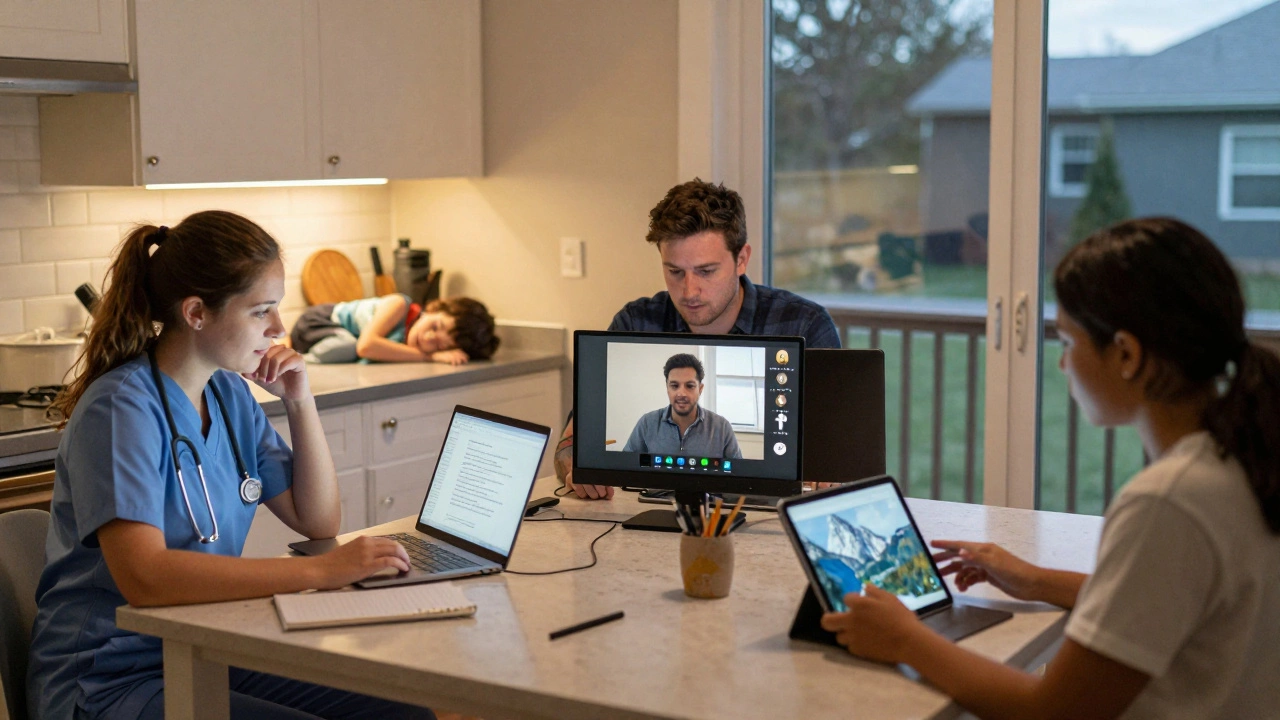
When you hear the term distance education, you might picture someone sitting at a kitchen table with a textbook and a stack of mailed assignments. That’s the old version. Today, distance education looks completely different - and it’s not just for people who can’t go to campus. It’s a fully recognized, flexible, and often high-quality way to learn, whether you’re working full-time, living in a rural area, or balancing family responsibilities.
What Exactly Counts as Distance Education?
Distance education is any form of learning where the student and instructor are not physically in the same place. That’s it. No fancy jargon. No hidden rules. The key is physical separation - not technology. You can do distance education with mailed packets, phone calls, video recordings, or live Zoom sessions. What matters is that you’re not in the same room as your teacher on a regular basis.
It’s not the same as homeschooling. In homeschooling, parents design and deliver the curriculum. In distance education, the curriculum comes from an accredited institution - like a university, college, or certified training provider. You’re enrolled in a program. You get grades. You earn credits or certificates that are officially recognized.
And yes, it includes online courses. But not every online course is distance education. If you’re watching a free YouTube tutorial on how to fix a leaky faucet, that’s self-directed learning. If you’re taking a 12-week course through the University of Toronto that requires assignments, exams, and a final grade, that’s distance education.
How It Works Today
Modern distance education uses a mix of tools to keep students engaged and on track:
- Learning Management Systems (LMS): Platforms like Canvas, Moodle, or Blackboard host lectures, quizzes, discussion boards, and assignment submissions.
- Synchronous sessions: Live video classes where you log in at a set time - just like a real classroom, but from your couch.
- Asynchronous materials: Pre-recorded videos, reading PDFs, podcasts, or interactive modules you can complete on your own schedule.
- Virtual labs and simulations: For science, engineering, or healthcare programs, students use digital tools to practice experiments or procedures.
- Proctored exams: Some programs use online exam platforms with webcam monitoring or require you to visit a local testing center.
Many universities now offer hybrid degrees - part in-person, part online. But if 50% or more of your coursework happens remotely, it’s still classified as distance education.
Who Uses It - And Why?
It’s not just stay-at-home parents or people in remote towns. Here are real examples from 2026:
- A nurse in northern Ontario takes a part-time Master’s in Public Health through a university in British Columbia while working night shifts.
- A single dad in Regina enrolls in a coding bootcamp that offers evening live classes and recorded lectures so he can help his kids with homework before studying.
- A small business owner in Newfoundland completes a digital marketing certificate from a U.S.-based institution because local options don’t cover the tools they need.
- A high school student in rural Manitoba takes Advanced Placement courses through distance education because their school doesn’t offer them.
These aren’t exceptions. They’re the norm. According to Statistics Canada’s 2025 education survey, over 1.2 million Canadians were enrolled in distance education programs last year - up 22% from 2023. That’s more than the entire population of Halifax.
What Doesn’t Count
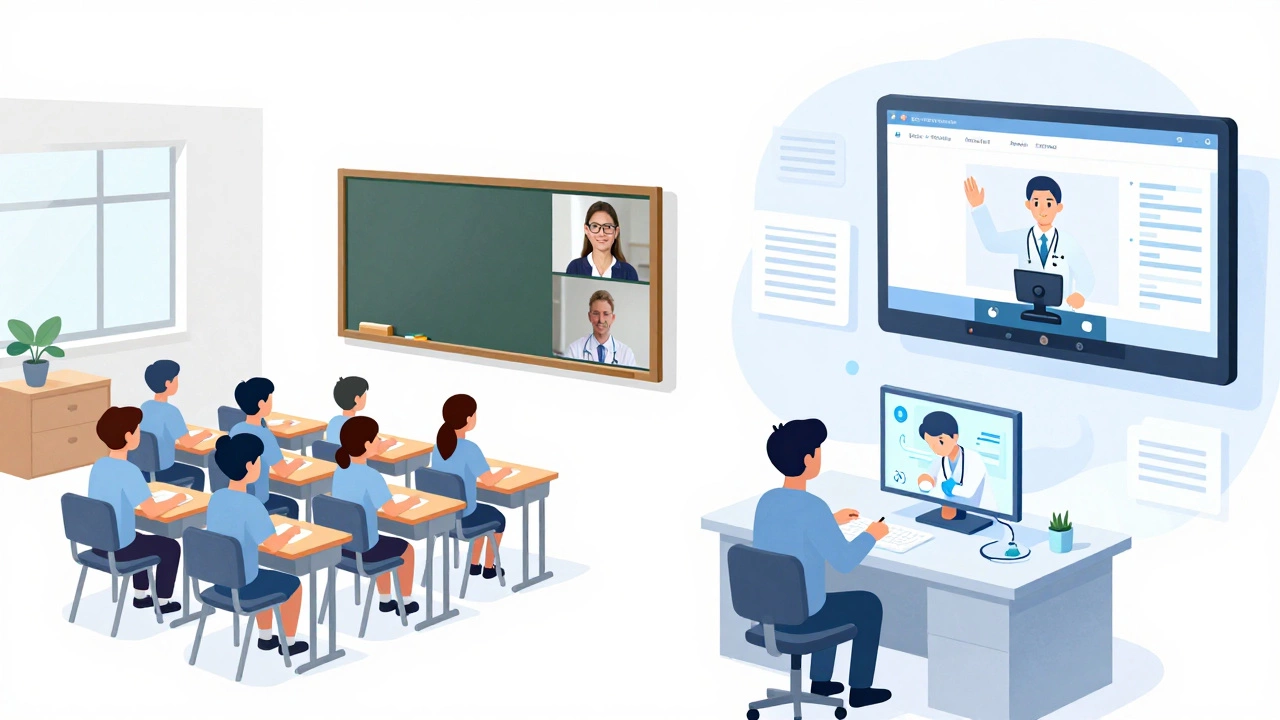
Not everything that happens online is distance education. Here’s what’s excluded:
- Self-paced free courses (like Coursera’s free audit tracks without certification).
- Corporate training videos that don’t lead to an official credential.
- YouTube tutorials or blog-based learning.
- Online tutoring for one subject, like math help from a private tutor.
The difference? Accreditation. If there’s no institution behind it - no transcript, no credit, no official recognition - it’s learning, but not distance education.
Accreditation Matters
Not all distance education programs are equal. Some are run by shady operators with no oversight. That’s why checking accreditation is non-negotiable.
In Canada, look for programs approved by provincial authorities - like Ontario’s Ministry of Colleges and Universities - or nationally recognized bodies like the Canadian Council for Accreditation of Teacher Education (CCATE) or provincial quality assurance agencies. In the U.S., regional accreditors like the Higher Learning Commission or Middle States Commission are trusted.
If a school says it’s “accredited” but can’t name the specific agency, walk away. You don’t want to spend thousands on a credential no employer or other school will recognize.
How It Compares to Traditional Learning
| Feature | Distance Education | Traditional Classroom |
|---|---|---|
| Location | Anywhere - home, work, travel | Must be physically present on campus |
| Schedule Flexibility | Often asynchronous; learn on your time | Fixed class times |
| Interaction | Discussion boards, video calls, email | In-person lectures, group work, office hours |
| Cost | Often lower tuition, no commute or housing fees | Higher tuition, plus living and transportation costs |
| Resources | Digital libraries, online labs, 24/7 tech support | On-campus libraries, labs, in-person tutoring |
One big myth: distance education is easier. It’s not. You need strong self-discipline. You have to manage your time. You can’t just show up to class and hope you’ll catch up. But for many, it’s more effective because they can learn at their own pace, revisit lectures, and fit school around life - not the other way around.
Recognized Credentials
What can you earn through distance education? Everything:
- High school diplomas and equivalency certificates
- College diplomas and certificates
- Undergraduate degrees (Bachelor’s)
- Graduate degrees (Master’s, PhD)
- Professional certifications (IT, healthcare, project management)
Employers now treat online degrees from accredited institutions the same as on-campus ones. A 2024 survey by LinkedIn found that 87% of hiring managers view online degrees from recognized schools as equally credible. Top companies like Google, Apple, and IBM now hire candidates with fully online degrees without asking for proof they attended campus.
Common Misconceptions
Let’s clear up a few myths:
- Myth: Distance education is only for people who failed in traditional schools.
Truth: Many students choose it because they’re high achievers who need flexibility - not because they couldn’t handle campus. - Myth: You’re alone and isolated.
Truth: Most programs have active student communities, peer study groups, and dedicated academic advisors. - Myth: It takes longer to graduate.
Truth: Many programs offer accelerated tracks. Some students finish degrees faster than on-campus peers because they take courses year-round.
What’s Next?
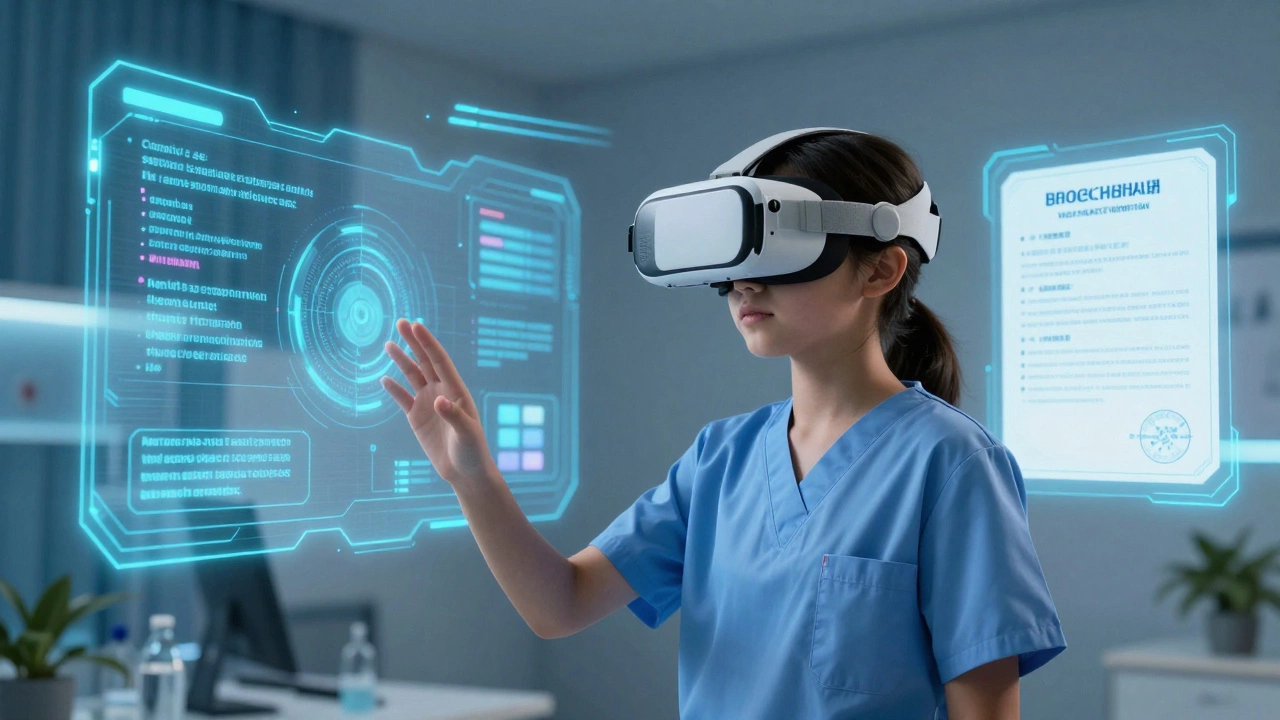
Distance education is evolving fast. In 2026, AI tutors are being integrated into LMS platforms to give personalized feedback. Virtual reality labs let nursing students practice emergency procedures in immersive 3D environments. Blockchain-based transcripts are making credential verification instant and tamper-proof.
It’s no longer a backup plan. It’s a mainstream path - one that’s reshaping who gets access to education and how they learn.
Is distance education the same as online learning?
Online learning is a method used within distance education, but they’re not the same. Distance education refers to any learning where student and teacher are separated by distance - whether by mail, phone, video, or internet. Online learning specifically means using the internet to deliver instruction. So all online learning is distance education, but not all distance education is online. For example, a student receiving mailed textbooks and taking exams at a local library is still in a distance education program - just not an online one.
Can I get a degree entirely through distance education?
Yes. Many accredited universities offer full degree programs - from associate’s to PhDs - completely online. Institutions like Athabasca University in Canada, the University of the People in the U.S., and the Open University in the UK are designed specifically for remote learners. These degrees are legally recognized and carry the same weight as on-campus degrees. Employers and graduate schools treat them identically, as long as the institution is properly accredited.
Do I need to be tech-savvy to succeed in distance education?
You don’t need to be a tech expert, but you should be comfortable using basic digital tools. Most programs require you to log into a learning platform, submit assignments as PDFs, join video calls, and use email. If you can use Zoom, upload a file, or send an email with an attachment, you’re already set. Most schools offer free orientation sessions and tech support to help you get started - even if you’ve never used an LMS before.
Are distance education programs more affordable?
Often, yes. Without the costs of commuting, housing, or campus fees, many distance programs cost significantly less than traditional ones. For example, a full-time undergraduate program at a Canadian university might cost $8,000 per year on campus, but only $5,200 when taken entirely online. Some programs also offer payment plans, scholarships, or reduced tuition for residents of certain provinces. Always compare the total cost - including hidden fees - before enrolling.
How do I know if a distance education program is legitimate?
Check three things: First, confirm the institution is accredited by a recognized agency - like provincial education ministries or national bodies. Second, search for reviews from current or former students on trusted forums. Third, contact the school directly and ask for their accreditation documentation. If they hesitate or can’t provide it, walk away. Avoid schools that promise degrees for a flat fee with no coursework, or that use names similar to well-known universities. Legitimate programs require regular assignments, exams, and interaction - not just payment.