
MBA Cost-Benefit Calculator
Calculate Your MBA ROI
See if an MBA makes financial sense for your specific situation. Based on data from the article: average debt of $120,000, 2-year opportunity cost, and varying salary returns by industry.
Your Current Situation
MBA Program Details
Millions of people chase an MBA every year, convinced it’s the golden ticket to a higher salary, a better job, or a leadership role. But what if the biggest hurdle isn’t getting in - it’s what happens after you graduate? The truth is, an MBA isn’t the universal upgrade it’s made out to be. For many, it’s a financial strain, a career detour, or even a dead end. Let’s cut through the hype and look at the real downsides - the ones schools rarely talk about.
The Price Tag Is Staggering
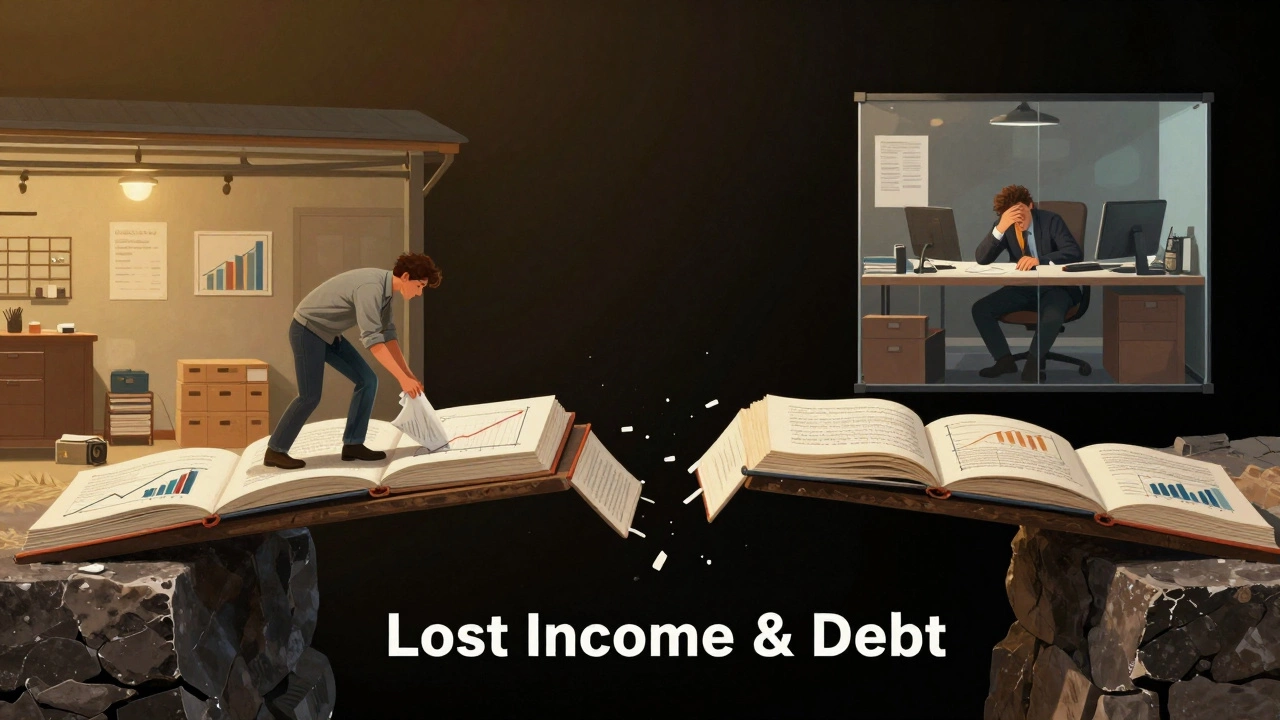
A top MBA program in the U.S. or Europe can cost over $100,000 when you add tuition, housing, books, and lost income. In Canada, even a respected program like Rotman or Sauder runs close to $70,000 for international students. That’s not a loan. That’s a decade’s worth of rent in Toronto. And if you’re not coming from wealth, you’re likely borrowing against your future. The average MBA grad in 2025 carries $120,000 in student debt. That’s more than most people make in their first five years after undergrad.And here’s the kicker: not everyone gets a raise. A 2024 survey by the Graduate Management Admission Council found that 38% of MBA graduates didn’t see a salary increase after graduation. Some even took pay cuts to switch industries. If your goal was financial gain, you might be worse off than before you enrolled.
You’re Giving Up Two Years of Earning Potential
Most full-time MBA programs are two years long. That means you’re not just paying tuition - you’re walking away from a steady paycheck. If you were making $65,000 a year before school, you’re losing $130,000 in income alone. Add in living costs, and you’re out over $200,000 before you even graduate. That’s not an investment. That’s a gamble.And what if you don’t land a job right away? Recession cycles hit MBA cohorts hard. In 2023, 17% of graduates from top U.S. schools were still unemployed six months after graduation. That’s not a glitch. That’s a pattern. The job market doesn’t pause for your degree.
It Doesn’t Guarantee Leadership
Many people think an MBA turns them into a manager. It doesn’t. Leadership isn’t taught in case studies. It’s earned through experience, trust, and results. I’ve met MBA grads who can recite Porter’s Five Forces but can’t lead a team through a crisis. Companies don’t promote people because they have an MBA. They promote people who solve problems, build relationships, and deliver outcomes.Real leadership roles go to those who’ve been in the trenches - not those who sat in a classroom analyzing Apple’s supply chain. An MBA might get your foot in the door at a big firm, but it won’t keep you there if you can’t deliver.
The Network Isn’t Always Worth It
One of the biggest selling points of an MBA is the alumni network. But networks don’t work like magic. You don’t just show up at a networking event and land a job. You have to build real relationships over time. And if you’re not naturally connected - if you’re from a non-target school, or a non-traditional background - you’re often treated as an outsider.At many top programs, 60% of internships and full-time roles go to students who already had corporate ties before enrolling. That’s not access. That’s exclusion dressed up as opportunity. The network only helps if you’re already on the inside.
Specializations Are Often Useless
MBA programs push specializations: finance, marketing, entrepreneurship, supply chain. But here’s the problem - most of these are just rebranded undergrad courses. A marketing specialization doesn’t make you a better marketer. It just gives you a certificate that says you took a class on consumer behavior.Employers care about what you’ve done, not what you’ve studied. I’ve seen people with an MBA in finance who couldn’t build a basic financial model. Meanwhile, someone without a degree but with five years of hands-on experience in corporate finance got hired at twice the salary.
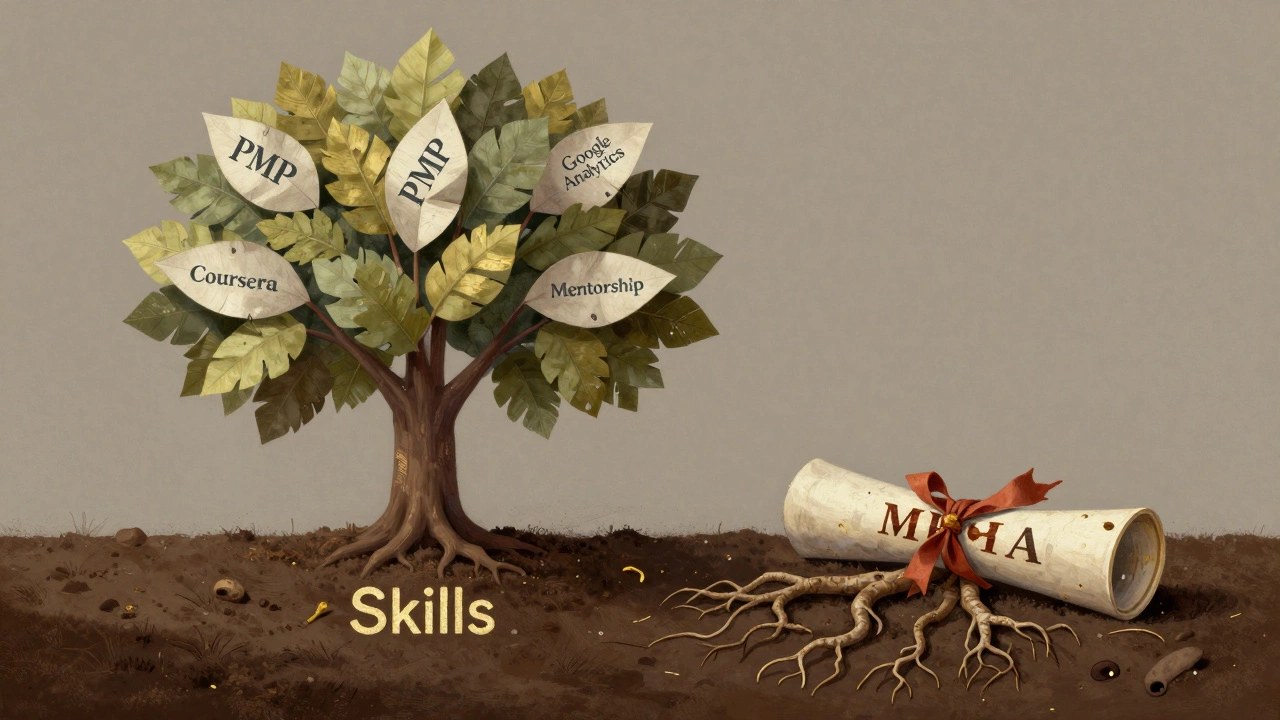
Specializations give you a label. They don’t give you skills. And skills are what actually get you hired.
It’s Not the Only Path to Advancement
You don’t need an MBA to become a director, VP, or CEO. Look at the leaders at companies like Shopify, Zoom, or even Shopify’s early team - most never got one. In tech, manufacturing, and even finance, companies are hiring based on performance, not pedigree.Canada’s own Shopify, which now employs over 7,000 people, rarely asks for MBAs in its leadership hiring. They look for problem solvers. They look for people who ship products, not people who write business plans.
Online certifications, bootcamps, and even self-directed learning are now cheaper, faster, and often more relevant than a two-year MBA. Platforms like Coursera and edX offer courses from Wharton and MIT for under $1,000. You can learn strategy, analytics, and leadership without going into debt.
The Dropout Rate Is Higher Than You Think
Few people talk about this, but MBA programs have a real dropout problem. In the U.S., 10-15% of students leave before finishing - not because they failed, but because they couldn’t handle the cost, the pressure, or the realization that it wasn’t worth it. In Canada, the rate is lower but still significant, especially among international students who can’t work off-campus.Imagine spending 18 months in debt, missing out on promotions, and then walking away with nothing. That’s not a rare story. It’s a quiet epidemic.
It Can Hurt Your Career More Than Help
Sometimes, an MBA makes you overqualified for the roles you actually want. I know a woman who worked in nonprofit communications for six years. She got her MBA to move into management. After graduation, she couldn’t get back into nonprofit roles - they saw her as too corporate. She ended up in a corporate communications job she hated, just to pay off her loans.Same goes for entrepreneurs. Many MBA grads try to start businesses after school, but they’re often too risk-averse, too process-driven, and too focused on metrics to take the bold moves startups need. The MBA teaches you to minimize risk. Startups thrive on taking it.
What Should You Do Instead?
If you’re thinking about an MBA because you want to advance, here are better options:- Get a specialized certification - like PMP, CFA, or Google Analytics
- Take online courses in leadership or data analysis from top schools
- Ask for stretch assignments at your current job
- Find a mentor who’s already in the role you want
- Build a portfolio of projects you can show, not just a degree you can name-drop
These cost less, take less time, and give you real skills - not just a piece of paper.
When an MBA Actually Makes Sense
I’m not saying it’s always a bad idea. If you’re switching industries - say from engineering to consulting - or moving from a small company to a global firm, an MBA can be the bridge. If your employer pays for it, it’s a no-brainer. If you’re already in a high-paying job and want to climb faster, it might be worth it.But if you’re doing it because you feel stuck, or because everyone else is doing it, or because you think it’s the only way - then you’re not investing in your future. You’re running from your present.
Is an MBA worth the cost?
Only if you’re switching industries, your employer is paying, or you’re targeting a field where an MBA is required - like investment banking or top-tier consulting. For most other roles, the return on investment is poor. The average MBA grad takes 7-10 years to break even on the cost. Many never do.
Can you get a good job without an MBA?
Absolutely. Many of the fastest-growing roles - product managers, data analysts, operations leads - don’t require an MBA. Companies like Google, Amazon, and Shopify hire based on skills, not degrees. A strong portfolio, proven results, and networking often matter more than a diploma.
Do MBA graduates earn more in Canada?
On average, yes - but only for certain roles. Graduates from top Canadian schools like Rotman or Ivey see a 30-50% salary bump in finance, consulting, and corporate strategy. But for roles in tech, nonprofits, or small businesses, the pay difference is often negligible. And when you factor in debt and lost income, the net gain is much smaller than it sounds.
Is an online MBA better than a traditional one?
It depends. Online MBAs from reputable schools like UBC or Queen’s are respected and far cheaper. But they don’t offer the same networking, recruiting events, or campus culture. If you’re looking for career switching, the traditional program still has the edge. If you’re upskilling while working, online is the smarter choice.
What’s the biggest mistake people make before getting an MBA?
They assume it’s a shortcut to success. It’s not. It’s a tool - and like any tool, it only works if you know how to use it. The biggest mistake is going in without a clear goal. If you don’t know exactly what you want to do after, you’ll end up lost, broke, and disappointed.