
English Skills Balance Calculator
Rate your current confidence level (1-10) in each of the four core English skills to identify areas for improvement and get a personalized practice strategy.
Analysis Result
Recommended Strategy
Imagine you are in a job interview. You know the technical answers perfectly. But when the interviewer asks a follow-up question, your mind goes blank. Or maybe you’re watching a movie with friends, and everyone laughs at a joke you didn’t understand because of a slang term or fast pronunciation. These moments are frustrating. They happen not because you lack intelligence, but because one of your core English language skills needs work.
Many learners focus only on vocabulary lists or grammar rules. They memorize words like 'ubiquitous' or 'ephemeral' but still struggle to order coffee confidently or write a clear email. Language is not just about knowing definitions; it is about communication. To truly master English, you need to balance four specific pillars: Listening, Speaking, Reading, and Writing. Each skill supports the others, creating a cycle of improvement.
The Foundation: Active Listening
We often think of listening as passive. You sit there, and sounds enter your ears. But effective listening is an active process. It requires decoding sounds, understanding context, and interpreting tone. If you cannot hear the difference between 'ship' and 'sheep,' or if you miss the sarcasm in a colleague’s voice, communication breaks down.
To improve this skill, you must expose yourself to diverse accents and speeds. Native speakers do not always enunciate clearly. They link words together ("want to" becomes "wanna") and drop sounds. Your brain needs training to recognize these patterns.
- Use Podcasts with Transcripts: Start with podcasts designed for learners, then move to native content. Listen once without text to gauge comprehension. Listen again with the transcript to identify missed words.
- Shadowing Technique: Play a short audio clip. Pause after every sentence and repeat it exactly, mimicking the speaker’s intonation and speed. This connects listening directly to speaking muscles.
- Watch Unscripted Content: Movies have scripts. Real life does not. Watch interviews, vlogs, or news segments where people speak spontaneously. This prepares you for real-world conversations.
A common mistake is relying only on subtitles. Subtitles allow your eyes to read while your ears relax. This creates a false sense of fluency. Try turning them off, or use English subtitles instead of your native language to force your brain to process the audio.
The Output: Confident Speaking
Speaking is where most learners feel vulnerable. It is the only skill that happens in real-time. You cannot edit your speech before saying it. Fear of making mistakes often leads to silence, which stalls progress. The goal here is not perfection; it is clarity and flow.
Fluency is different from accuracy. Accuracy means using correct grammar. Fluency means keeping the conversation moving. In daily interactions, people care more about whether they understood you than whether you used the perfect past perfect tense. Prioritize getting your message across.
| Aspect | Accuracy-Focused Learner | Fluency-Focused Learner |
|---|---|---|
| Mistake Reaction | Stops to self-correct immediately | Continues speaking, fixes later if needed |
| Vocabulary Use | Uses complex, rare words | Uses simple, high-frequency words |
| Confidence Level | Low due to fear of errors | Higher due to focus on connection |
| Best For | Academic exams, formal writing | Daily conversation, networking |
To build speaking confidence, you need low-stakes practice environments. Talking to yourself is a valid start. Describe your day out loud while cooking. Narrate what you see on your walk. This builds the neural pathways between thought and speech without the pressure of judgment.
When interacting with others, join language exchange groups or online communities. Apps like Tandem or HelloTalk connect you with native speakers who want to learn your language. Offer to help them with your native tongue in exchange for English practice. This reciprocity reduces anxiety because both parties are learners.

The Input: Strategic Reading
Reading feeds your brain with vocabulary and sentence structures. It is how you internalize grammar rules naturally. Instead of memorizing conjugation tables, you see how verbs change in context. However, many learners read inefficiently. They look up every unknown word, which destroys flow and enjoyment.
Adopt the concept of "comprehensible input." This means reading material that is slightly above your current level but still understandable. If you understand 70-80% of the text, you can infer the meaning of the remaining words from context. This inference skill is crucial for real-world communication.
- Graded Readers: These are books written specifically for language learners at different levels. They use controlled vocabulary to ensure you don’t get overwhelmed.
- News Articles: Sites like BBC Learning English or News in Levels provide current events simplified for learners. This keeps your knowledge relevant to today’s world.
- Fiction vs. Non-Fiction: Fiction helps with emotional nuance and dialogue. Non-fiction helps with structure and factual vocabulary. Mix both for balanced growth.
Speed reading is less important than consistent reading. Aim for fifteen minutes daily rather than two hours once a week. Consistency builds habit. Over time, you will notice that you stop translating in your head and start thinking directly in English concepts.
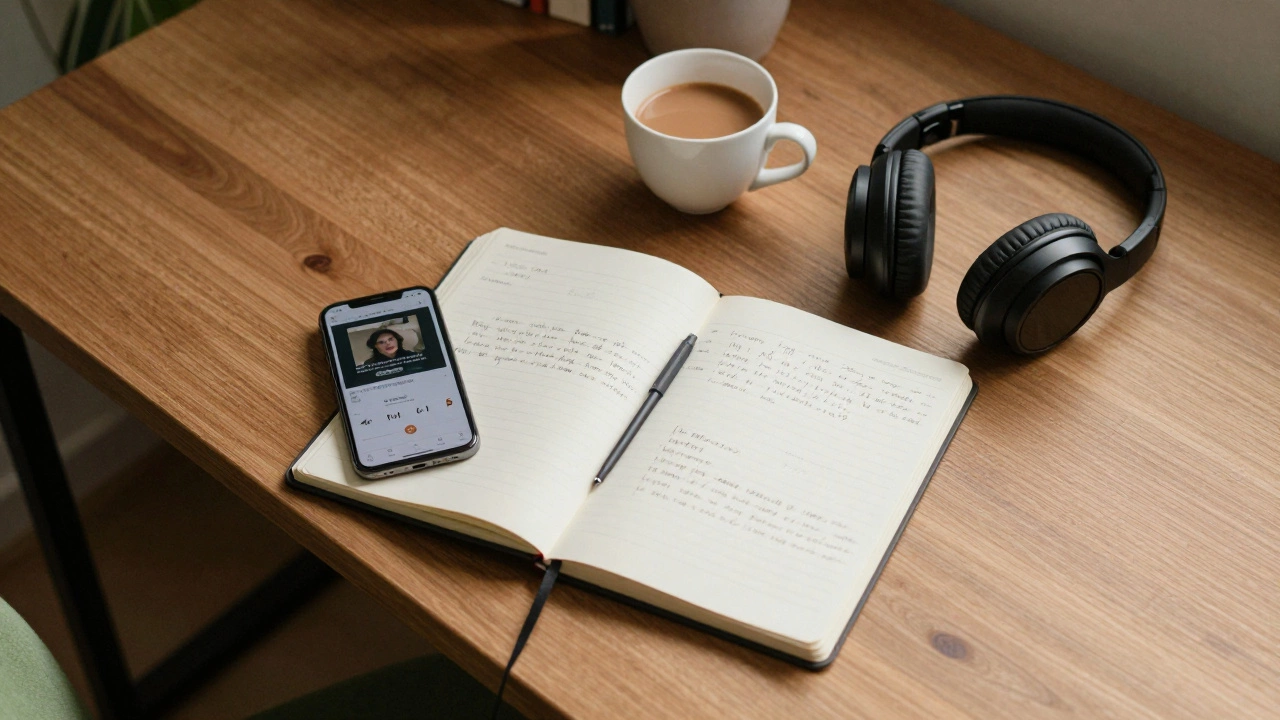
The Precision: Clear Writing
Writing allows you to slow down and organize your thoughts. It is the skill where you can edit and refine. While speaking values flow, writing values precision and structure. Good writing demonstrates that you understand logic, coherence, and audience awareness.
Start with journaling. Write three sentences every night about your day. This seems simple, but it forces you to recall vocabulary and construct complete sentences. As you improve, expand to paragraphs. Describe a recent event, explain an opinion, or summarize a book.
Feedback is essential for writing. Unlike speaking, where feedback is immediate (confused looks), writing feedback is delayed. Use tools like Grammarly or Hemingway Editor to catch basic errors. But for deeper improvements, seek human review. Post your writing on forums like Reddit’s r/EnglishLearning or hire a tutor on platforms like iTalki. Ask them to focus on one area at a time, such as punctuation or paragraph transitions, so you are not overwhelmed by corrections.
Emails are another practical writing exercise. Practice writing professional emails to colleagues or customer support. Note the formal tone, subject lines, and clear calls to action. This bridges the gap between casual learning and professional application.
Integrating the Four Skills
You cannot isolate these skills completely. They overlap constantly. When you listen to a podcast, you are also practicing pronunciation (speaking) when you shadow. When you read an article, you are building vocabulary for your writing. The key is to create activities that combine multiple skills.
For example, try this weekly routine: 1. Listen to a ten-minute TED Talk. 2. Read the transcript. 3. Summarize the main points in writing (three bullet points). 4. Record yourself explaining the summary aloud. This single activity engages all four domains. It reinforces the content through multiple senses, making retention stronger. It also highlights weaknesses. If you struggle to summarize, your comprehension (listening/reading) might be weak. If you stumble while recording, your fluency (speaking) needs work.
How long does it take to improve all four English skills?
There is no fixed timeline, as it depends on your starting level and consistency. However, noticeable improvements in confidence and comprehension can occur within 3 to 6 months of daily practice. Mastery is a lifelong journey, but functional fluency for daily tasks is achievable relatively quickly with focused effort on high-frequency vocabulary and phrases.
Which English skill is the hardest to learn?
Most learners find speaking the most challenging due to psychological barriers like fear of judgment and the pressure of real-time response. Listening is also difficult because of varied accents and connected speech. Writing tends to be easier for beginners because it allows time for correction, while reading benefits from visual cues.
Can I improve my English without a teacher?
Yes, self-study is highly effective with the right resources. Online courses, apps, podcasts, and language exchange partners can replace traditional classroom settings. However, a teacher provides personalized feedback and structure, which can accelerate progress and prevent bad habits from forming.
Is it better to focus on one skill at a time?
It is generally better to integrate skills. Focusing solely on grammar (writing/reading) may leave you unable to converse. Focusing only on speaking may lead to poor written communication. A balanced approach ensures that strengths in one area support weaknesses in another, leading to more natural proficiency.
What are the best free resources for practicing English?
Free resources include YouTube channels like English with Lucy or BBC Learning English, podcasts like "6 Minute English," and apps like Duolingo or HelloTalk. Public library websites often offer free access to audiobooks and e-books, which are excellent for listening and reading practice.