Digital Platform Strategy Selector
Select your primary goal for this training session to identify the optimal delivery model.
What is the main objective?
Facts & Compliance
Teaching rules, safety protocols, or factual information that must be standardized.
Soft Skills
Role-playing, negotiation, leadership, or handling difficult conversations.
Community Building
Creating a network of peers, troubleshooting together, and sharing diverse perspectives.
Complex Concepts
Deep technical topics requiring self-study followed by practical application or discussion.
Recommended Model:
Key Benefits
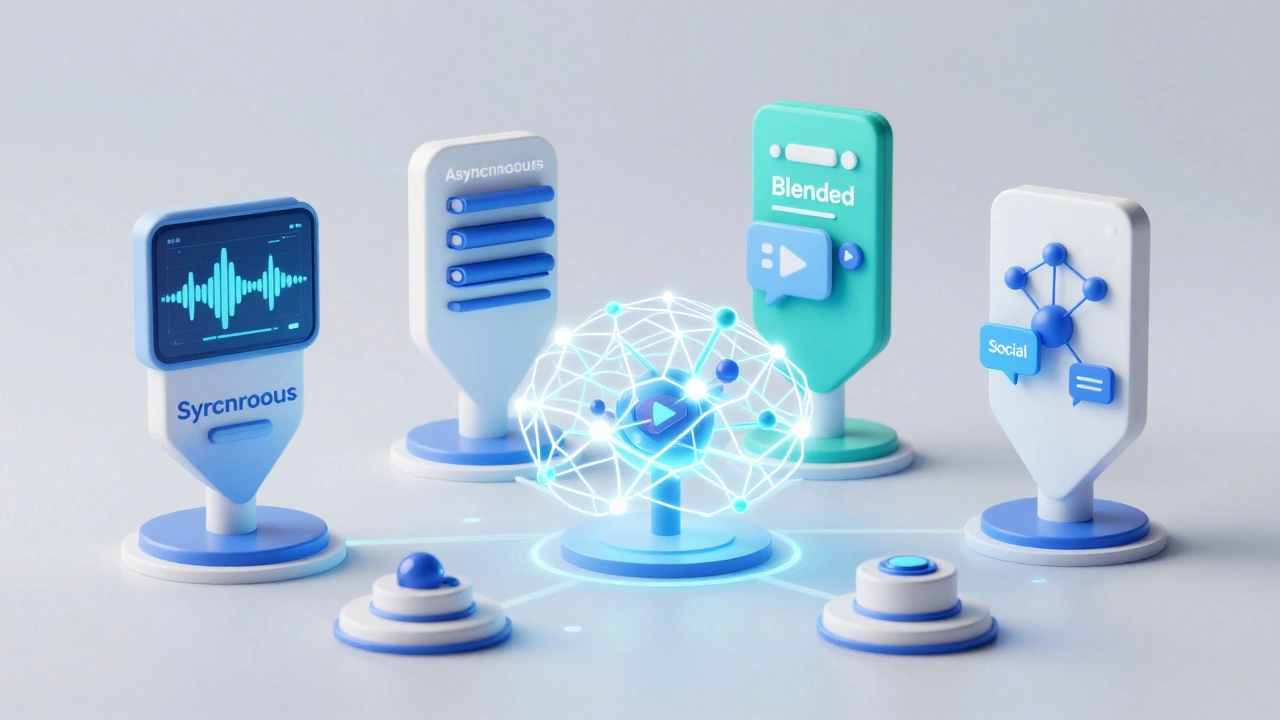
You’ve probably heard educators and corporate trainers talk about "the four digital platforms" or the "four modes of delivery." But if you ask five different people what they mean, you might get five different answers. It’s a messy term because it doesn’t refer to four specific websites like Zoom, Udemy, Coursera, and Blackboard. Instead, it refers to the four fundamental structures that define how digital education actually works.
Understanding these four pillars is crucial whether you are designing a course for your company, choosing an online degree, or just trying to figure out why your team hates mandatory webinars. These aren't just buzzwords; they are the architectural blueprints of modern knowledge transfer. Let’s break down exactly what they are, how they function, and which one fits your needs.
The Four Pillars of Digital Education Delivery
When experts categorize digital platforms, they usually split them by two axes: time (when does it happen?) and presence (where is everyone?). This creates four distinct models. Think of these as the operating systems of learning. Every app, software, or program you use falls into one of these buckets.
| Model | Time Factor | Interaction Level | Best For |
|---|---|---|---|
| Synchronous Live | Real-time | High (Instructor + Peers) | Complex discussions, soft skills |
| Asynchronous Self-Paced | On-demand | Low to Medium | Technical skills, compliance training |
| Blended/Hybrid | Mixed | Medium to High | K-12 schools, university degrees |
| Social/Collaborative | Continuous | Very High (Peer-to-Peer) | Community building, professional networks |
1. Synchronous Live Platforms: The Virtual Classroom
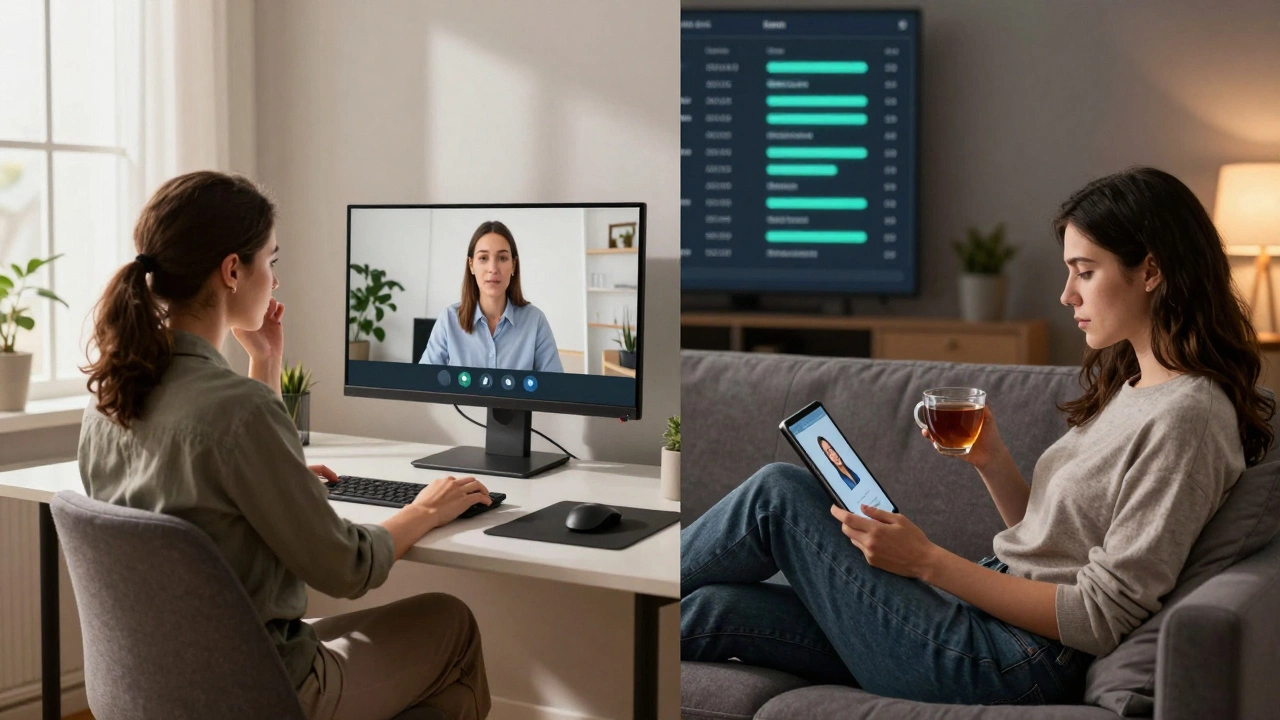
This is the model that feels most like "school." Everyone logs in at the same time. The instructor talks, and the students listen, ask questions, and participate via chat or video. If you’ve ever sat through a webinar or a live lecture on Zoom, you were using a synchronous platform.
Zoom is the dominant example of this category, but tools like Microsoft Teams and Google Meet also fit here. The core value proposition is immediacy. You have a question about a complex concept, and you can raise your hand (digitally) to get an answer right then and there. This reduces ambiguity significantly compared to reading a manual.
However, this model has a major flaw: rigidity. It requires scheduling coordination across time zones, which is a nightmare for global teams. It also suffers from "Zoom fatigue," a well-documented phenomenon where cognitive load increases due to constant eye contact and lack of physical movement. Use this model only when human interaction is non-negotiable, such as role-playing sales scenarios or debating ethical dilemmas.
2. Asynchronous Self-Paced Platforms: The Library Model
On the opposite end of the spectrum is asynchronous learning. Here, the content is recorded or written once, and learners consume it whenever they want. This is the backbone of the massive open online course (MOOC) industry. Platforms like Coursera or Udemy rely heavily on this structure.
The beauty of this model is scalability and flexibility. An instructor can record a lesson on Python programming once, and ten thousand people can watch it over the next decade without the instructor lifting a finger again. For the learner, it means you can pause, rewind, and take notes at your own speed. There is no pressure to perform live in front of others.
The downside? Completion rates are notoriously low. Without the accountability of a live class, procrastination takes over. Data from various ed-tech studies suggests that completion rates for self-paced courses often hover below 15%. To make this work, you need high production quality and strong internal motivation. It’s great for technical skills where you can practice alone, like coding or graphic design, but terrible for learning public speaking.
3. Blended or Hybrid Platforms: The Best of Both Worlds
If you think the first two models are too extreme, you’re not alone. Most effective educational programs today use a blended approach. This isn’t just throwing a few videos into a live meeting. It’s a deliberate mix designed to optimize engagement. For example, a university might assign pre-recorded lectures (asynchronous) so that class time (synchronous) is used entirely for group projects and problem-solving.
This model leverages the Flipped Classroom technique. Students digest the basic information on their own time, freeing up valuable live interaction for higher-order thinking tasks. Corporate training departments use this too: employees read the safety manual online (asynchronous) and then attend a brief workshop to practice emergency procedures (synchronous).
The challenge with blended learning is complexity. It requires robust technology infrastructure. You need a Learning Management System (LMS) like Moodle or Canvas that can host videos, track progress, and schedule live sessions seamlessly. If the tech fails, the experience fractures. But when it works, it respects the learner's time while maintaining community connection.
4. Social and Collaborative Platforms: The Network Effect
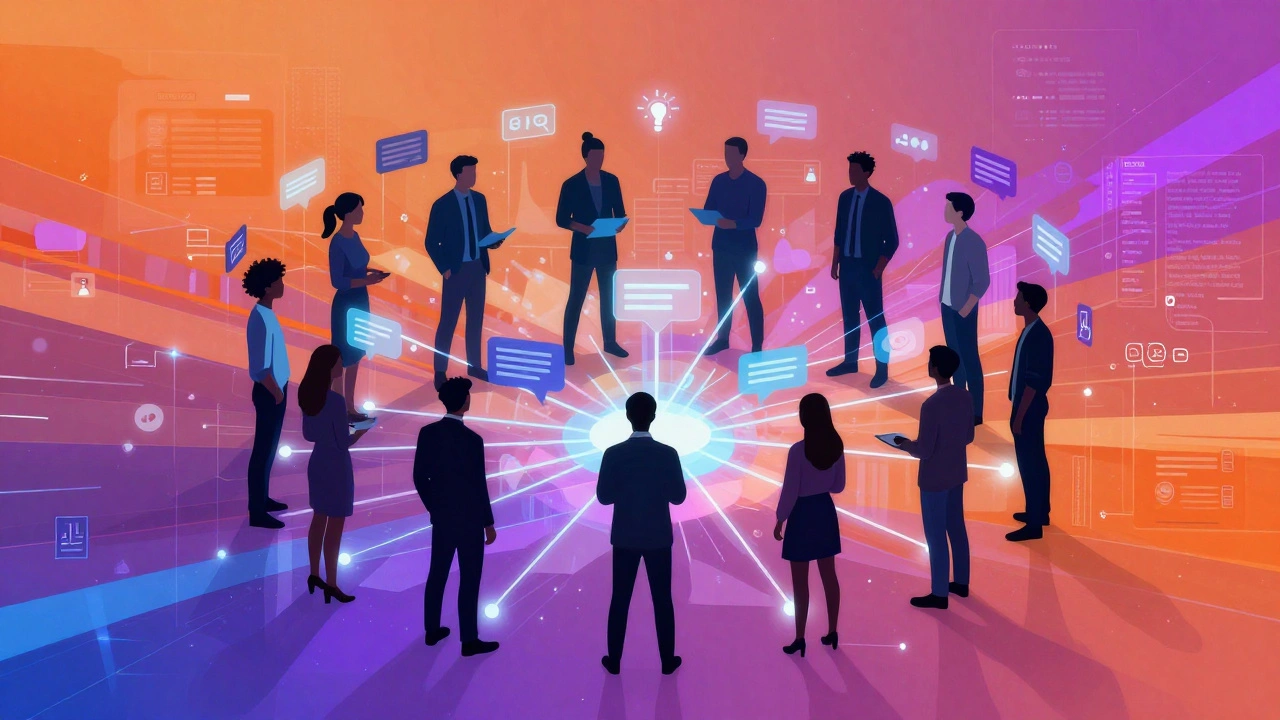
The fourth pillar is often overlooked but is increasingly critical. This model shifts the focus from the instructor to the peers. Learning happens through discussion, sharing, and co-creation. Think of platforms like Discord servers dedicated to coding, or Reddit communities where professionals troubleshoot issues together. Even LinkedIn Learning has social features, but pure social learning platforms prioritize interaction over content consumption.
In this model, knowledge is decentralized. No single expert holds all the answers. Instead, value comes from the diversity of perspectives. A developer stuck on a bug might find the solution in a forum post from someone in another country who faced the same issue last week. This mimics real-world professional environments where collaboration is key.
The risk here is misinformation. Without a central authority curating the content, bad advice can spread quickly. Moderation is essential. However, for soft skills, leadership, and niche professional topics, social platforms provide context that static videos cannot. They build a sense of belonging, which is a huge driver of long-term engagement.
How to Choose the Right Platform Structure
So, which one should you pick? It depends entirely on your goal. Are you trying to certify employees on compliance rules? Go asynchronous. It’s cheap, scalable, and easy to audit. Are you training managers to handle difficult conversations? Go synchronous. You need the nuance of real-time feedback. Are you launching a new product internally? Blend them. Send out info packs first, then hold a Q&A session.
Don’t fall into the trap of thinking newer is better. A simple PDF guide (asynchronous) is sometimes more effective than a flashy interactive module if the user just needs a quick reference. Always start with the learning objective, not the technology. Ask yourself: "Do they need to see me? Do they need to see each other? Or do they just need the facts?" The answer will point you to the right platform type.
Common Pitfalls in Digital Platform Adoption
Many organizations fail because they force a square peg into a round hole. Using a synchronous video call to deliver information that could have been an email is a waste of everyone’s time. Conversely, trying to teach empathy purely through text-based forums often leads to misunderstandings.
Another mistake is ignoring accessibility. A synchronous platform that doesn’t offer closed captions excludes hearing-impaired users. An asynchronous video without transcripts is useless for someone with dyslexia. Ensure your chosen platform supports diverse learning needs. Finally, don’t neglect the analytics. Modern platforms provide data on who watched what, how long they stayed, and where they dropped off. Use this data to refine your approach. If everyone quits the video at minute three, your intro is too boring. Fix it.
What is the difference between synchronous and asynchronous learning?
Synchronous learning happens in real-time, requiring participants to be present at the same time (e.g., live webinars). Asynchronous learning allows participants to access materials and complete tasks on their own schedule (e.g., pre-recorded videos).
Which digital platform is best for corporate training?
For compliance and factual knowledge, asynchronous platforms are best due to scalability. For soft skills and leadership development, synchronous or blended platforms are superior because they allow for real-time feedback and interaction.
Are free digital platforms effective for learning?
Yes, but they require more self-discipline. Free platforms often lack structured support and certification, leading to lower completion rates. However, for skill acquisition like coding or languages, free resources can be highly effective if the learner is motivated.
What is a blended learning model?
Blended learning combines synchronous (live) and asynchronous (self-paced) elements. It aims to balance the flexibility of online study with the engagement and accountability of face-to-face interaction.
How do I choose between Zoom and a Learning Management System (LMS)?
Use Zoom for live, interactive sessions where immediate feedback is needed. Use an LMS (like Moodle or Canvas) to host course materials, track progress, manage assignments, and facilitate asynchronous discussions. Many organizations use both together in a blended approach.