Best CBSE Syllabus for Kids in 2025: A Complete Guide for Parents
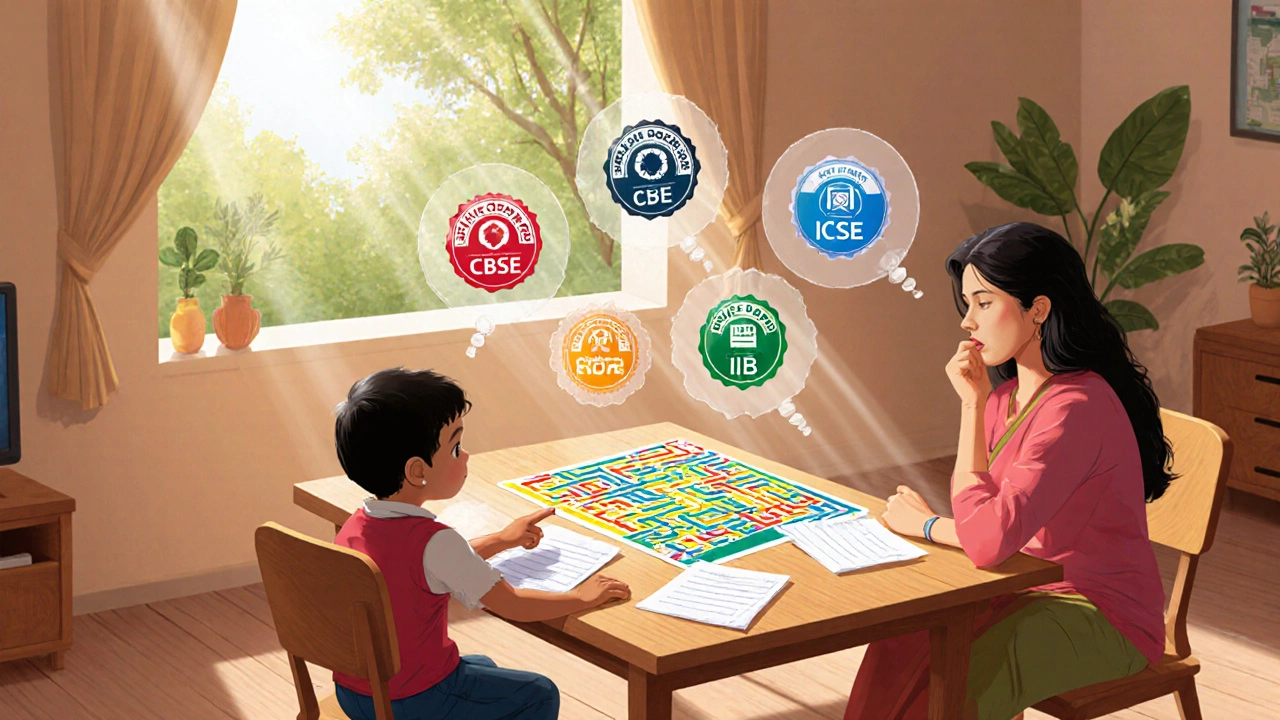
Discover which syllabus fits your child best in 2025. Compare CBSE, ICSE, state boards, IB and CAIE, learn key criteria, and get a practical checklist for parents.
When it comes to primary education CBSE, the Central Board of Secondary Education’s structured, exam-oriented approach to early learning in India. Also known as CBSE curriculum, it’s the most common path for kids starting school across the country, especially in families planning for competitive exams later on. Unlike state boards that vary by region, CBSE follows a uniform syllabus from Class 1 to Class 12, making it easier for families who move cities or for students who later aim for national-level tests like JEE or NEET.
The CBSE syllabus, a standardized framework for teaching core subjects like English, Math, and Environmental Science in early grades. Also known as elementary education India, it’s designed with clarity in mind—less theory, more application. Kids learn through activities, projects, and simple experiments, especially in science. This isn’t just about memorizing facts; it’s about building habits like observation, questioning, and logical thinking. Teachers are trained to align lessons with NCERT textbooks, which are simple, well-structured, and widely available even in small towns. Schools that follow CBSE often have better access to digital tools, standardized assessments, and training programs, giving students a smoother transition into higher grades. Parents choose CBSE not because it’s the easiest, but because it’s predictable. If your child switches schools mid-year, the content won’t suddenly change. That’s a big deal when you’re trying to keep up with learning.
What sets CBSE apart from ICSE or state boards? It’s the focus on outcomes. From Grade 1, students are gently introduced to structured testing, multiple-choice questions, and time-bound assignments—all skills that matter later for exams like JEE or NEET. You won’t find heavy literature or essay-heavy assignments in early grades. Instead, you’ll see worksheets on identifying plants, basic addition word problems, or simple English dialogues. It’s practical. It’s direct. And for many families, that’s exactly what they need.
There’s a reason why over 20,000 CBSE-affiliated schools exist in India, and why more are opening every year. It’s not magic. It’s consistency. Whether you’re in Delhi or Dibrugarh, your child learns the same core concepts at the same pace. That’s why so many parents trust it—even if they don’t fully understand the system. They know it leads somewhere.
Below, you’ll find real insights from parents, teachers, and students who’ve lived through this system. From how to pick the right CBSE school to what’s actually taught in Grade 3 science, these posts cut through the noise and give you what matters.
Discover which syllabus fits your child best in 2025. Compare CBSE, ICSE, state boards, IB and CAIE, learn key criteria, and get a practical checklist for parents.