Education Statistics in India: What the Numbers Really Show
When we talk about education statistics, quantitative data that measures how students learn, where they succeed, and what systems are working in India. Also known as learning outcomes data, it’s not just about pass rates—it’s about who gets access, who gets left out, and why some paths lead to real opportunity. In India, these numbers don’t lie. Over 80% of students preparing for competitive exams like JEE and NEET are enrolled in CBSE schools, not because it’s the easiest, but because it’s the most predictable. The syllabus matches the exam pattern, the textbooks are standardized, and coaching centers build entire businesses around it. That’s not luck—it’s design.
Behind every high-scoring NEET candidate is a system: NEET coaching, structured, high-intensity training programs designed to turn students into top performers in India’s medical entrance exam. These institutes don’t just teach chemistry—they teach strategy, timing, and stress management. And the numbers show it works: students from top coaching centers are 3x more likely to crack NEET than those studying alone. But here’s the catch—only 12% of Indian students can afford this. The rest rely on free YouTube channels, old books, or school teachers who juggle 80 students at once. That’s the real divide in education statistics: access, not ability.
Then there’s the government jobs, public sector roles that remain the most sought-after career path for Indian graduates, even as private sector salaries rise. Over 20 million apply for just 100,000 positions each year. Why? Because job security, pensions, and social status still outweigh salary in the Indian mindset. But the data also shows something else: candidates with vocational training in fields like electrician work or lab technician roles are getting hired faster than many degree holders. The system is changing, but slowly. Meanwhile, scholarship types, the two main categories—merit-based and need-based—that determine who gets financial help to stay in school—are still unevenly distributed. Merit scholarships go to students who already have access to coaching and resources. Need-based ones? Often buried under paperwork and bureaucracy.
What do these numbers add up to? They show that education in India isn’t broken—it’s biased. The system rewards those who can afford the right prep, live in the right city, or know the right people. But the data also shows hope: more students are cracking NEET without coaching. More are choosing vocational paths over degrees. More are finding free, high-quality online tools. The stats don’t just tell you where India stands—they show you where it’s headed. And if you’re a student, a parent, or a teacher, these numbers aren’t just facts. They’re your roadmap.
Below, you’ll find real stories behind the numbers—what makes CBSE the default choice, why Aakash material works for some but not others, how RRB Group D became the easiest government job to land, and which scholarships actually get awarded. No fluff. Just what the data says—and what it means for you.
Which State Has More CBSE Schools in India? Key Facts You Should Know
May, 18 2025
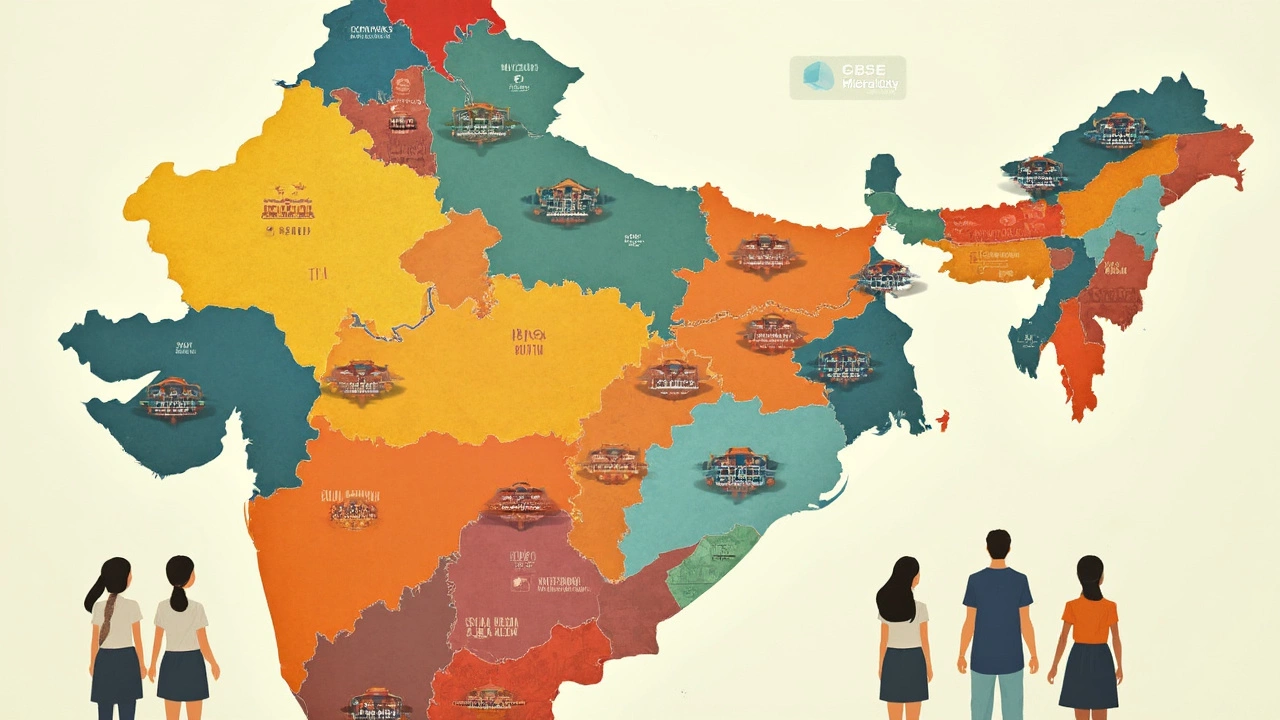
Curious about where CBSE schools are most common in India? This article pinpoints which state leads the count, gives interesting facts about why that’s the case, and shares tips for navigating the CBSE network as a parent or student. We break down real numbers, share practical reasons behind these trends, and make it easy to compare states. You'll also discover what makes CBSE school distribution unique and how it can affect student choices. Dive in if you want to get serious about CBSE schooling options across India.