Coursera Value Calculator
Find out if paying for a Coursera certificate is worth your time and money based on your goals and budget.
Your Coursera Certificate Value Assessment
Recommendation:
When you first hear about Coursera, it sounds too good to be true: top universities, industry leaders, and real certifications-all for free. But then you click on a course and get hit with a paywall. So, is Coursera still free? The short answer: Coursera isn’t fully free anymore, but you can still access a huge amount of learning content without spending a dime-if you know where to look.
What’s Actually Free on Coursera?
Not all of Coursera is locked behind a credit card. The platform offers free access to course materials for thousands of classes. That means you can watch all the video lectures, read the readings, and even take quizzes without paying a cent. You just won’t get a certificate at the end, and you won’t get access to graded assignments or peer-reviewed projects.
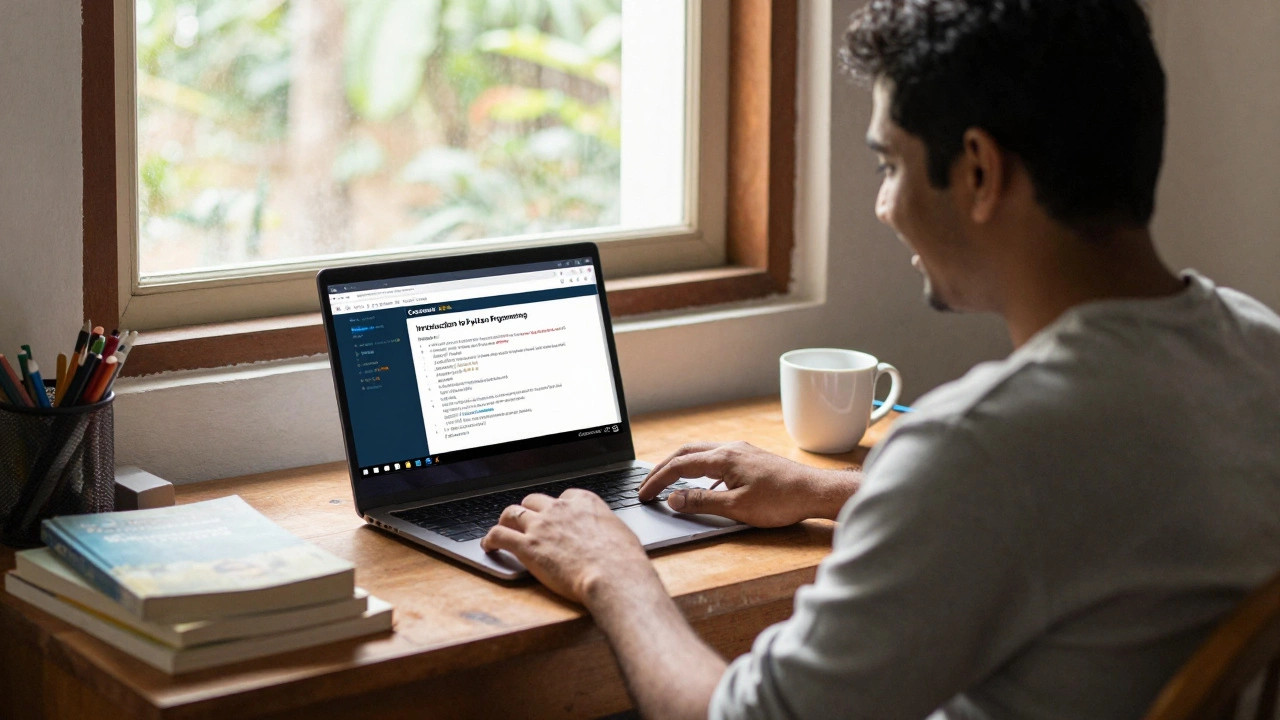
For example, if you take “Introduction to Python Programming” from the University of Michigan, you can follow every lesson, complete all the practice exercises, and learn the same material as someone who paid $49. The only difference? You won’t get the badge to put on your LinkedIn profile.
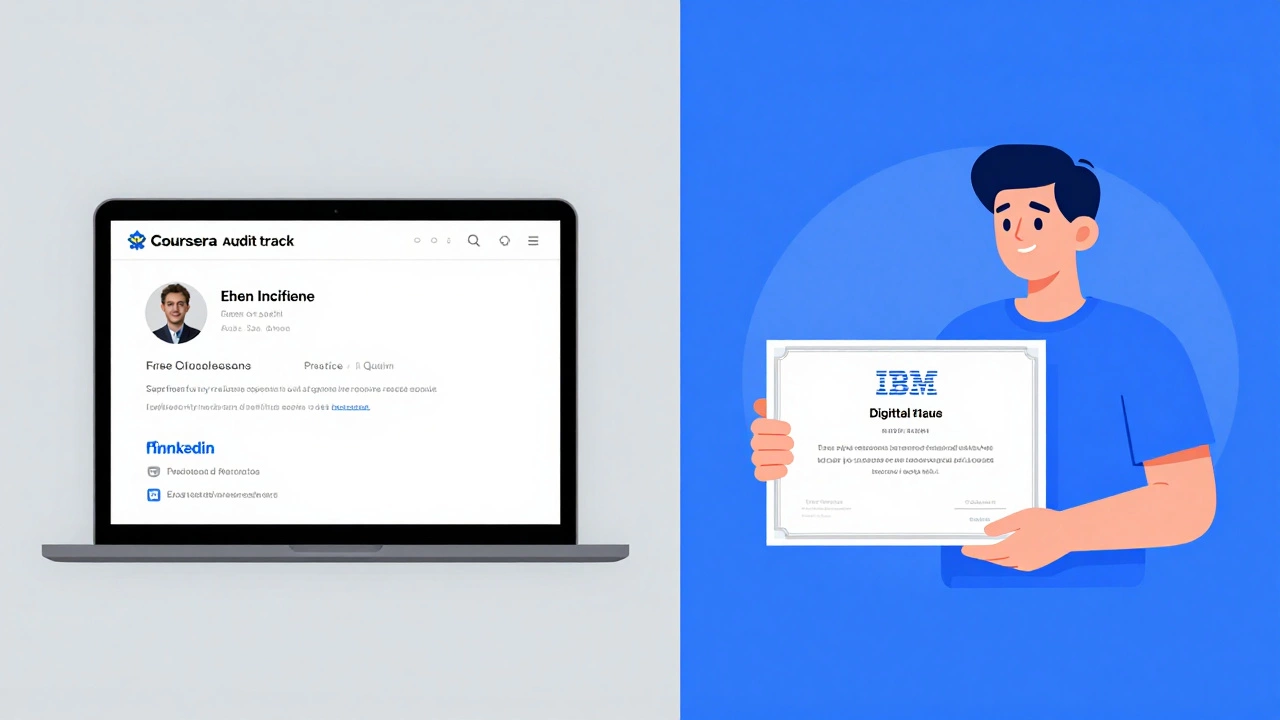
Google, IBM, and Stanford all offer free audit tracks for their most popular courses. You can learn data analysis from Google, project management from IBM, or even machine learning basics from Stanford-all without opening your wallet.
How to Access Free Content on Coursera
Getting free access is simple, but it’s not always obvious. Here’s how to do it:
- Go to coursera.org and search for the course you want.
- Click on the course title to open the course page.
- Look for the button that says "Enroll for Free"-not "Start Free Trial" or "Buy".
- Click it. You’ll be enrolled in the audit track.
- Start learning. No payment info needed.
Some courses don’t show the "Enroll for Free" option right away. If you see a "Start Free Trial" button instead, don’t click it unless you want to risk being charged after 7 days. Instead, scroll down to the bottom of the page. There’s usually a small link that says "Audit the course". Click that.
Pro tip: Use the filter tool on the homepage. Click "All Courses", then select "Free" under the "Price" filter. This shows only courses you can audit without paying.
What You Can’t Get for Free
Free access doesn’t mean full access. Here’s what’s blocked unless you pay:
- Graded assignments (quizzes that count toward a score)
- Peer-reviewed projects (where other students rate your work)
- Final exams with official scoring
- Course certificates (digital or printable)
- Access to specializations or professional certificates (those multi-course programs)
- Downloadable course materials (PDFs, templates, code files)
If you’re learning for personal growth, none of this matters. But if you’re using the course to boost your resume, get a job, or apply to grad school, you’ll need the certificate. That’s where the paid option comes in.
Can You Get a Certificate for Free?
Yes-but only if you qualify for financial aid.
Coursera’s financial aid program gives full access to paid courses-including certificates-for free to people who can’t afford them. You don’t need to be a student or unemployed. You just need to explain why you can’t pay.
Here’s how it works:
- Go to any paid course page.
- Click "Financial Aid Available" under the price.
- Fill out a short application (takes about 15 minutes).
- Answer questions like: "How will this course help your career?" and "What’s your current income?"
- Wait 15 days for a response.
Most applicants get approved. In 2024, Coursera granted over 1.2 million financial aid awards. People from 180 countries got free access to courses in nursing, computer science, business, and more.
One user from rural India used financial aid to complete a data analytics course, landed a remote job with a Canadian startup, and now earns more than her previous salary as a teacher. She didn’t pay a cent.
Free vs. Paid: What’s the Real Difference?
Let’s say you’re taking “Data Science Fundamentals” from Johns Hopkins University. Here’s what you get:
| Feature | Free Audit | Paid Access |
|---|---|---|
| Video Lectures | ✓ | ✓ |
| Readings & Articles | ✓ | ✓ |
| Practice Quizzes | ✓ | ✓ |
| Graded Assignments | ✗ | ✓ |
| Peer Reviews | ✗ | ✓ |
| Final Project | ✗ | ✓ |
| Certificate | ✗ | ✓ |
| Downloadable Materials | ✗ | ✓ |
The learning experience is nearly identical. The only difference is proof of completion. If you’re learning for fun, the free track is perfect. If you’re building your professional brand, the paid version is worth the investment.
Alternatives to Coursera’s Free Content
If you want more free options, here are other platforms that offer similar quality:
- edX - Offers free audit tracks from MIT, Harvard, and Berkeley. Similar to Coursera, but often more academic.
- Khan Academy - Completely free, no sign-up needed. Best for math, science, and early college prep.
- MIT OpenCourseWare - Full university courses from MIT, including syllabi, exams, and lecture notes. No certificates, but top-tier content.
- YouTube - Many university professors post full courses. Search for "Stanford CS106A" or "Harvard CS50"-you’ll find the full semester.
Each has strengths. Coursera wins for industry-relevant skills and certificates. Khan Academy wins for beginners. MIT OpenCourseWare wins for depth and rigor.
Who Should Use Coursera for Free?
Free Coursera courses are perfect for:
- Students exploring career paths before committing to a degree
- Professionals upskilling without employer support
- Stay-at-home parents learning new skills on a budget
- Retirees curious about tech, history, or philosophy
- Anyone in a developing country with limited access to formal education
One teacher in Lagos, Nigeria, used free Coursera courses to learn digital marketing. She started a small business helping local shops run Facebook ads. Within a year, she was earning more than her salary as a schoolteacher.
What’s Changing in 2025?
Coursera has been shifting toward paid subscriptions since 2023. The "Coursera Plus" plan ($59/month) gives unlimited access to over 7,000 courses and certificates. But the free audit option hasn’t been removed. In fact, Coursera’s 2024 annual report says they’ve expanded free access to 500+ new courses in low-income regions.
They’re also testing AI-powered learning assistants in free courses. That means even if you don’t pay, you might get smarter feedback on your quizzes or personalized study tips.
The platform isn’t going away from free learning-it’s just making it easier to upgrade if you want more.
Final Verdict: Is Coursera Still Worth It for Free?
Yes. If your goal is to learn, not to collect certificates, Coursera remains one of the best free learning platforms on the planet. You’re getting content from Stanford, Yale, and Google-all without a credit card.
Don’t let the paywalls fool you. The knowledge is still there. You just have to know how to reach it.
Start with one free course. Pick something that excites you. Finish it. Then decide if you want to pay for the certificate-or if you’re already where you need to be.
Can I get a Coursera certificate without paying?
You can only get a certificate for free if you’re approved for financial aid. Otherwise, you need to pay for the course. Free audit access lets you learn everything but doesn’t include a certificate.
Do free Coursera courses expire?
No, once you enroll in a free audit track, you have unlimited access to the course materials. You can revisit lectures, readings, and quizzes anytime-even years later.
Are Coursera certificates recognized by employers?
Yes, especially from top institutions like IBM, Google, and Stanford. Many employers accept Coursera certificates as proof of skills, particularly in tech, data, and business fields. Some even reimburse employees for paid courses.
Is Coursera better than Khan Academy for free learning?
It depends on your goal. Khan Academy is better for foundational subjects like math and science. Coursera is better for career-focused skills like coding, marketing, or project management. Both are free and high-quality.
Can I use Coursera for university credit?
Some Coursera courses offer university credit through partnerships with schools like the University of Illinois or Arizona State. But you must pay for those. Free audit courses don’t count for credit.
How long does financial aid approval take on Coursera?
It usually takes 15 days. You’ll get an email notification when your application is reviewed. If approved, you’ll get full access to the course and certificate for free.
Are there any hidden fees with free Coursera courses?
No. Free audit courses have no fees, no trials, and no automatic charges. You only pay if you actively choose to upgrade. Just avoid clicking "Start Free Trial" unless you’re ready to pay.