
English Speaking Practice Hub
Choose a category below to practice your oral production. Read the phrases aloud and try to mimic natural rhythm!
Quick Wins for Immediate Progress
- The Shadowing Technique: Listen to a native speaker and repeat exactly what they say with a fraction of a second delay. Don't just repeat the words; mimic the emotion and the speed.
- Self-Talk Narratives: Describe your day as you live it. "I am making coffee now," or "I need to find my keys." This bridges the gap between thinking and speaking.
- Record and Compare: Use your phone to record yourself reading a paragraph. Listen to it, then listen to a professional recording of the same text. The difference you hear is where your growth happens.
- Learn Phrases, Not Words: Instead of memorizing "decision," learn "make a decision." It prevents that awkward pause where you try to remember which verb goes with which noun.
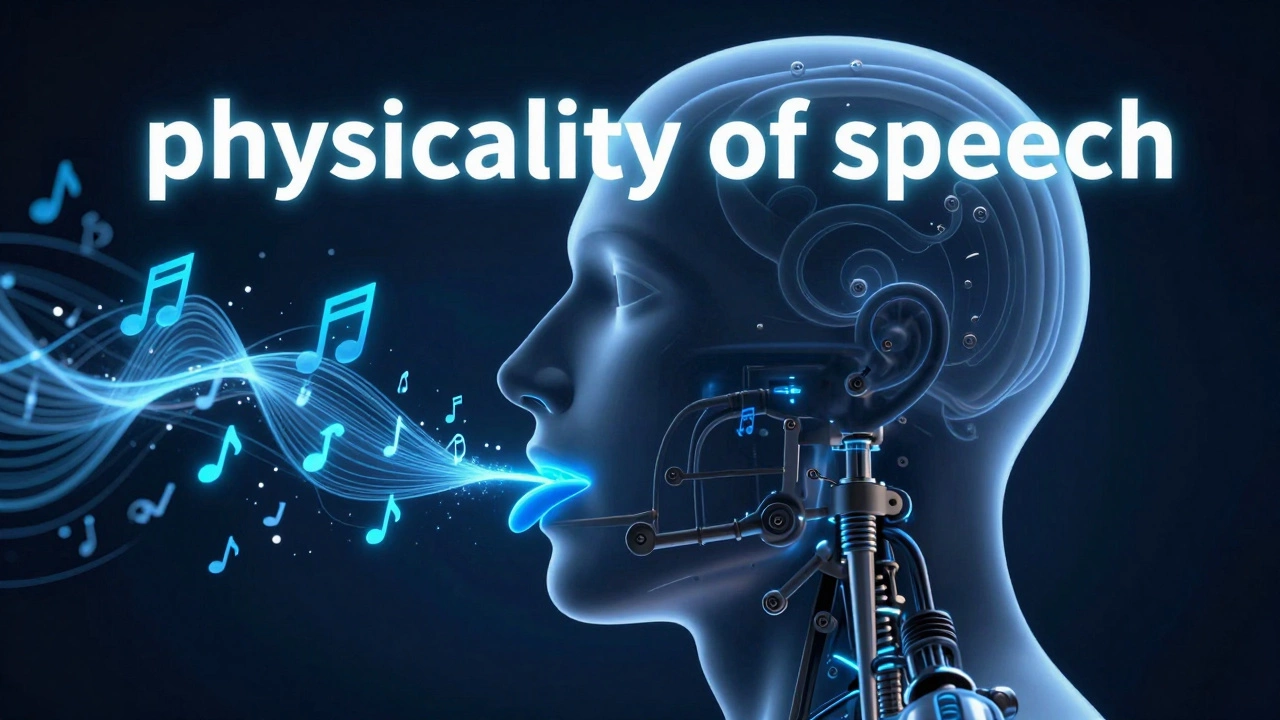
Mastering the Physicality of Speech
Your mouth has muscles, and if you aren't used to English, those muscles aren't trained for the specific shapes needed for sounds like "th" or "r." To speak English fluently, you need to treat your vocal cords like a gym. Many learners struggle because they try to use the mouth positions of their native language to produce English sounds, which leads to a heavy accent that can sometimes hinder clarity.
Try practicing tongue twisters. They aren't just for kids; they are high-intensity interval training for your tongue. Focus on the "v" and "b" sounds or the difference between "ship" and "sheep." If you find yourself stumbling, slow down to a crawl. Precision is more important than speed when you're building muscle memory. Once the movement is automatic, the speed will follow naturally.
Overcoming the Fear of Making Mistakes
The "perfectionist trap" is the number one killer of fluency. You spend so much time in your head correcting your verb tense that the conversation has already moved on by the time you open your mouth. You have to accept that you will sound silly sometimes. The secret is that most native speakers don't actually care if you use the present perfect incorrectly; they care if they can understand the point you're making.
Shift your goal from "perfection" to "communication." If you forget the word for "colander," call it a "pasta bowl with holes." Using descriptive workarounds is actually a sign of high-level fluency because it shows you can navigate the language even when you hit a wall. This is called circumlocution, and it's a survival skill every speaker needs.
Tools and Environments for Daily Practice
You don't need a plane ticket to London or New York to immerse yourself. You can create an "English bubble" right where you are. The key is consistency over intensity. Spending 15 minutes every single day is far more effective than a five-hour marathon once a week.
| Method | Best For | Pros | Cons |
|---|---|---|---|
| Language Exchange | Real-world flow | Free, authentic interaction | Can be inconsistent |
| AI Conversation Bots | Low-pressure start | Available 24/7, no judgment | Lacks human emotion |
| Professional Tutoring | Rapid correction | Structured, expert feedback | Can be expensive |
| Shadowing | Accent & Rhythm | Improves intonation quickly | Passive, no interaction |
Integrating Listening with Speaking
Speaking is the output, but listening is the input. You can't produce what you haven't absorbed. However, passive listening (like having a podcast on in the background) does very little for your speaking. You need active listening. This means listening to a sentence and asking yourself: "Why did they rise in pitch at the end?" or "Why did they blend those two words together?"
English is a stress-timed language, meaning some syllables are long and others are short. This is why the "schwa" sound (that neutral 'uh' sound) is so common. If you try to give every syllable equal weight, you'll sound robotic. Focus on the rhythm. Listen to how native speakers glide over unimportant words like "to," "for," and "a." Once you mimic that rhythm, you'll stop sounding like a textbook and start sounding like a person.

Building Your Conversational Toolkit
Ever notice how native speakers use specific phrases to buy time? Instead of saying "uhhh" while they think, they use fillers like "To be honest," "Actually," or "That's an interesting point." These are called discourse markers. They aren't just filler; they signal to the listener that you are still speaking and just organizing your thoughts.
Start building a list of these a-la-carte phrases. Instead of just learning the word "agree," learn "I couldn't agree more" or "I see where you're coming from, but..." These pre-fabricated chunks of language reduce the cognitive load on your brain, allowing you to focus more on the content of your message and less on the construction of the sentence.
How long does it take to become fluent in English speaking?
Fluency isn't a destination with a fixed date. However, most learners see a significant jump in confidence after 3 to 6 months of daily, active speaking practice. The key is the number of hours spent actually producing speech, not just studying grammar rules. If you spend one hour a day speaking, you'll see results much faster than someone studying a textbook for three hours.
What if I have no one to practice with?
You can be your own partner. Try the "mirror method" where you hold a conversation with yourself in the mirror. Alternatively, use AI voice tools or language exchange apps to find partners globally. Recording yourself and playing it back is also a powerful way to identify your own mistakes without needing another person present.
Should I focus on my accent or my grammar first?
Prioritize clarity over perfection. An accent is a natural part of your identity and isn't a problem as long as you are intelligible. Focus on pronunciation (the way sounds are made) and rhythm rather than trying to sound like a native. Grammar is important, but in spoken English, communicative effectiveness is more valuable than perfect syntax.
Why do I forget words when I start speaking?
This is usually due to anxiety or a lack of "active vocabulary." You have a large passive vocabulary (words you understand when you hear them), but a smaller active vocabulary (words you can recall quickly). To fix this, practice recalling words in a low-stress environment and use the circumlocution technique to describe the word you've forgotten.
Do I need to take a formal course to improve my speaking?
Courses provide structure and a curriculum, which is great for beginners. However, no course can "give" you fluency; they can only give you the tools. The actual improvement happens during the hours you spend speaking outside the classroom. Use courses for the foundation, but prioritize real-world application to see actual progress.
Next Steps for Your Journey
If you're feeling overwhelmed, start with just one thing: the 5-minute voice memo. Every night, record a voice memo to yourself summarizing your day. Don't edit it, don't restart it, and don't worry about the mistakes. Just talk. After a month, listen to the first recording. You'll be surprised at how much your confidence has grown simply because you stopped being afraid of the sound of your own voice in English.
For those who want a faster track, try a "language sprint." For one week, commit to doing everything in English-change your phone settings, write your shopping list in English, and watch your favorite shows with English subtitles. By forcing your brain to operate in the language, you move it from a "subject you study" to a "way you live." That shift is where true fluency begins.