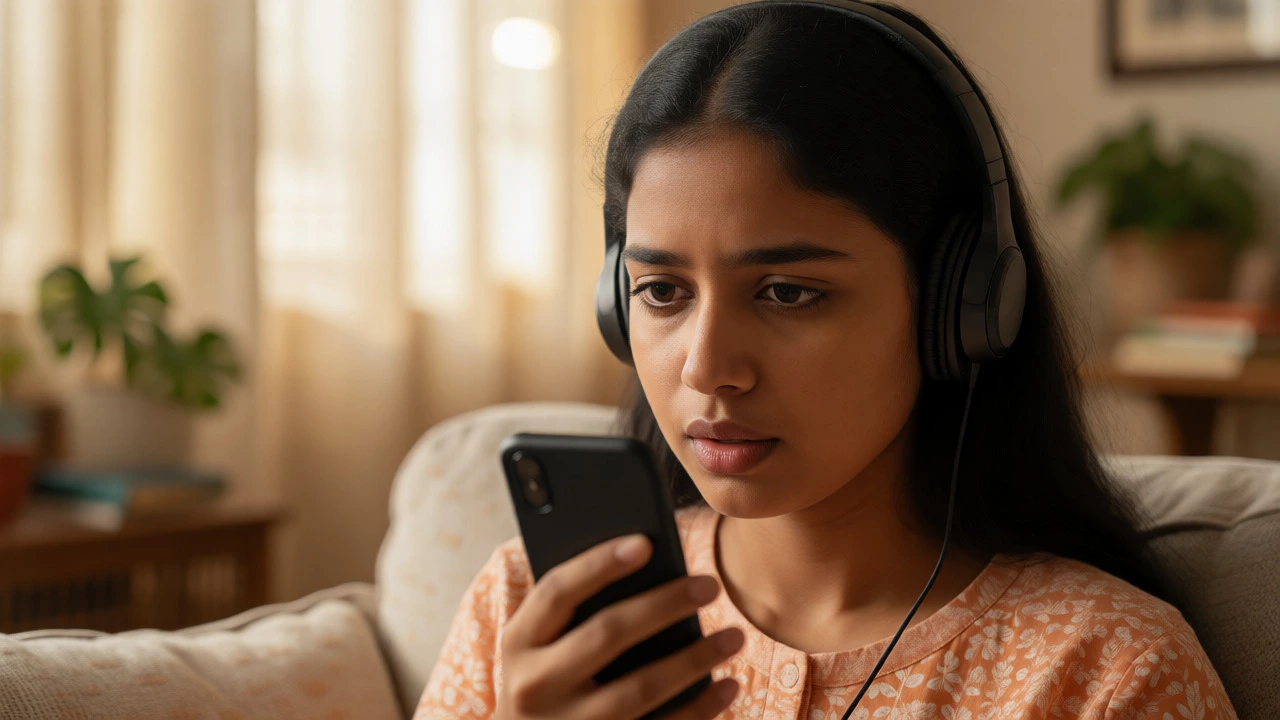
Daily Speaking Practice Tracker
Based on the article's advice: Consistency beats intensity. Use this timer for your daily 5-minute monologue challenge.
Today's Challenge
Weekly Progress
Shadowing Checklist
You know that feeling when you have the perfect sentence in your head, but by the time you open your mouth, it’s gone? Or maybe you understand every word in a movie, yet freeze when ordering coffee. This isn’t a talent issue; it’s a muscle memory issue. Your brain knows the rules, but your tongue hasn’t practiced the moves. The good news is you don’t need an expensive tutor or a plane ticket to London to fix this. You can build real English speaking skills right where you are, starting today.
Most people fail because they study English instead of using it. They memorize grammar tables and read textbooks, but they rarely produce sound. To get fast results, you need to shift from passive consumption to active production. Here is how you hack your environment to force improvement without leaving your house.
The Shadowing Technique: Your Secret Weapon
If you only do one thing, make it Shadowing. This is a technique used by professional interpreters and polyglots alike. It involves listening to native audio and repeating it almost simultaneously, like an echo. You aren’t just repeating words; you are mimicking rhythm, intonation, and speed.
Why does it work? Because it bypasses the translation layer in your brain. When you translate, you slow down. When you shadow, you train your auditory cortex and motor skills to connect directly. Start with short clips-30 seconds max. Use podcasts, TED Talks, or even YouTube vloggers. Pick someone whose voice you like. Listen once for meaning, then listen again while speaking along. Don’t worry about understanding every word. Focus on the melody of the speech. Within two weeks, you’ll notice your pauses becoming more natural and your stress patterns aligning with native speakers.
Talk to Yourself (Yes, Really)
It feels silly, but narrating your life is one of the fastest ways to identify gaps in your vocabulary. As you cook breakfast, say out loud what you are doing: "I am cracking the eggs," or "The water is boiling." If you don’t know the word for "whisk," pause. Look it up immediately. Then use it in the next sentence. This creates an immediate feedback loop.
Try the "5-Minute Monologue" challenge. Set a timer for five minutes. Pick a random topic-your favorite movie, your commute, or why you hate Mondays-and talk until the timer stops. Do not stop to correct mistakes. Just keep talking. Record yourself on your phone. Listening back is painful at first, but it reveals exactly where you stumble. Do you use "um" too much? Do you switch tenses mid-sentence? These self-corrections stick better than any teacher’s advice because you discovered them yourself.
Change Your Digital Environment
Your phone and computer are constant companions. Make them serve your goals. Change the interface language of your social media apps, email, and operating system to English. This forces you to process functional vocabulary daily. Instead of clicking "Send," you click "Submit." Instead of "Settings," you see "Preferences." These small shifts accumulate into thousands of micro-exposures per week.
Also, curate your entertainment. Stop watching shows with subtitles in your native language. Switch to English audio with English subtitles. Once you feel comfortable, turn the subtitles off entirely. This trains your ear to distinguish sounds rather than relying on text support. If you find a series difficult, rewatch episodes you’ve already seen. Familiarity reduces cognitive load, allowing you to focus on pronunciation and slang rather than plot comprehension.

Master the Art of Recording
We all hate hearing our own recorded voices, but it’s essential data. Most learners think they sound different from natives because of their accent. Often, it’s actually about pacing and linking sounds. Native speakers blend words together. "What are you doing?" becomes "Whatcha doin?" If you pronounce every syllable separately, you sound robotic.
| Common Learner Approach | Native Speaker Flow | Actionable Fix |
|---|---|---|
| Pronouncing every letter clearly | Linking sounds (e.g., "an apple" -> "anapple") | Practice consonant-vowel links |
| Flat intonation | Rising pitch for questions, falling for statements | Mimic pitch contours in shadowing |
| Long pauses between words | Pauses occur at thought groups, not word breaks | Group words into chunks |
Record a short answer to a simple question, like "Tell me about your weekend." Listen to it. Compare it to a native speaker answering the same question on YouTube. Identify one specific difference-maybe it’s the way you end sentences-and try again. Repeat until the recording sounds closer to the target. This iterative process builds precision faster than vague practice.
Use Technology as a Conversation Partner
You don’t always need a human partner to practice conversation. Modern AI tools and language exchange apps can simulate dialogue. Apps like Elsa Speak provide instant feedback on pronunciation accuracy. They analyze your waveform against a native model and tell you exactly which phoneme you missed. This objective data removes guesswork.
For conversational flow, try talking to voice assistants like Siri or Alexa. Ask them complex questions. "What is the weather going to be like tomorrow?" or "Tell me a joke." If they misunderstand you, adjust your enunciation and ask again. This low-stakes environment lets you experiment with phrasing without fear of judgment. Once you gain confidence here, moving to human interaction becomes less intimidating.

Create Immersion Through Input
You cannot output what you haven’t inputted. To speak well, you must hear good English constantly. Replace background noise with English podcasts during chores or commutes. Choose topics you actually care about. If you love tech, listen to tech podcasts. If you like true crime, listen to true crime. Interest drives retention.
Pay attention to collocations-words that naturally go together. Natives don’t say "make a photo"; they say "take a photo." They don’t say "do a mistake"; they say "make a mistake." Learning these pairs makes you sound fluent instantly. Keep a digital note file specifically for collocations. Review it weekly. Using three new collocations in your daily monologues will significantly boost your lexical resource score.
Consistency Beats Intensity
Studying for five hours once a week yields worse results than fifteen minutes every day. Language acquisition relies on neural pathways strengthening through repetition. Short, frequent bursts of practice keep the material fresh in your working memory. Aim for 15-20 minutes of focused speaking practice daily. That’s it. No burnout, no excuses.
Set specific micro-goals. Instead of "I want to improve my English," set a goal like "This week, I will master the past tense irregular verbs." Track your progress visibly. Seeing a streak of days where you practiced speaks volumes to your motivation. Celebrate small wins. Did you order food without switching languages? Win. Did you laugh at a joke in English? Win. These dopamine hits reinforce the habit loop.
How long does it take to see noticeable improvement?
With consistent daily practice of 15-20 minutes, most learners notice improved confidence and fluency within 4 to 6 weeks. Significant structural changes in accent and grammar may take 3 to 6 months depending on your starting level.
Is shadowing effective for beginners?
Yes, but beginners should start with slower audio sources like children's stories or slow-paced podcasts. It helps train the ear and mouth coordination before attempting fast native-speed conversations.
Do I need a tutor to improve speaking skills?
No, a tutor is helpful but not mandatory. Self-directed methods like shadowing, recording yourself, and talking to AI can yield significant results. A tutor is best for correcting subtle errors or providing accountability if you struggle with discipline.
What is the best app for practicing speaking alone?
Apps like Elsa Speak are excellent for pronunciation analysis. For conversation simulation, HelloTalk or Tandem allow you to send voice notes to native speakers who can reply asynchronously, reducing pressure.
Should I worry about my accent?
Focus on clarity over accent perfection. An accent is part of your identity. Aim to be easily understood by native speakers rather than trying to erase your origin completely. Clear pronunciation matters more than sounding American or British.