Education Pathway Decision Tool
Select the scenario that best matches your family's situation to see a recommended pathway.
Your Family Profile
Ready to Compare
Fill out the profile on the left to get a personalized recommendation based on curriculum, cost, and future opportunities.
Parents moving from India to Dubai often face a tough choice. Should they keep their children in the Indian education system, specifically the Central Board of Secondary Education (CBSE) curriculum known for its rigorous academic standards and alignment with competitive exams like JEE and NEET, or switch to the diverse schooling options available in the UAE? The question isn't just about geography; it's about future career paths, cultural identity, and financial investment. With over 300,000 Indian expatriates living in Dubai, this is one of the most common dilemmas families face today.
The short answer is that neither system is universally "better." They serve different goals. If your child aims for an engineering seat at IIT Bombay, staying in the Indian CBSE track is non-negotiable. If you want a global perspective, lower stress levels, and access to international universities, Dubai’s British or American curricula might be the smarter move. However, many schools in Dubai now offer the CBSE syllabus itself, creating a hybrid option that changes the equation entirely.
Understanding the Core Difference: Curriculum vs. Location
To compare these systems fairly, we first need to separate the *curriculum* from the *location*. In India, the CBSE is the dominant board for students aiming at national competitive exams. It focuses heavily on theoretical knowledge, rote memorization, and high-stakes testing. The pressure is immense, starting as early as Class 10.
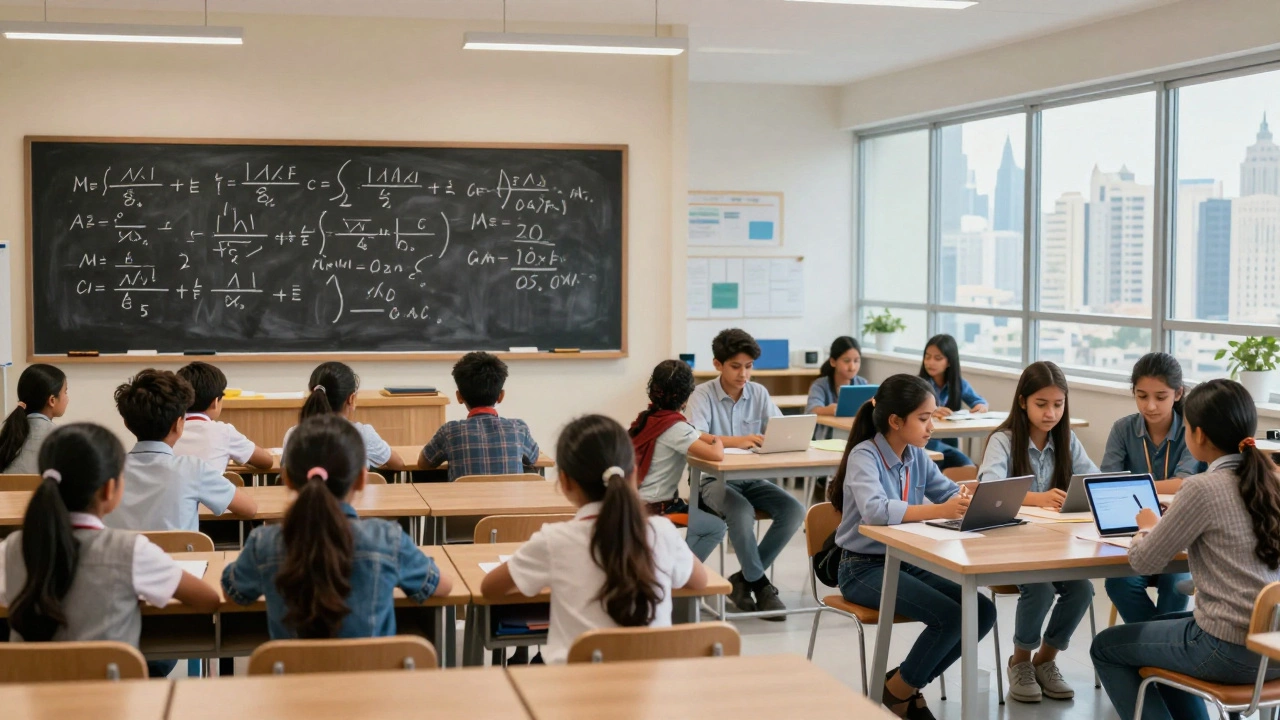
In Dubai, the situation is fragmented. You have schools following the British GCSE/A-Level system, the American IB/AP system, and yes, Indian CBSE/ICSE schools. When people ask if Dubai education is better, they usually mean the *international* schools offering British or American curricula. But if you send your child to a CBSE school in Dubai, you are still studying the same syllabus as a student in Delhi or Mumbai. The difference lies in the teaching methodology, infrastructure, and extracurricular balance.
| Feature | India (CBSE) | Dubai (International/British/American) | Dubai (CBSE Schools) |
|---|---|---|---|
| Focus | Theory & Exam Prep | Holistic Development | Balanced Theory & Activity |
| Class Size | 40-50+ students | 15-20 students | 25-35 students |
| Extracurriculars | Limited time | Integral part of day | Moderate emphasis |
| Cost (Annual) | $500 - $5,000 | $8,000 - $25,000+ | $4,000 - $10,000 |
| University Pathway | IITs, NITs, AIIMS | UK, US, Global Universities | IITs, NITs, plus some Global |
The Academic Rigor: Depth vs. Breadth
One of the biggest arguments for the Indian system is depth. A CBSE student in India spends hours mastering complex mathematical concepts and scientific theories. This creates a strong foundational base, which is why Indian students often excel in STEM fields globally. However, this comes at a cost. Critical thinking and creative problem-solving are sometimes sacrificed for exam performance.
In contrast, Dubai’s international schools emphasize breadth. Students learn to research, debate, and present. An American-curriculum school in Dubai might spend weeks on a single project-based learning module rather than memorizing textbook definitions. This approach prepares students well for liberal arts colleges in the US or holistic admissions processes in the UK. But critics argue that the foundational math and science skills can be weaker compared to their Indian counterparts.
If you choose a CBSE school in Dubai, you get the best of both worlds in theory. The syllabus remains rigorous, but the smaller class sizes allow teachers to address individual doubts more effectively. Many parents report that their children perform better academically in Dubai CBSE schools simply because there is less classroom chaos and more personalized attention.
Infrastructure and Learning Environment
Let’s talk about the physical reality of schooling. Top private schools in India have improved significantly, but the average public or mid-tier private school still struggles with outdated facilities. In Dubai, even mid-range schools boast state-of-the-art laboratories, smart classrooms, and extensive sports complexes. The UAE government mandates high standards for all licensed schools, ensuring a baseline of quality that is hard to match elsewhere.
This infrastructure impacts learning. Access to modern technology, robotics labs, and digital libraries enhances the educational experience. Furthermore, the safety and cleanliness of Dubai schools are generally higher. For parents worried about pollution, traffic congestion, and security issues affecting daily commutes in major Indian cities, Dubai offers a serene environment conducive to study.
However, this premium environment comes with a premium price tag. Tuition fees in Dubai are among the highest in the world. A top-tier British school can charge upwards of AED 60,000 ($16,000) per year. While this ensures quality, it also means that only families with substantial disposable income can afford the "best" education. In India, you can find excellent coaching institutes and schools at a fraction of this cost.

Cultural Identity and Social Integration
Education is not just about books; it’s about socialization. Children growing up in India are immersed in Indian culture, festivals, and social norms. This builds a strong sense of identity and belonging. In Dubai, the population is incredibly diverse. Your child will interact with peers from the UK, USA, Lebanon, Pakistan, Bangladesh, and beyond. This exposure fosters global citizenship and cultural sensitivity.
For Indian expats, this can be a double-edged sword. On one hand, your child becomes adaptable and open-minded. On the other hand, they may feel disconnected from their roots. Language barriers can also arise. While English is the medium of instruction in most Dubai schools, the home language for many Indian families is Hindi, Tamil, or another regional tongue. Maintaining fluency requires extra effort, whereas in India, it happens naturally.
Socially, the pressure to conform is different. Indian schools often have a hierarchical structure with strict discipline. Dubai schools tend to be more egalitarian, encouraging students to question authority and express opinions. This shift can be liberating for some children but confusing for others who are used to a more structured environment.
Future Career Prospects: Where Does It Lead?
Your choice of education system dictates your university options. If your child completes CBSE in India, they are primed for the Joint Entrance Examination (JEE) and National Eligibility cum Entrance Test (NEET). These are gateways to India’s premier institutions like IITs and AIIMS. These degrees carry immense weight in India and respect globally, particularly in engineering and medicine.
If your child studies in an international school in Dubai, they are looking outward. They can apply to universities in the UK, USA, Canada, Australia, and Europe. The IB Diploma or A-Levels are recognized worldwide. However, getting into top-tier Western universities is highly competitive and expensive. Tuition fees in the US can exceed $50,000 per year, while in India, public universities are far more affordable.
Here is the crucial insight: A CBSE certificate from Dubai is valid for Indian university entrance exams. So, if you live in Dubai but plan for your child to return to India for college, sticking to the CBSE syllabus in Dubai is a strategic move. It allows them to enjoy the lifestyle and infrastructure of the UAE while keeping the door open for IITs and NITs. Switching to an American curriculum would close that door, forcing you to budget for international university tuition later.

Financial Implications: The Hidden Costs
We cannot ignore money. Education in Dubai is a significant financial commitment. Beyond tuition, there are costs for uniforms, transport, trips, and extracurricular activities. For a family of four, education alone can consume 20-30% of household income. In India, unless you opt for elite private schools, the financial burden is much lower.
However, consider the earning potential. Graduates from top international schools often secure jobs in multinational corporations with higher starting salaries compared to local Indian firms. But this is not guaranteed. Many Indian graduates from tier-2 cities outperform their Dubai-educated peers in technical interviews due to stronger foundational skills. The ROI depends heavily on the specific career path chosen.
Making the Decision: A Practical Checklist
So, how do you decide? Ask yourself these questions:
- Where will my child live permanently? If they will return to India, stick to CBSE. If they will stay abroad, consider international curricula.
- What is our budget? Can we sustain high tuition fees for 12 years without compromising other life goals?
- What is my child’s learning style? Do they thrive under pressure and structure (India/CBSE), or do they need freedom and creativity (Dubai International)?
- Do we value global exposure or deep specialization? International schools offer breadth; Indian systems offer depth in STEM.
There is no perfect answer. The "better" education is the one that aligns with your family’s long-term vision. For many Indian expats in Dubai, the sweet spot is a reputable CBSE school that offers the rigor of the Indian syllabus with the comfort and resources of the UAE. This hybrid approach minimizes risk and maximizes opportunity.
Is the CBSE syllabus in Dubai the same as in India?
Yes, the core syllabus is identical as it is mandated by the Central Board of Secondary Education in New Delhi. However, schools in Dubai may adapt teaching methods to be more interactive and include more extracurricular activities due to smaller class sizes and different cultural expectations.
Can a student from a Dubai international school take JEE or NEET?
Technically, yes, but it is extremely difficult. International curricula like IB or A-Levels do not cover the specific depth of physics, chemistry, and mathematics required for JEE Advanced. Students would need extensive self-study or additional coaching to compete with Indian CBSE students who have been preparing for years.
Which is better for coding and tech careers: Dubai or India?
India has a massive ecosystem for coding bootcamps and competitive programming communities, giving students early exposure. Dubai offers access to global tech hubs and internships. For pure technical skill building, India’s rigorous math foundation helps. For networking and global opportunities, Dubai provides an edge.
Are schools in Dubai regulated?
Yes, all schools in Dubai are inspected by the Knowledge and Human Development Authority (KHDA) or the Department of Education in Abu Dhabi. They receive ratings from "Outstanding" to "Weak," which helps parents make informed choices based on objective criteria.
Does switching from India to Dubai affect a child's mental health?
It can. The transition involves cultural shock and academic adjustment. However, many parents report reduced stress levels in Dubai schools due to less emphasis on rote learning and ranking. Supportive counseling services are also more readily available in international schools.