CBSE School Capacity Estimator
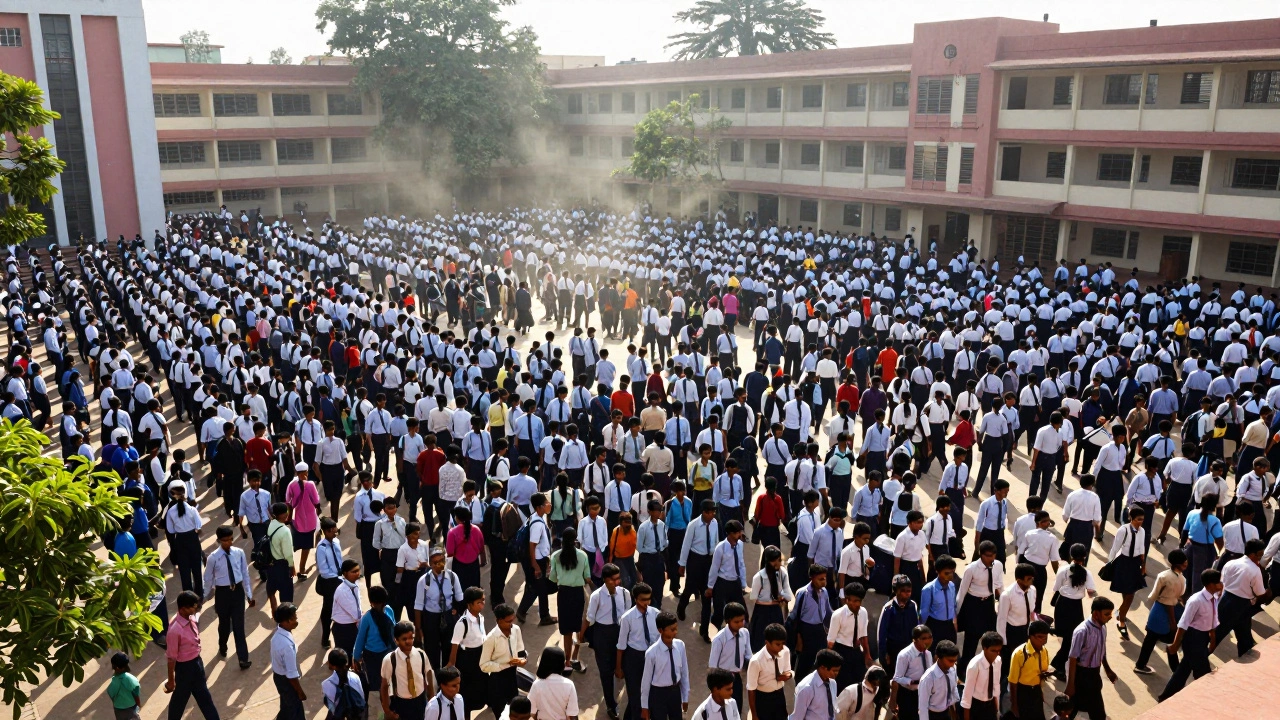
Based on the article, CBSE has over 16,000 schools and roughly 25-30 million students. Use this tool to estimate total enrollment and student distribution based on custom parameters.
Quick Breakdown of CBSE Student Numbers
- Estimated Total Enrollment: Roughly 25 to 30 million students across all grade levels.
- Board Exam Candidates: Between 2.1 million (Class 10) and 1.5 million (Class 12) annually.
- School Network: Over 16,000 affiliated schools.
- Growth Rate: Steady increase driven by urban migration and the preference for a standardized national curriculum.
The Scale of the CBSE Ecosystem
To understand the numbers, we have to look at how CBSE operates. It doesn't just run schools; it affiliates them. This means a private school in a small town in Kerala or a massive corporate school in Delhi can both follow the same rules. Because it is a central board, it is the go-to choice for parents who move frequently-like military families or corporate employees-because the syllabus doesn't change when you cross state lines. In recent years, the student count has surged because the board has modernized. By integrating NCERT (National Council of Educational Research and Training) guidelines, they've made the curriculum the gold standard for students aiming for competitive exams. When you have millions of kids eyeing the IIT JEE or NEET, they naturally flock to the board that aligns most closely with those test papers. This creates a snowball effect: more students join, more coaching centers align their materials with CBSE, and the board's population grows even further.Breaking Down the Board Exam Numbers
While the total student population is huge, the most tracked data points are the students appearing for the board exams. This is where the numbers get concrete. In the last few academic cycles, we've seen a consistent pattern where Class 10 enrollment is significantly higher than Class 12. For example, in a typical year, you'll see roughly 2.1 to 2.3 million students appearing for the Class 10 exams. By the time they reach Class 12, that number often dips to around 1.5 to 1.7 million. Why the drop? It isn't necessarily because students are leaving the system, but because some switch to state boards or vocational streams after the 10th grade.| Category | Approx. Student Count | Key Driver |
|---|---|---|
| Class 10 Candidates | 2.1M - 2.3M | Mandatory secondary certification |
| Class 12 Candidates | 1.5M - 1.7M | Stream specialization (Science/Commerce/Arts) |
| Total Affiliated Schools | 16,000+ | Rapid privatization of urban education |
Why is the CBSE Student Population Growing?
It's not just about more kids being born; it's about a shift in how India views education. For decades, state boards were the norm. However, the CBSE student count has grown because of a few specific triggers. First, the rise of the middle class in Tier 2 and Tier 3 cities has led to a demand for English-medium education. CBSE schools are almost always English-medium, making them a status symbol and a practical tool for global mobility. Second, the digitalization of the board has helped. With the introduction of SARAS (School Affiliation Re-engineered and Simplified), the process of schools joining the board became faster and more transparent. When more schools get affiliated, more students naturally enter the system. Third, let's talk about the competitive edge. If you want to get into a top engineering college, you aren't just fighting for a grade; you're fighting for a rank. The NCERT textbooks used by CBSE are the literal blueprints for the IIT JEE. Studying from a state board often means the student has to buy extra CBSE books anyway to keep up. It's simpler to just be a CBSE student from the start.Comparing CBSE with Other Boards
To get a full picture of the student volume, you have to compare it to the ICSE (Indian Certificate of Secondary Education) and various state boards. The ICSE board is often seen as more rigorous in English and humanities, but its student base is significantly smaller than CBSE's. State boards, on the other hand, have the highest absolute numbers because they cater to the rural heartlands of India, but they are fragmented by state. CBSE occupies the "sweet spot." It has the prestige of a national board but is more accessible and widely adopted than the ICSE. This positioning is why you see such a massive concentration of students in urban hubs like Delhi, Bangalore, and Mumbai choosing CBSE over anything else.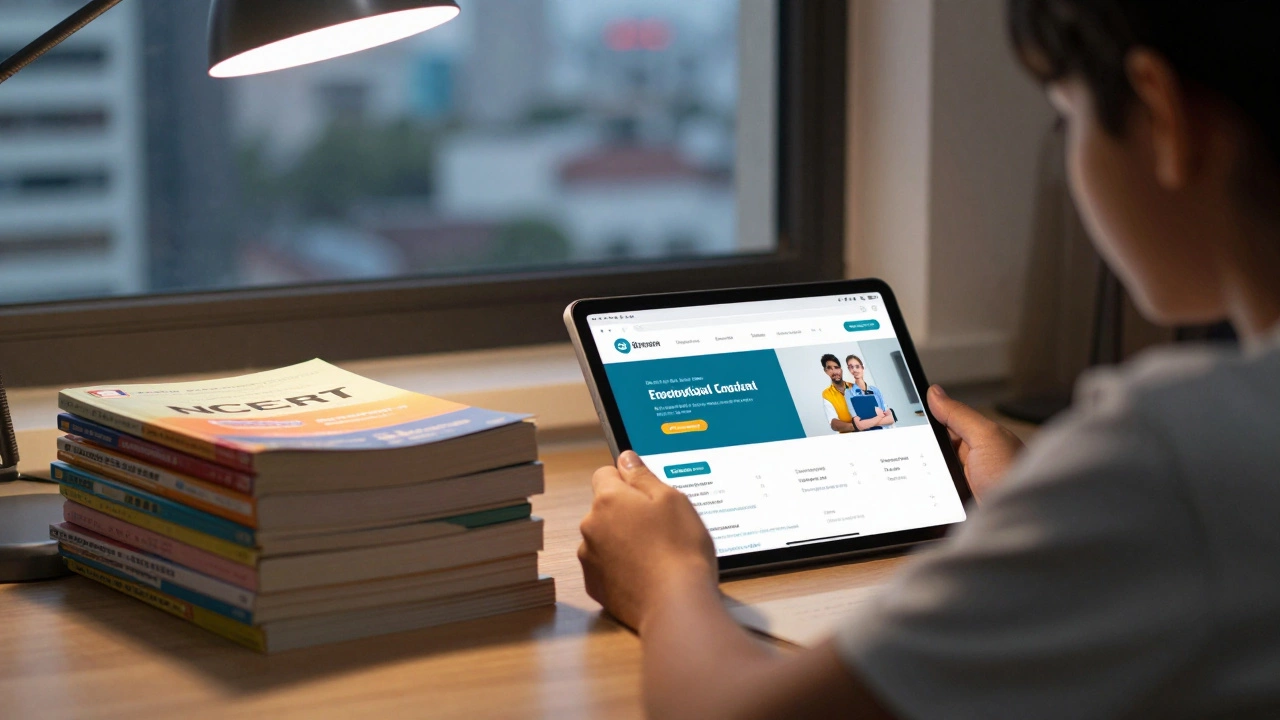
The Impact of Digital Transformation on Enrollment
Since 2020, the way we count and manage students has changed. The board has moved toward a more data-driven approach. The shift to online registration for exams and the use of DigiLocker for issuing certificates means that the board now has near-perfect data on its student population. This digital shift has also opened doors for "Open Schooling" via NIOS (National Institute of Open Schooling), which is often linked to the same ecosystem. While NIOS handles students who can't attend traditional schools, the overlap in curriculum means the overall "reach" of the central education system is even larger than the official CBSE school numbers suggest.Challenges of Managing Millions
When you have 25 million students, a small change in the marking scheme becomes a national news event. The board faces immense pressure to maintain a balance between strict standards and student mental health. We've seen this in the recent moves to shift from rote memorization to "competency-based education." Changing the way 2 million 10th graders are tested isn't just an academic shift; it's a logistical nightmare. It requires training thousands of teachers across thousands of schools to ensure that a student in a remote village in Rajasthan is being graded by the same standard as a student in a posh South Delhi school. This uniformity is exactly why the student count remains high-parents trust the predictability of the system.Is CBSE the largest board in India?
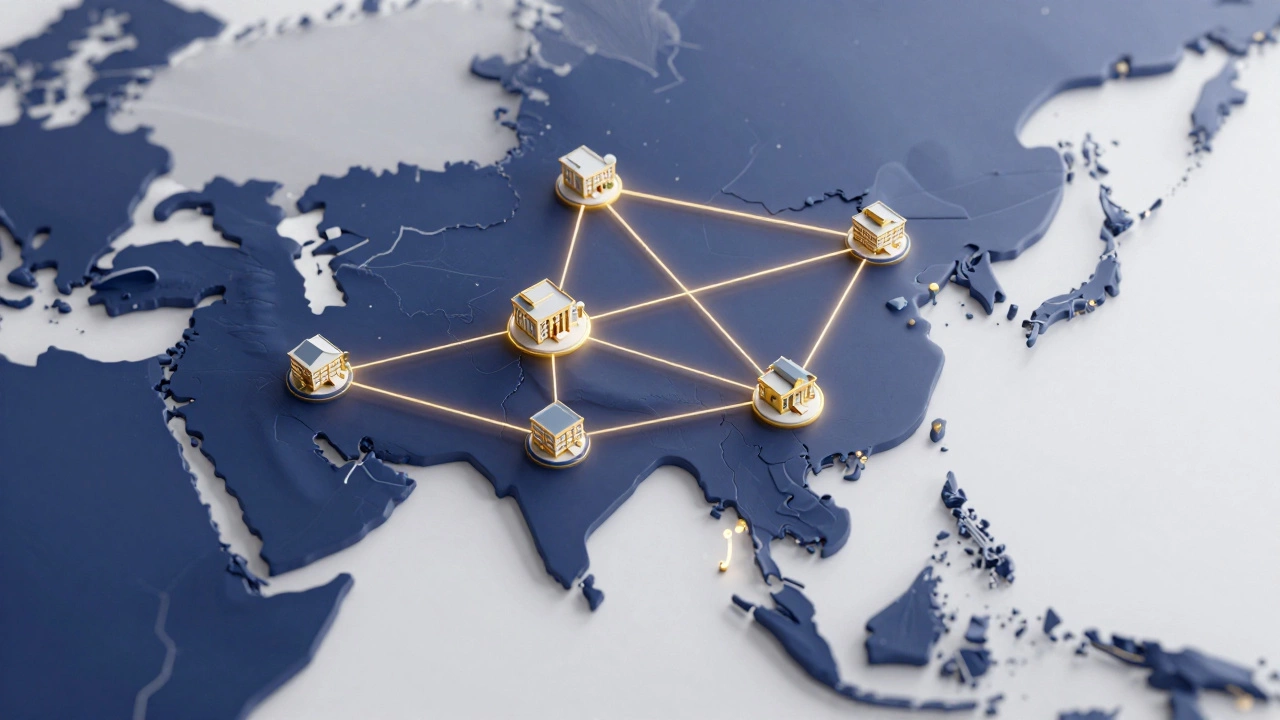
In terms of national reach and influence, yes. While individual state boards (like UP Board) might have more students in a specific region, CBSE is the largest national-level board with the most widespread affiliation across different states and even countries.
Why do more students choose CBSE over ICSE?
Most students choose CBSE because its syllabus is tightly aligned with national competitive exams like JEE and NEET. It's generally seen as more practical for those pursuing science and medicine, whereas ICSE is often preferred for those focusing on literature and language.
How does CBSE count its students?
The board tracks students primarily through the registration process for the Class 10 and Class 12 board exams. Every affiliated school must submit candidate lists, which provides the official count of students appearing for the national assessments.
Do international students study under CBSE?
Yes, CBSE has a significant presence abroad. There are hundreds of schools in countries like the UAE, Oman, Kuwait, and Nepal that are affiliated with the board to serve the Indian diaspora and local students.
What is the difference between NCERT and CBSE?
NCERT is the organization that creates the textbooks and the framework for the curriculum. CBSE is the board that implements that curriculum, conducts the exams, and manages the affiliation of schools. Essentially, NCERT provides the content, and CBSE provides the system.