Coding Class Matchmaker
Answer these 3 questions to get personalized recommendations for your coding journey. Based on your goals, time, and learning style, we'll suggest classes that match your needs.
Want to learn coding but not sure where to start? You’re not alone. Thousands of people sign up for coding classes every month, only to quit within weeks because they picked the wrong one. The problem isn’t that coding is hard-it’s that most classes don’t match what you actually need. Whether you’re switching careers, building a side project, or just curious, the best coding class for you depends on your goals, time, and learning style.
What Makes a Coding Class Actually Good?
A good coding class doesn’t just teach syntax. It teaches you how to solve real problems. The best ones give you projects that feel like real work-not toy exercises. Look for classes that:
- Start with a working example on day one
- Let you build something by week three
- Give feedback from real developers
- Include version control (Git) from the beginning
- Don’t require prior experience
Too many courses waste your time with 40-minute lectures on loops while you sit there wondering, "When do I actually code?" The best classes skip the fluff and get you building fast.
Best Coding Classes for Absolute Beginners
If you’ve never written a line of code, start here. These classes assume zero knowledge and build up slowly with real-world context.
freeCodeCamp (Free)
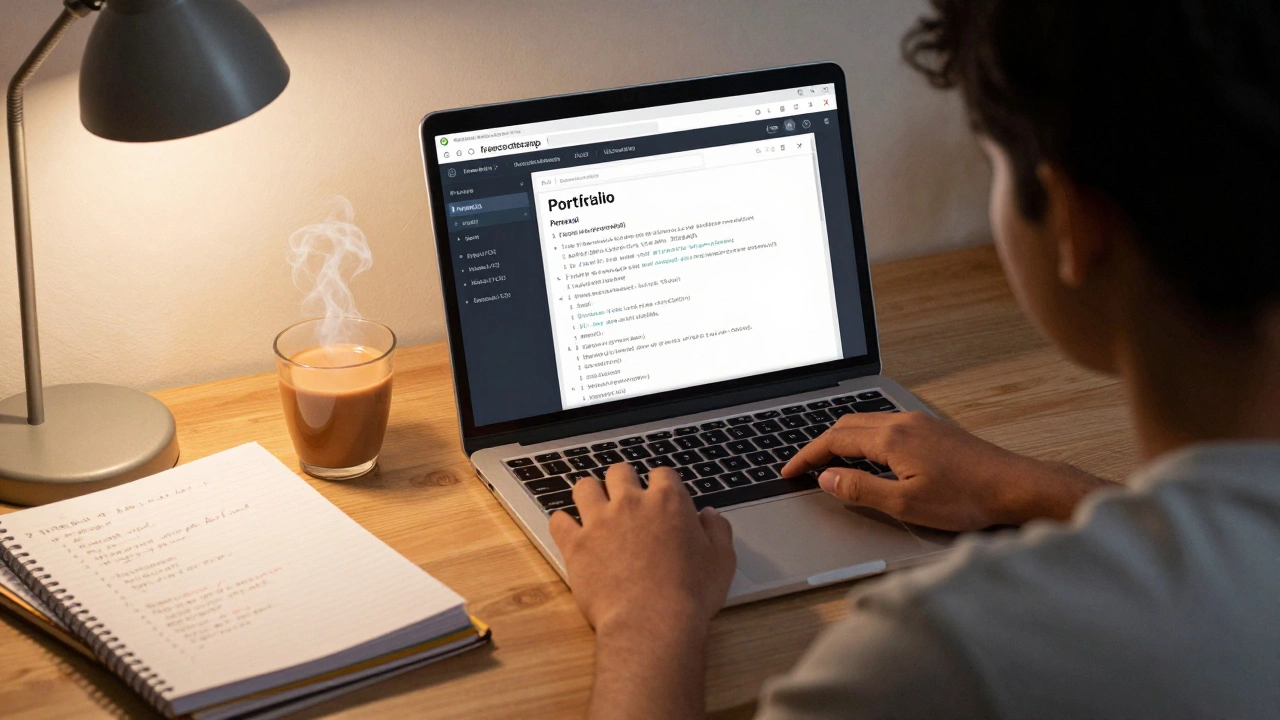
freeCodeCamp is the most popular free option for a reason. It’s not just videos-it’s interactive coding with instant feedback. You learn HTML, CSS, and JavaScript by building a personal portfolio, a calculator, and a tribute page. No signup needed. No ads. No upsells. You earn certifications as you go, and the community forums are active and helpful. Over 10 million people have finished at least one project here.
Codecademy (Paid, but has a free tier)
Codecademy’s interactive lessons are designed for people who learn by doing. The "Learn Python 3" path takes you from printing "Hello World" to scraping websites and automating tasks in under 20 hours. The paid version adds quizzes, projects, and career paths like "Data Scientist" or "Web Developer." It’s not perfect-some lessons feel too guided-but it’s one of the few platforms that keeps you engaged without burning you out.
CS50 by Harvard (Free, Online)
Harvard’s Introduction to Computer Science (CS50) is legendary. It’s not easy, but it’s honest. You’ll write code in C, Python, SQL, and JavaScript. You’ll learn how computers work at a low level, not just how to use a framework. The course includes problem sets that feel like real engineering challenges. If you’re serious about understanding how code works under the hood, this is the class to take. It’s free on edX, and you can audit it without a certificate.
Best Coding Classes for Intermediate Learners
If you’ve done a few tutorials and can write a basic website or script, you’re ready for the next level. This is where most people get stuck. The goal now isn’t to learn another language-it’s to build real systems.
The Odin Project (Free)
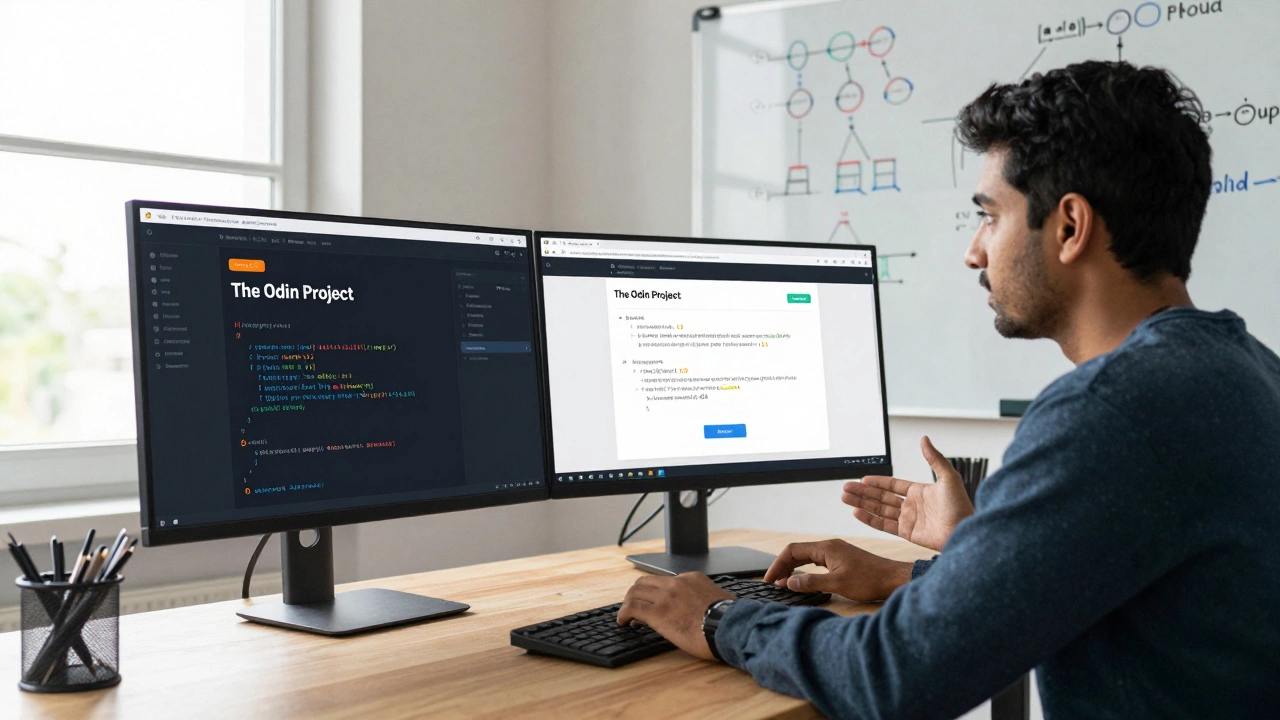
The Odin Project is the hidden gem for people who want to become full-stack developers. It’s a curriculum built by developers who got hired without a degree. You’ll build a full web app using HTML, CSS, JavaScript, Node.js, and React. You’ll deploy it. You’ll use Git. You’ll write tests. And you’ll do it all without watching a single video. The entire path is text-based, with links to real documentation and YouTube tutorials when you need them. Over 70% of learners who finish the full stack path get a job within six months.
Udemy: The Complete Web Developer Course 2.0 (Paid)
This course by Andrei Neagoie has over 1 million students. Why? Because it’s structured like a real job. You don’t just learn React-you build a real-time chat app. You don’t just learn Node.js-you set up a server with authentication and database connections. The course updates every few months to keep up with changes in the industry. It’s not cheap ($120 on sale), but it’s one of the few courses that actually prepares you for interviews. Many learners say it’s the only reason they got hired.
Frontend Masters (Paid, Subscription)
If you want to go deep into JavaScript, React, or performance optimization, Frontend Masters is the gold standard. The instructors are engineers from companies like Google, Meta, and Airbnb. You won’t find "Hello World" here. Instead, you’ll learn how to optimize React rendering, handle state in complex apps, and debug performance issues. It’s expensive at $39/month, but if you’re serious about a career in frontend development, it’s worth every penny. Most learners use it for 3-6 months and then stop-because they’ve learned enough to get hired.
What to Avoid in Coding Classes
Not all coding classes are created equal. Here are the biggest traps:
- Video-only courses with no hands-on practice. Watching someone code won’t make you able to code.
- Overly theoretical courses that spend weeks on algorithms before you write a single web page.
- "Guarantee a job" promises. No course can guarantee employment. If they say they can, they’re selling you a dream, not a skill.
- Platforms that lock content behind paywalls after a few lessons. You should be able to try before you buy.
Also, avoid learning multiple languages at once. Pick one-JavaScript, Python, or Ruby-and stick with it for at least three months. Switching too often creates confusion, not mastery.
How to Choose Based on Your Goals
Not everyone needs the same class. Here’s how to pick:
- Want to build a website or app? Start with HTML, CSS, and JavaScript. The Odin Project or freeCodeCamp are your best bets.
- Want to analyze data or automate tasks? Learn Python. freeCodeCamp’s Python course or Codecademy’s "Learn Python 3" path will get you there fast.
- Want to work at a tech company? CS50 + The Odin Project + building 3 real projects on GitHub will give you a stronger portfolio than a degree.
- Have only 10 hours a month? Codecademy’s daily 15-minute lessons are perfect. Consistency beats intensity.
Real Results: Who Succeeds?
People who stick with coding classes aren’t the ones with the highest IQ. They’re the ones who:
- Build something every week-even if it’s small
- Ask for help when stuck (and know where to look)
- Don’t compare themselves to YouTube coders with 10 years of experience
- Use their code in real life: automate a spreadsheet, fix a broken website, or make a tool for a friend
One student from Toronto, Maria, started with freeCodeCamp while working night shifts. She built a simple app to track her sleep patterns. She shared it on Reddit. Someone asked if she could build one for their business. She did. Six months later, she was freelancing full-time. She didn’t go to college. She didn’t get a bootcamp scholarship. She just built something useful-and kept going.
Final Tip: Start Today, Not Tomorrow
The biggest mistake? Waiting for the "perfect" class. There isn’t one. The best class is the one you start today. Open freeCodeCamp. Click "HTML & CSS." Start the first lesson. Don’t think about the whole path. Just do the first exercise. If you finish it, you’ve already done more than 90% of people who say they want to learn to code.
Coding isn’t about memorizing commands. It’s about solving problems. And the only way to get better is to keep building-even if your first project looks messy. Every expert was once a beginner who didn’t quit.
Are free coding classes any good?
Yes, absolutely. FreeCodeCamp, CS50, and The Odin Project are all free, high-quality, and used by hiring managers to evaluate candidates. Many people land jobs after completing just these free resources. You don’t need to pay for coding classes to succeed.
Which programming language should I learn first?
Start with JavaScript if you want to build websites or apps. Start with Python if you want to analyze data, automate tasks, or get into AI. Both are beginner-friendly, widely used, and have strong communities. Avoid Java or C++ as a first language-they’re powerful but too complex for beginners.
How long does it take to get hired after learning to code?
Most people who land entry-level jobs spend 3 to 6 months learning and building projects. The key isn’t how long you study-it’s how many real projects you complete. Three solid projects on GitHub, plus a personal website, often outperforms a 6-month bootcamp certificate.
Do I need a computer science degree to get a coding job?
No. Many tech companies, including Google and Apple, now hire based on skills, not degrees. Employers care more about your GitHub profile, problem-solving ability, and communication than your diploma. A strong portfolio beats a degree in most cases.
What if I get stuck and can’t solve a problem?
Everyone gets stuck. The difference between beginners and experienced coders is that experienced ones know how to search. Use Google, Stack Overflow, and the course’s discussion forums. Try explaining the problem out loud-sometimes just talking through it helps. Don’t give up after 15 minutes. Take a walk, then come back. Persistence matters more than brilliance.