Learning Mode Matchmaker
Answer three quick questions about your current situation to see which learning format aligns best with your life.
Your Recommended Path
Why this fits you:
You’re staring at two course options. One says "Online," the other says "Distance." They look identical on the brochure-same syllabus, same degree title, same price tag. So why do students keep asking which one is better? The truth is, these terms aren’t just marketing fluff. While they overlap heavily in 2026, the delivery mechanisms, interaction models, and even the accreditation bodies often differ significantly. Choosing the wrong one can mean missing out on real-time feedback or getting stuck with a rigid schedule that clashes with your job.
Let’s clear up the confusion. We’ll break down exactly what separates distance learning from online learning, who each format suits best, and how to pick the right path for your career goals.
The Core Distinction: Technology vs. Methodology
Think of it this way: distance education is a broad category defined by physical separation between student and teacher. It doesn’t care *how* you get the content. Historically, this meant mailing printed textbooks and exam papers via postal service. Today, it includes any mode where you aren’t physically present in a classroom. This could be radio broadcasts, television lectures (like IGNOU’s Gyan Darshan channel), or digital platforms.
Online learning, however, is a specific subset of distance education that relies entirely on internet-based technologies. If you need Wi-Fi to access your lessons, it’s online learning. If you can download a PDF module and study it offline without logging into a portal, it might still be classified under traditional distance education frameworks, depending on the institution’s definition.
The key difference isn’t just about the device you use-it’s about interactivity. Distance learning programs often follow a correspondence model: you receive materials, complete assignments, and send them back for grading. Interaction is delayed. Online learning, especially modern iterations, emphasizes real-time or near-real-time engagement through video conferencing, live chats, and collaborative forums.
Synchronous vs Asynchronous: The Time Factor
This is where most people get tripped up. Many assume "online" means watching pre-recorded videos whenever you want. That’s only half the story.
- Asynchronous Learning: You learn on your own time. You watch recorded lectures, read modules, and submit assignments by deadlines. This is common in both traditional distance education and many online courses. It offers maximum flexibility but requires high self-discipline.
- Synchronous Learning: You attend live classes at scheduled times. Think Zoom seminars or live Q&A sessions with professors. This is almost exclusively an online learning feature. Traditional distance education rarely offers this because it wasn’t technologically feasible until recently.
If you have a rigid 9-to-5 job, asynchronous distance learning might suit you better because you can study at midnight if needed. But if you thrive on peer discussion and immediate instructor feedback, you need a synchronous online program. Check the syllabus carefully: does it list "live tutorials" or just "recorded lectures"?
Interaction and Support Systems
How much human contact will you actually get? In traditional distance education, support is often administrative. You email a query, wait three days for a response, and maybe visit a regional center once a year for exams. The relationship feels transactional.
In contrast, robust online learning platforms build community into the DNA of the course. Tools like Slack channels, Discord servers, or integrated LMS (Learning Management System) forums allow students to help each other. Peer reviews are common. Some online programs even offer virtual office hours where you can drop in on a professor’s video call. This network effect is crucial for soft skills development, something distance learners often miss unless they actively seek it out.
| Feature | Traditional Distance Learning | Modern Online Learning |
|---|---|---|
| Primary Medium | Printed materials, TV/Radio, basic LMS | High-speed Internet, Video Streaming, Apps |
| Interaction Type | Limited, delayed (email/post) | Real-time (chat/video) & Delayed (forums) |
| Schedule | Fully flexible (self-paced) | Mixed (some live sessions required) |
| Cost Structure | Generally lower (no tech infrastructure costs) | Variable (can be higher due to tech/support) |
| Accreditation | Often regulated by DEB (India) or similar bodies | Regulated by UGC/AICTE or international equivalents |
Accreditation and Recognition
Here’s a critical point for career-minded students: not all degrees are created equal. In countries like India, the Distance Education Bureau (DEB) regulates universities offering distance programs. These degrees are recognized by the University Grants Commission (UGC) and are valid for government jobs.
However, purely "online" degrees sometimes face scrutiny. Until recent regulatory changes, many online-only certificates weren’t treated as equivalent to full degrees. Now, institutions like IIT Madras and BITS Pilani offer fully online B.Tech and MBA degrees that carry the same weight as their on-campus counterparts. Always verify if the specific program is approved by the relevant national body. Don’t assume "online" equals "unrecognized," but don’t assume it’s automatically valid either.
Which One Fits Your Life?
Choosing between these modes depends on your personality and current life situation. Let’s look at two personas.
Amit, the Working Professional: Amit works in IT with unpredictable overtime. He wants an MBA. A traditional distance learning program with printed notes and weekend exams might frustrate him because he can’t ask questions when he’s confused. An online program with recorded lectures he can speed-watch on his commute, plus a WhatsApp group for doubt-clearing, fits his fragmented schedule perfectly.
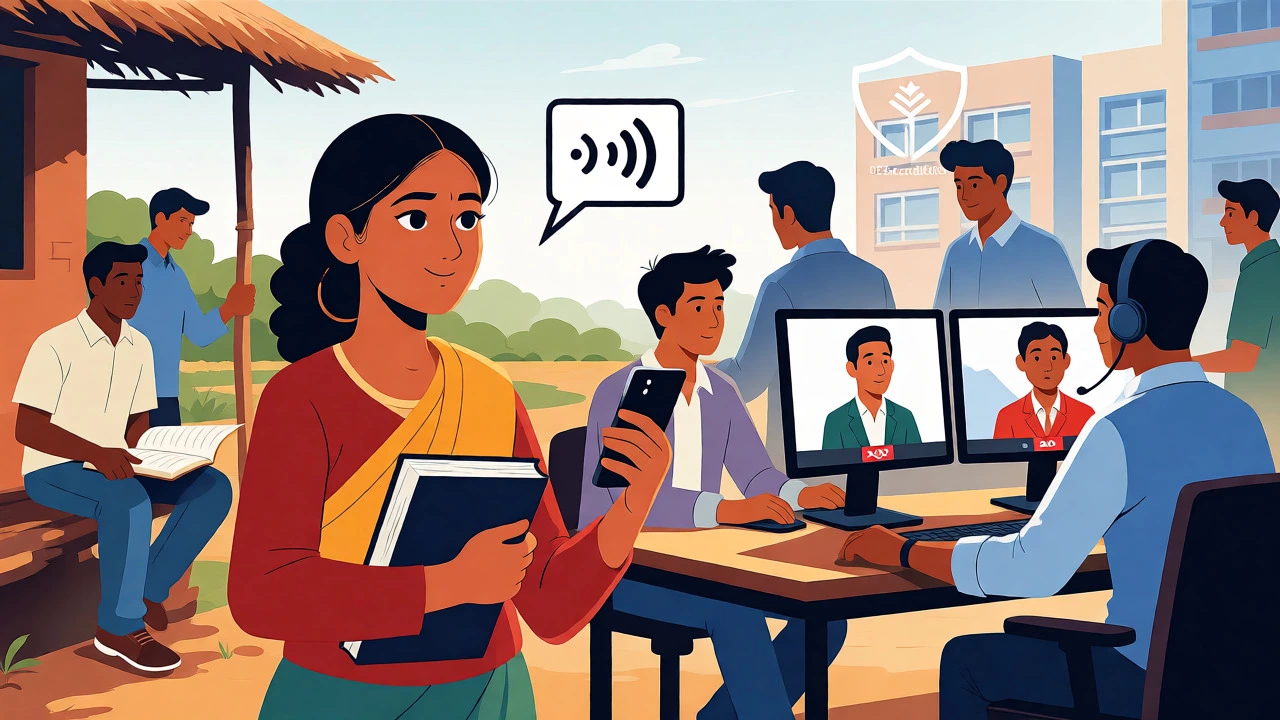
Priya, the Rural Student: Priya lives in a village with spotty internet connectivity. She wants a BA degree. High-bandwidth video streaming would fail her constantly. A distance learning program that provides downloadable content she can access on a low-data connection, or even physical books mailed to her, ensures she doesn’t fall behind due to technical issues. For her, reliability beats interactivity.
The Blurring Lines in 2026
Be careful with terminology. Many universities now rebrand their old distance programs as "online" to attract younger demographics. Conversely, some online platforms offer "hybrid" models where you attend campus twice a year. The label matters less than the actual delivery method. When evaluating a course, ignore the name. Look for these three things:
- Connectivity Requirements: Do you need constant high-speed internet?
- Live Component: Are there mandatory live classes you cannot miss?
- Support Channels: How quickly can you reach an instructor?
If the answer to #1 is "yes" and you have poor internet, avoid it. If the answer to #2 is "yes" and you travel frequently, avoid it. If the answer to #3 is "via ticket system only," consider if you can tolerate the delay.
Common Pitfalls to Avoid
Don’t fall for the myth that online learning is "easier." Studies consistently show that completion rates for online courses are lower than traditional ones because they demand more self-regulation. Without a teacher physically checking if you’re paying attention, procrastination becomes your biggest enemy.
Also, beware of "diploma mills." Some unaccredited entities sell fake online degrees. Always check the university’s status on the official regulatory website before paying fees. A legitimate distance learning university will clearly state its approval number from the DEB or equivalent authority.
Final Thoughts
Distance learning is the umbrella; online learning is the sharpest tool under it. If you value structure and have limited internet, stick to traditional distance formats. If you crave interaction and have reliable tech, go for fully online synchronous programs. The gap is closing every year, but understanding these nuances saves you money and stress.
Is online learning considered distance education?
Yes, online learning is a type of distance education. All online learning is distance education, but not all distance education is online. Distance education includes older methods like correspondence courses, while online learning specifically uses internet-based tools.
Are online degrees valid for government jobs?
It depends on the country and the specific university. In India, degrees from universities approved by the UGC and DEB are generally valid for government jobs. However, you must ensure the specific online program has proper accreditation. Always verify with the recruiting authority's latest notification.
Which is cheaper: distance or online learning?
Traditional distance learning is often cheaper because it lacks the expensive technology infrastructure of live video streaming and interactive platforms. However, top-tier online programs can cost the same as on-campus degrees due to high-quality faculty and tech support. Compare total costs including internet and hardware needs.
Can I switch from distance to online learning mid-course?
Rarely. Most universities treat these as separate admission categories. Switching usually requires re-admission or a formal transfer process, which may involve credit transfers and additional fees. Check the institution's migration policy before enrolling.
Do online courses require internet for exams?
Most modern online courses require internet for proctored exams using AI monitoring software. However, some distance learning programs still conduct offline exams at regional centers. Verify the exam mode in the prospectus, as this impacts your location requirements during test weeks.