Mobile Learning Capacity Planner
Your Device Settings
Select Courses to Download
Click on courses to add them to your offline library.
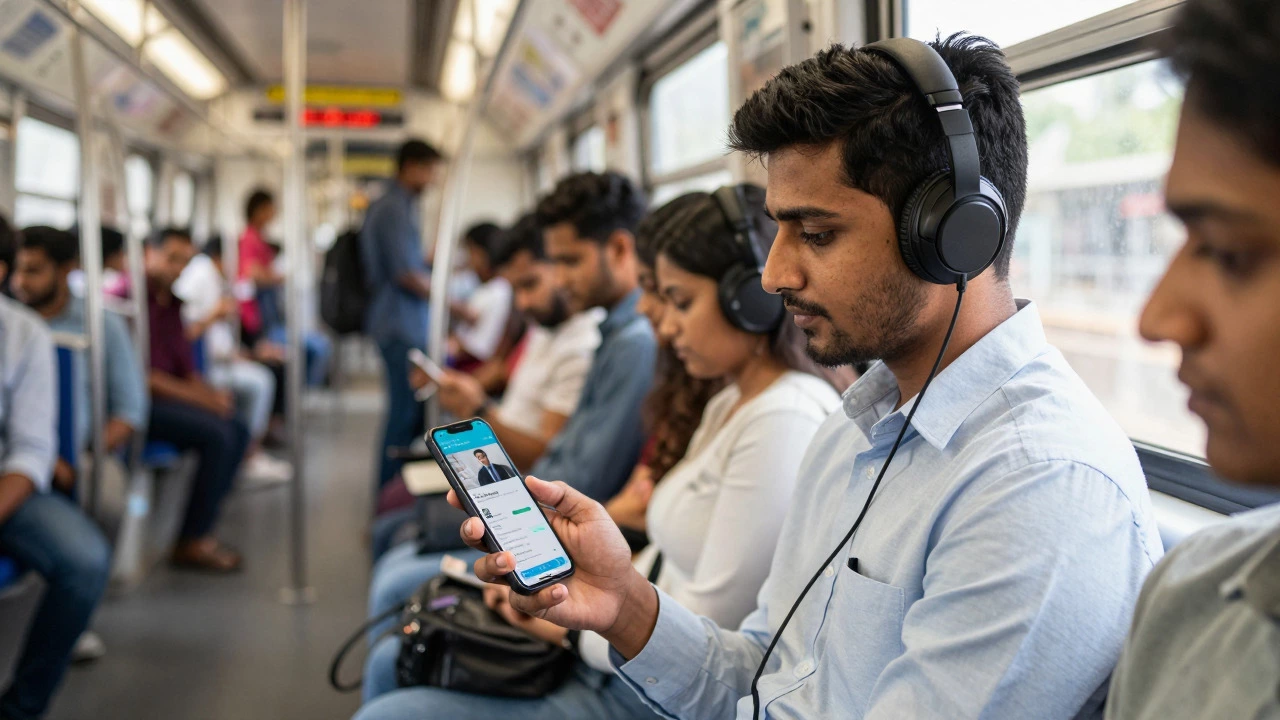
You’re stuck on a crowded subway, waiting for a coffee, or lying in bed unable to sleep. You have twenty minutes before your next meeting, and you want to use that time to learn something new. But your laptop is at home. Can you actually get real value from eLearning digital education delivered through electronic media on a small screen?
The short answer is yes. In fact, for many learners in 2026, the smartphone has replaced the desktop as the primary device for education. However, just opening a browser and clicking a link isn’t enough. To make mobile learning work, you need to understand which platforms are optimized for small screens, how to handle connectivity issues, and how to adjust your study habits for bite-sized sessions.
Why Your Phone Is Now a Legitimate Classroom
A decade ago, trying to watch a lecture on a 4-inch screen was a recipe for eye strain and frustration. That’s not the case anymore. Modern smartphones have high-resolution displays, powerful processors, and speakers that can handle audio clearly. More importantly, app developers have shifted their focus from "shrinking the desktop experience" to designing native mobile experiences.
This shift is driven by data. According to recent industry reports, over 60% of all course completions on major platforms now happen on mobile devices. This isn’t just about convenience; it’s about accessibility. If you don’t own a computer, or if your job keeps you away from a desk, your phone is the only gateway to global education.
But there’s a catch. Not all learning content is created equal. Some courses are designed with mobile users in mind, while others are simply responsive websites that feel clunky on touchscreens. Knowing the difference is the first step to successful mobile studying.
Top Platforms Optimized for Mobile Learning
Not every platform deserves your data plan. Here are the top contenders that offer genuine mobile-first experiences in 2026:
| Platform | Best For | Offline Capability | Mobile UX Rating |
|---|---|---|---|
| Coursera | University degrees & professional certs | Yes (Video download) | High |
| Udemy | Skill-based tutorials (coding, design) | Yes (Unlimited downloads) | Very High |
| Duolingo | Language acquisition | Yes (Practice packs) | Excellent |
| Khan Academy | K-12 & foundational math/science | Limited (Audio only) | Medium |
| LinkedIn Learning | Business & soft skills | Yes (Downloadable videos) | High |
Udemy stands out because its app allows unlimited video downloads, meaning you can buy a course once and access it forever without using data. Coursera is excellent for academic rigor but requires an active subscription to keep downloaded content accessible. For languages, Duolingo remains the gold standard due to its gamified, micro-learning structure that fits perfectly into short breaks.
The Offline Advantage: Studying Without Wi-Fi
One of the biggest myths about mobile learning is that you need constant internet. While live webinars and interactive coding environments require a connection, most self-paced courses do not.
Downloading content is crucial for two reasons: saving battery life and avoiding data overages. Streaming HD video consumes significant data. By downloading lectures during your morning commute on Wi-Fi, you can study later on a train or plane without worrying about signal strength.
Here’s how to set this up effectively:
- Check storage space: A single hour of HD video can take up 300MB to 1GB of storage. Ensure your phone has at least 5GB free before bulk downloading.
- Use Wi-Fi only settings: Most apps like Coursera and Udemy allow you to restrict downloads to Wi-Fi networks to prevent accidental cellular usage.
- Organize by module: Don’t download the entire course at once. Download one week’s worth of material to keep your device organized and manageable.
Overcoming Screen Size Limitations
Let’s be honest: reading dense text or following complex code examples on a 6-inch screen is difficult. The key is to adapt your expectations and methods.
For reading-heavy courses, use the built-in accessibility features of your phone. Increase the font size, switch to dark mode to reduce eye strain, and use voice-to-text if you’re taking notes. Many modern browsers also offer a "reader mode" that strips away ads and navigation bars, leaving only the core text.
If you’re learning technical skills like programming or graphic design, pure mobile learning might hit a wall. In these cases, use your phone for theory-watching lectures, reading documentation, and understanding concepts-and save the practical application for when you have access to a larger screen. Think of your phone as the library and your laptop as the workshop.
Bite-Sized Learning: The Micro-Learning Strategy
Mobile devices encourage shorter attention spans. Instead of forcing yourself to sit through a 90-minute lecture, break your study sessions into 10-15 minute chunks. This approach, known as micro-learning, aligns with how our brains retain information best.
Here’s a sample daily routine for mobile learners:
- Morning Commute (15 mins): Listen to an audio lecture or podcast related to your course. Use headphones for better immersion.
- Lunch Break (10 mins): Take a quiz or review flashcards using apps like Anki or Quizlet.
- Evening Wind-down (20 mins): Watch one short video lesson and write down three key takeaways in a note-taking app.
This strategy prevents burnout and makes learning feel less like a chore and more like a habit. It also leverages the portability of your phone-you can learn anywhere, anytime.
Tools to Enhance Your Mobile Study Experience
Your phone is more than just a video player. With the right apps, it becomes a complete study ecosystem.
Notion or Evernote are essential for organizing notes. They sync across devices, so if you jot down an idea on your phone, it’s available on your laptop later. For visual learners, MindMeister allows you to create mind maps directly on your touchscreen.
Don’t forget productivity tools. Apps like Forest help you stay focused by gamifying the act of putting your phone down. Since your phone is both your learning tool and your biggest distraction, managing notifications is critical. Turn off social media alerts during study hours to maintain deep focus.
Common Pitfalls to Avoid
Even with the best apps, mobile learning can fail if you aren’t careful. Here are the most common mistakes:
- Ignoring battery life: Video streaming drains batteries quickly. Carry a power bank or keep your charger nearby.
- Multi-tasking too much: Checking messages between every sentence breaks your concentration. Set your phone to "Do Not Disturb" mode.
- Skipping practice exercises: Watching videos feels like learning, but doing the quizzes is where retention happens. Don’t skip the interactive parts.
- Poor lighting: Studying in the dark strains your eyes. Always ensure adequate ambient light or use your phone’s night shift feature.
Is Mobile Learning Right for You?
It depends on what you’re learning. If you’re acquiring knowledge-based skills-like history, business strategy, or language vocabulary-your phone is perfect. If you’re learning hands-on skills-like advanced video editing or complex software development-you’ll need a hybrid approach. Use your phone for the "why" and "what," and your computer for the "how."
In 2026, the barrier to entry for education is lower than ever. Your pocket holds access to thousands of experts, universities, and tutorials. The question isn’t whether you *can* do eLearning on your phone-it’s whether you’ve optimized your setup to make it effective. Start with one course, download the first module, and test it out on your next commute. You might be surprised by how much you can achieve in those small pockets of time.
Can I get a certificate from mobile-only learning?
Yes, absolutely. Certificates are tied to your account, not your device. As long as you complete the required assignments and pass the final assessments on your phone, the certificate will be issued digitally. You can download it as a PDF or share it directly to LinkedIn from the app.
Does mobile learning cost more than desktop?
Generally, no. Most platforms charge the same price regardless of device. However, be mindful of data costs. If you don’t have unlimited data, downloading large video files over cellular can add up. Stick to Wi-Fi for downloads to avoid extra charges.
What if my phone doesn’t have enough storage for courses?
You can manage this by deleting completed modules. Most apps allow you to remove downloaded videos while keeping them in your library for re-download later. Alternatively, use SD card expansion if your phone supports it, or opt for audio-only modes which consume significantly less space.
Are there any courses that don’t work well on phones?
Courses requiring heavy interaction, such as coding bootcamps with integrated IDEs, graphic design with complex layers, or virtual lab simulations, are often frustrating on mobile. Look for platforms that offer companion desktop apps or cloud-based environments for these specific subjects.
How do I take notes effectively on a small screen?
Typing long essays is impractical. Instead, use bullet points, voice memos, or screenshot key slides and annotate them using your phone’s markup tools. Apps like Notion allow you to paste screenshots and add quick comments, making note-taking faster and less cumbersome.